
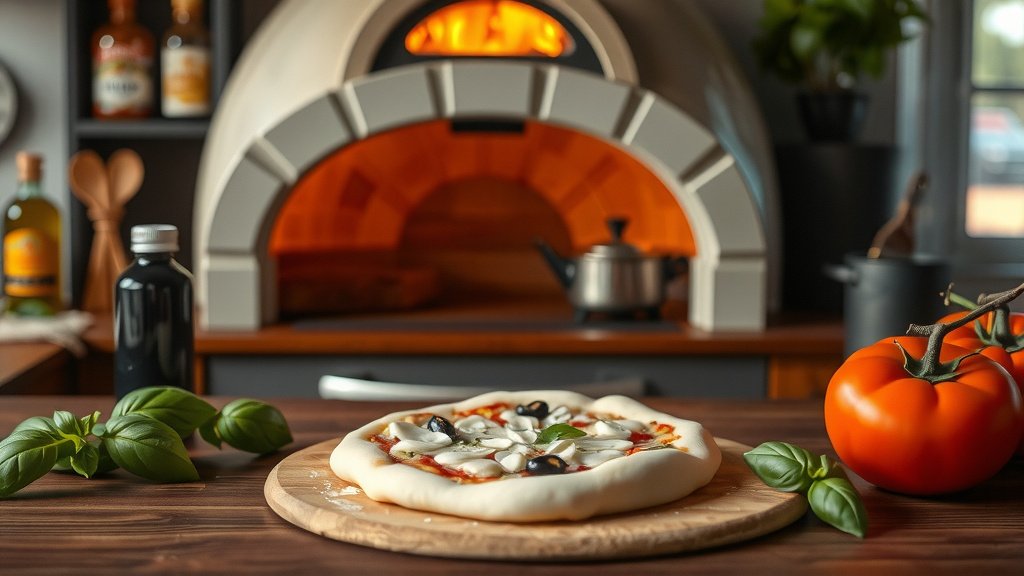
Making pizza dough for a pizza oven requires attention to high-quality ingredients and specific hydration levels to withstand extreme temperatures. You’ll achieve the best crust by combining flour, water, yeast, and salt with a careful mixing and proofing process.
Creating your own pizza dough for a scorching pizza oven is genuinely rewarding. It gives you control over the texture and taste, leading to a fantastic homemade pizza experience every time.
- The best pizza dough for a pizza oven uses specific flour like ’00’ or bread flour, crucial for high heat.
- Hydration, or the water content, needs to be precise for a perfect chew and crisp.
- Careful mixing, kneading, and especially a long, cold proofing time build flavor and structure.
- Understanding the simple ingredients – flour, water, yeast, and salt – is key to success.
- You’ll master making dough that performs beautifully under intense heat with patience and practice.
How To Make Pizza Dough For Pizza Oven?
Making pizza dough for a pizza oven means focusing on creating a dough that can handle intense heat, yielding a beautifully crisp yet chewy crust. It’s all about the right ingredients and technique.
Why Dough for a Pizza Oven is Different
Have you ever wondered why some pizza crusts are simply amazing? A pizza oven reaches incredibly high temperatures, often over 700°F (370°C). This extreme heat cooks the dough rapidly, creating a unique texture. Your homemade dough needs to be robust enough to handle this intense heat without burning or becoming too dense. Many experts emphasize the importance of dough structure (Pizzamaking.com).
The Power of High Heat
The high heat from a pizza oven cooks your pizza in minutes, sometimes even seconds. This speed causes the dough to puff up quickly, creating those desirable airy pockets and a slightly charred crust. It’s like a magical transformation right before your eyes.
Gather Your Essential Ingredients
Good pizza starts with simple, quality ingredients. Think of them as the building blocks for your culinary masterpiece. You’ll need flour, water, yeast, and salt.
Flour: The Foundation of Your Dough
Choosing the right flour is perhaps the most critical step. For pizza ovens, ’00’ flour is often recommended because it’s finely milled and has a specific protein content. Many experienced chefs prefer it for its ability to create a tender, chewy crumb. Bread flour is another excellent choice, offering good gluten development. We found that the protein content in flour directly impacts elasticity.
| Flour Type | Best Use | Characteristics for Pizza Oven |
|---|---|---|
| ’00’ Flour | Neapolitan-style pizza | Fine texture, good elasticity, tender crust. |
| Bread Flour | Chewy, American-style pizza | High protein, strong gluten development, resilient. |
| All-Purpose Flour | Beginner-friendly | Acceptable, but less ideal texture and structure. |
Yeast: The Life of Your Dough
Yeast is what makes your dough rise, giving it that wonderful airy texture. Active dry yeast or instant yeast both work well. Instant yeast can often be mixed directly with dry ingredients, which is a nice time-saver.
Water: The Hydrator
The water temperature is important. Lukewarm water helps activate the yeast without killing it. Aim for around 95-105°F (35-40°C). The total amount of water, known as hydration, significantly impacts the dough’s feel and final texture. Research often connects precise hydration with dough workability (Food Science & Nutrition Journal).
Salt: For Flavor and Structure
Don’t forget the salt! It’s not just for flavor; salt also helps control yeast activity and strengthens the gluten structure in your dough. Without salt, your dough might taste flat and be difficult to handle.
Equipment You’ll Need
Having the right tools makes the process much smoother. You don’t need a fancy kitchen, but a few basics help immensely.
- A kitchen scale for precise ingredient measurements.
- A large mixing bowl.
- A dough scraper or sturdy spoon.
- Plastic wrap or a damp towel for proofing.
- A pizza peel (wooden or metal) for transferring your pizza.
The Step-by-Step Dough Making Process
Let’s get down to business! Following these steps will guide you to a perfect pizza dough.
Mixing Your Ingredients
First, combine your flour and salt in a large bowl. In a separate bowl or measuring cup, mix your lukewarm water and yeast. Let the yeast sit for about 5 minutes until it looks foamy. This confirms your yeast is active and ready to go.
Bringing the Dough Together
Pour the yeast mixture into the flour and salt. Mix with a spoon or your hands until a shaggy dough forms. It might look a little messy at first, but don’t worry, that’s normal. We found that a sticky dough often signals good hydration.
Kneading for Structure
Turn the dough out onto a lightly floured surface. Knead it for about 8-10 minutes. This process develops the gluten, creating that elastic, smooth texture. You’ll feel the dough transform from sticky to supple.
First Proof: The Bulk Fermentation
Place your kneaded dough into a lightly oiled bowl, turning it once to coat. Cover the bowl tightly with plastic wrap or a damp towel. Let it proof at room temperature for 1-2 hours, or until it has doubled in size. This initial rise builds flavor.
Cold Proofing for Maximum Flavor
Many pizza experts swear by cold proofing. After the first rise, gently divide your dough into individual balls (typically 200-250g each for a 10-12 inch pizza). Place them in individual oiled containers or a proofing tray. Cover and refrigerate for at least 24 hours, or up to 3 days. This slow fermentation develops complex flavors and makes the dough easier to digest (NIH).
Bringing Dough to Room Temperature
When you’re ready to bake, take your dough balls out of the refrigerator. Let them sit at room temperature for at least 1-2 hours before stretching. This step helps the gluten relax, making the dough easier to work with.
Shaping Your Pizza Dough
Shaping is where the magic happens! Gently flour your work surface and your hands. Start by pressing the dough from the center outwards, pushing air to the edges to form a crust. Many people say avoiding a rolling pin keeps the crust airy. We recommend using your hands to stretch and turn the dough, creating a round shape. Think of it like a gentle dance with your dough.
Checklist for Pizza Dough Success
- Use a kitchen scale for precise measurements.
- Ensure your yeast is active and bubbly.
- Knead your dough until smooth and elastic.
- Allow for sufficient proofing time, especially cold proofing.
- Bring dough to room temperature before stretching.
- Handle dough gently when shaping to preserve air pockets.
Troubleshooting Common Dough Issues
Making pizza dough is a learning curve, and sometimes things don’t go as planned. Don’t worry; we’ve all been there!
Dough is Too Sticky
If your dough feels too sticky, add a very small amount of flour, a teaspoon at a time, during kneading. Be careful not to add too much, or your crust will become tough. A sticky dough can sometimes just need more kneading time to develop its gluten.
Dough is Too Stiff or Won’t Stretch
A stiff dough usually means it’s either too cold or hasn’t proofed enough. Let it warm up longer at room temperature. If it’s still stubborn, try letting it rest for another 15-20 minutes covered. This rest allows the gluten to relax, making it more pliable.
Conclusion
Crafting perfect pizza dough for your pizza oven is a journey of patience and practice. By understanding your ingredients, respecting the proofing process, and learning to handle the dough gently, you’ll unlock the secret to restaurant-quality pizza at home. The joy of seeing your dough transform into a delicious, crispy, and chewy crust is truly unmatched. Keep experimenting, and soon you’ll be tossing dough like a pro!
How important is the type of flour for pizza oven dough?
The type of flour is extremely important for pizza oven dough. ’00’ flour and bread flour are highly recommended because their protein content and milling quality create the right gluten structure to handle the high heat, resulting in a superior texture and chew.
Can I make pizza dough without a stand mixer?
Absolutely! You can easily make excellent pizza dough by hand. While a stand mixer speeds up the kneading process, hand-kneading is a traditional and effective method that also helps you get a better feel for the dough’s consistency.
What is cold proofing and why should I do it?
Cold proofing involves refrigerating your dough for an extended period, typically 24-72 hours, after the initial rise. This slow fermentation process significantly enhances the flavor and complexity of your dough, making it richer and more aromatic. It also improves digestibility and makes the dough easier to handle.
How can I tell if my yeast is still active?
To test your yeast, mix it with lukewarm water and a pinch of sugar. If it’s active, it should become foamy and bubbly within 5-10 minutes. If there’s no activity, your yeast is likely expired or inactive, and you should use a new batch.
What should I do if my pizza dough sticks to the peel?
If your dough sticks to the pizza peel, it likely needs more flour or semolina on the peel before you place the stretched dough on it. Work quickly when topping your pizza, and give the peel a gentle shake to ensure the dough moves freely before sliding it into the oven. Some people also use parchment paper for an easier transfer.
