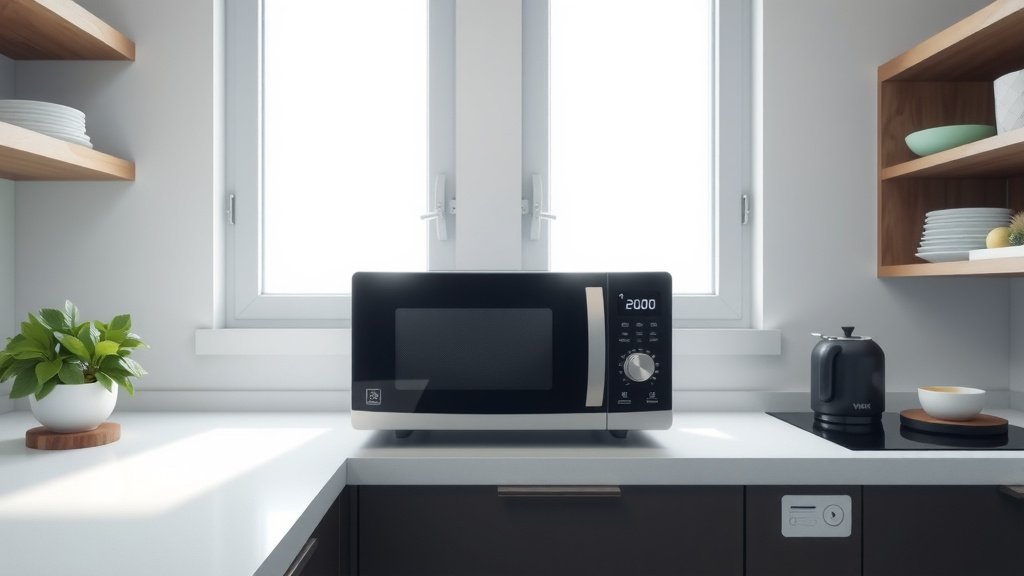
For most households, a microwave oven between 900 to 1200 watts is often considered best, offering a good balance of speed and cooking consistency for everyday tasks.
Lower wattage microwaves (600-800W) suit minimal use, while higher wattage models (1200W+) excel in rapid, even cooking for larger families or frequent users.
TL;DR: Here’s a quick takeaway for choosing your microwave wattage:
- For average homes, aim for 900-1200 watts for great results.
- Smaller kitchens or occasional users might find 600-800 watts sufficient.
- If you cook a lot or have a big family, consider 1200 watts or more for speed.
- Higher wattage generally means faster and more even cooking, but also costs more.
- Always check your favorite recipes, as some might specify a minimum wattage.
What Wattage Microwave Oven Is Best?
The best microwave oven wattage depends largely on your specific cooking needs and how you plan to use it daily.
There isn’t a single “best” wattage, but rather an ideal range that suits different lifestyles and kitchen demands.
Why Microwave Wattage Matters to Your Kitchen
Think of microwave wattage like the horsepower in a car; more watts generally means more power. This power affects how quickly and evenly your food cooks, reheats, or defrosts.
We found that understanding wattage helps you avoid undercooked meals or burnt edges, giving you better results every time you use your microwave.
What Does Microwave Wattage Really Mean?
Wattage measures the maximum amount of electricity your microwave uses to generate heat. A higher wattage microwave heats food faster because it can produce more microwave energy per second.
This also often leads to more consistent cooking, as the powerful energy can penetrate food more effectively (Many experts say).
Choosing the Right Wattage for Your Needs
Selecting the right wattage is like picking the right tool for the job. You wouldn’t use a tiny hammer for a big nail, right? Your microwave choice should also match your cooking “jobs.”
Consider what you primarily use your microwave for before making a decision.
The Versatile 900-1200 Watt Range
For most kitchens and daily routines, a microwave between 900 to 1200 watts is a fantastic choice. This range offers a great blend of speed, efficiency, and versatility.
Many experts say this is the most popular range because it handles most tasks well, from reheating leftovers to cooking ready-made meals (Consumer Reports).
Power Up: When 1200+ Watts Makes Sense
If you have a large family, frequently cook full meals in the microwave, or are often in a rush, considering a microwave with 1200 watts or more can be really beneficial.
These powerful models heat things up super fast and often cook very evenly, reducing those annoying cold spots in your food.
Smaller Jobs: The 600-800 Watt Option
Lower wattage microwaves, typically ranging from 600 to 800 watts, are perfect for individuals or those with limited kitchen space. They are often smaller in physical size.
These models are fine for simple tasks like melting butter, warming a cup of coffee, or making popcorn, though they will take a bit longer.
Matching Wattage to Your Daily Life
Your microwave is a tool for your lifestyle. Do you just warm up coffee? Or are you cooking elaborate microwave recipes? Your answer helps decide the perfect wattage.
We found that considering your typical usage patterns is far more helpful than just picking the highest or lowest number.
Your Cooking Habits and Food Types
If you often cook dense foods like casseroles or roast vegetables, a higher wattage will give you better, more consistent results. For simple reheating of soup, wattage is less critical.
Many experts say that if your family enjoys frozen dinners regularly, a higher wattage microwave will definitely improve their texture and heating consistency.
Here’s a quick glance at how wattage impacts common kitchen tasks:
| Wattage Range | Best For | Typical Cooking Speed |
|---|---|---|
| 600-800W | Popcorn, coffee, small portions, melting butter | Slower, requires longer times |
| 900-1100W | Everyday reheating, defrosting, cooking frozen meals, vegetables | Moderate, good balance |
| 1200W+ | Large meals, dense foods, fast cooking, even heating | Fastest, most consistent |
Wattage vs. Cost: What to Expect
Generally, as the wattage of a microwave increases, so does its price. This makes sense, as more powerful appliances often come with more advanced features and components.
However, we found that higher wattage microwaves can be more energy-efficient over time because they cook faster, meaning they run for shorter periods.
How Oven Size Connects to Wattage
It’s common to see a correlation between physical size and wattage. Larger microwaves often have higher wattages to effectively heat their bigger interior space.
Smaller, compact models typically have lower wattages. Consider your counter space and how much food you regularly cook when choosing (Consumer Reports).
Adjusting Cook Times for Different Wattages
What if your recipe calls for 1000 watts, but your microwave is only 700 watts? You can absolutely still cook it, but you will need to adjust the cooking time.
As a general rule, a lower wattage means longer cooking. Many experts suggest increasing the cooking time by about 10-20% for every 100 watts less than the recipe specifies.
Here’s a simple checklist to help you choose the ideal microwave wattage:
- Do you primarily reheat single servings or full family meals?
- How often do you use your microwave daily?
- Is speed a top priority for your kitchen?
- What is your budget for a new appliance?
- Do you have specific counter space limitations?
- Are you often cooking dense or frozen food items?
Conclusion
Choosing the best microwave oven wattage really boils down to your personal cooking habits and household needs. There’s no one-size-fits-all answer, but understanding the basics makes your decision easier.
For most people, a 900 to 1200-watt microwave offers a great balance of power and efficiency. However, don’t shy away from higher or lower wattages if they genuinely suit your specific kitchen life.
By considering how you cook and what you value most, you will easily find the perfect wattage for your next microwave oven.
Can a microwave be too powerful?
While a higher wattage generally offers faster and more even cooking, a microwave can sometimes feel “too powerful” if you are not used to adjusting cook times. Food might cook too quickly or unevenly if you use standard instructions meant for lower wattages without modification. It is about matching the power to your usage habits.
Does higher wattage always mean faster cooking?
Yes, higher wattage generally means faster cooking. More watts deliver more microwave energy, which heats food quicker. However, cooking speed also depends on the food type, its density, and moisture content. A higher wattage will usually complete tasks in less time compared to a lower wattage model for the same food item.
Is it okay to use a low-wattage microwave for large meals?
You can use a low-wattage microwave for larger meals, but it will take significantly longer to cook and may not heat as evenly. For big portions or dense foods, a low-wattage microwave might leave cold spots, requiring more stirring or additional heating cycles. It is generally less efficient and convenient for big meal preparation.
How do I find the wattage of my current microwave?
You can usually find your microwave’s wattage listed on a label on the back, side, or inside the door frame. If you cannot find it there, check your owner’s manual. As a last resort, a quick search online with your microwave’s brand and model number should help you find the specification.
What is the ideal wattage for defrosting?
For efficient and even defrosting, a microwave with at least 900 watts is often ideal. Higher wattage allows for quicker defrosting cycles, reducing the chance of cooking the edges of your food while the center remains frozen. Most microwaves have a specific defrost setting that automatically adjusts power levels, but a higher base wattage helps overall.