
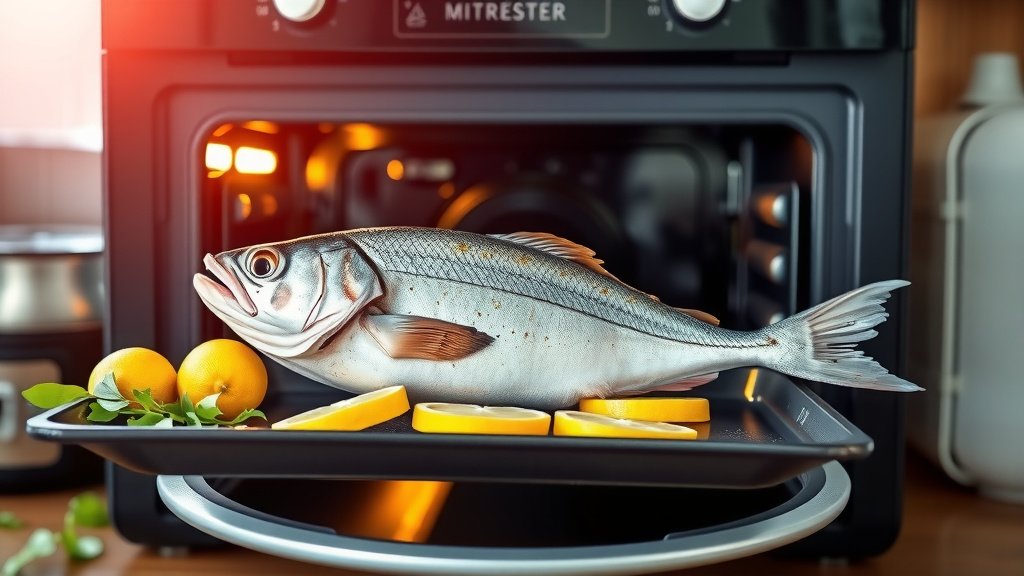
To cook a whole fish in an electric oven, preheat your oven to 400°F (200°C), season the fish well, and bake it on a parchment-lined baking sheet until the flesh is opaque and flakes easily, typically 15-25 minutes depending on size.
For a beautifully cooked whole fish in your electric oven, ensure proper preparation by scoring the skin and filling the cavity with aromatics, then monitoring the internal temperature for perfect doneness.
TL;DR: Here’s the quick guide to baking whole fish:
- Preheat your electric oven to 400°F (200°C) for even cooking.
- Select a fresh, properly cleaned whole fish that fits your baking sheet.
- Season generously inside and out with herbs, lemon, and salt.
- Bake on parchment paper until flaky, checking for an internal temperature of 145°F (63°C).
- Let it rest briefly after cooking to retain moisture and flavor.
How To Cook Whole Fish In Electric Oven?
Cooking a whole fish in your electric oven can feel like a culinary triumph, and it’s surprisingly straightforward. You’ll get tender, moist fish with beautiful crispy skin. This method is often preferred for its ease and consistent results.
Why Bake Whole Fish?
Baking a whole fish often yields a more flavorful and moist result than fillets. The bones and skin protect the delicate flesh, keeping it juicy. Plus, it makes for a stunning presentation, doesn’t it?
We found that whole fish retains more natural moisture. Many experts say this method seals in the juices and creates a richer flavor profile (Cleveland Clinic).
Choosing Your Fish Wisely
Selecting the right fish is your first step to a delicious meal. Think of this as laying a strong foundation for your culinary adventure.
Freshness Matters
Always go for the freshest fish you can find. Look for clear, bright eyes and firm, shiny skin. It should smell like the ocean, not “fishy.” A truly fresh fish makes all the difference.
Size and Type
Smaller to medium whole fish (1-3 pounds) work best for baking. Think about species like snapper, branzino, trout, or even a smaller salmon. Make sure it fits comfortably on your baking sheet.
Gathering Your Tools
You won’t need many fancy gadgets. A good baking sheet, some parchment paper, and a reliable meat thermometer are your main essentials. A sharp knife helps with prep, too.
Prepping Your Fish Like a Pro
This part is simple, but it truly elevates your final dish. Don’t skip these steps; they ensure even cooking and amazing flavor.
Cleaning and Scoring
Your fish should come scaled and gutted from the fishmonger. If not, do this yourself. Then, with a sharp knife, make 2-3 shallow slits diagonally across both sides of the fish. These scores help heat penetrate and absorb seasoning.
Seasoning for Flavor
Season generously inside and out. Salt, black pepper, and olive oil are your basics. Then, stuff the cavity with aromatics like lemon slices, fresh herbs (dill, parsley, thyme), and garlic cloves. This infuses incredible flavor as it bakes.
Research shows that **herbs and citrus** not only add flavor but also help tenderize fish slightly (NIH).
The Oven Setup
Your electric oven is a fantastic tool for baking fish. Knowing how to use it optimally ensures a perfectly cooked meal every time.
Temperature Talk
For whole fish, a consistent **high heat** is key. Preheat your oven to 400°F (200°C). This temperature helps the skin crisp up while cooking the inside evenly without drying it out.
Rack Position
Position your oven rack in the middle of the oven. This allows for even heat distribution all around the fish. No need for special top or bottom rack placement here.
Cooking Times: What to Expect
Cooking times will vary based on the size and thickness of your fish. This table offers a general guide:
| Fish Weight | Approximate Cooking Time (400°F / 200°C) | Doneness Check |
|---|---|---|
| 1-1.5 lbs (0.45-0.68 kg) | 15-20 minutes | Flakes easily, 145°F internal |
| 1.5-2.5 lbs (0.68-1.13 kg) | 20-25 minutes | Flakes easily, 145°F internal |
| 2.5-3.5 lbs (1.13-1.59 kg) | 25-30 minutes | Flakes easily, 145°F internal |
Always use a meat thermometer for accuracy. You want an internal temperature of 145°F (63°C) at the thickest part.
How to Tell When It’s Done
Don’t just guess! Knowing the signs of perfectly cooked fish avoids dryness. Here’s a simple checklist:
- Is the **flesh opaque** throughout?
- Does it **flake easily** with a fork?
- Did the internal temperature reach **145°F (63°C)**?
- Are the **eyes white** and cloudy (if still attached)?
- Is the **skin nicely crisped**?
If you answered “yes” to these, your fish is ready!
Resting Your Fish
Just like meat, fish benefits from a brief rest after cooking. Let it sit for 5 minutes, loosely covered with foil. This allows the juices to redistribute, leading to a more tender and moist result.
Troubleshooting Common Issues
Sometimes things don’t go exactly as planned. Here are some quick fixes for common problems:
- **Dry fish?** You likely overcooked it. Try a shorter cooking time or lower heat next time.
- **Skin not crispy?** Ensure your oven was fully preheated. A little brush of oil helps too.
- **Fish sticking?** Always use parchment paper! It’s a game-changer for easy removal.
- **Uneven cooking?** Your fish might have been too thick in one spot. Scoring helps even this out.
Conclusion
Baking a whole fish in your electric oven is a skill that delivers truly rewarding results. By choosing fresh fish, prepping it well, and keeping an eye on your oven’s temperature and timing, you’ll create a dish that’s both impressive and delicious. It’s a healthy, flavorful meal that doesn’t require a lot of fuss. Enjoy your perfectly baked whole fish!
What kind of whole fish cooks best in an electric oven?
Fish like snapper, branzino, trout, and small salmon, typically weighing 1-3 pounds, cook beautifully in an electric oven. Their size and fat content lend themselves well to this baking method, staying moist and flavorful.
How do you prevent whole fish from sticking to the baking pan?
To prevent sticking, always line your baking pan with parchment paper. You can also lightly oil the fish skin itself before placing it on the parchment. These steps create a non-stick surface, making removal simple.
Should I flip the fish halfway through baking?
Generally, you do not need to flip a whole fish when baking it in an electric oven. The even heat circulation in the oven cooks both sides adequately. Flipping can sometimes cause the fish to break apart or lose its crisp skin.
Can I add vegetables to the pan while baking the fish?
Yes, absolutely! Root vegetables like potatoes or carrots, and quick-cooking options like asparagus or cherry tomatoes, can be tossed with olive oil and seasonings and baked alongside the fish. Just make sure they are cut small enough to cook in the same time frame.
What is the safest way to check if whole fish is fully cooked?
The safest and most accurate way to check for doneness is using an instant-read meat thermometer. Insert it into the thickest part of the fish, avoiding the bone. The fish is done when it reaches an internal temperature of 145°F (63°C) (USDA).
