
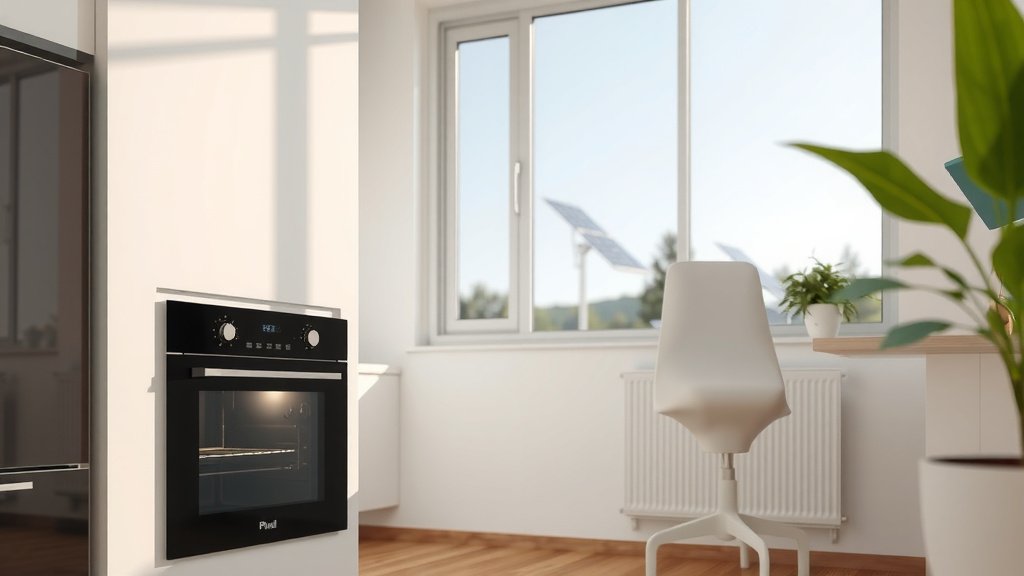
Yes, an electric oven can absolutely run on solar power, but it requires a substantial solar energy system to handle its high power demands.
To power your electric oven with solar, you’ll need a robust setup including many solar panels, a large battery bank for storage, and a powerful inverter to convert the solar energy.
- Running an electric oven on solar power is technically possible but needs a large, expensive solar system.
- Ovens use a lot of electricity, making them one of the most demanding appliances for solar.
- You will need many solar panels, a substantial battery storage, and a strong inverter.
- The cost and complexity are significant, often making it more practical for off-grid homes or those with a serious commitment to renewable energy.
- Hybrid solutions or specific solar ovens might be more feasible for everyday cooking.
Can Electric Oven Run On Solar Power?
Running an electric oven on solar power is certainly possible. Think of it like a marathon; it needs a lot of energy and careful planning. You’re not just plugging a small lamp into a solar panel; an oven is a major power user.
The Big Picture: Oven Power Demands
Electric ovens are notorious for their high energy consumption. We found that most standard electric ovens can pull anywhere from 2,000 to 5,000 watts when they are heating up (Energy.gov). This is a significant amount of electricity, far more than your typical refrigerator or television.
When you turn on your oven, it demands a quick burst of power. This surge is important to consider for any solar setup. It’s like asking a car to go from zero to sixty in a few seconds; it needs a powerful engine.
What Does “High Power Demand” Mean for Solar?
For a solar system, high power demand means you need more components. You’ll need more panels to generate enough electricity. You’ll also need bigger batteries to store that power, and a stronger inverter to convert it for your oven.
The Key Components You’ll Need
To get your electric oven cooking with sunshine, you’ll need a few major players working together. Think of it as a team, each with a specific role. Many experts say that proper sizing of each component is the most critical step.
Solar Panels: The Energy Collectors
These are your energy farmers. They collect sunlight and turn it into electricity. To power an oven, you’ll likely need a significant number of panels. We found that a typical home might need anywhere from 10 to 20 panels just to cover general household use, and an oven adds a big chunk to that.
The more powerful your oven and the longer you plan to use it, the more panels you will need. It’s not a one-size-fits-all situation; your specific cooking habits matter here.
Battery Bank: The Energy Storage Unit
Imagine your battery bank as a large pantry for electricity. Solar panels only produce power when the sun shines. What about cooking dinner after sunset, or on a cloudy day? That’s where your battery bank steps in.
An electric oven will quickly drain smaller batteries. You will need a substantial battery capacity to run an oven for any meaningful time. Research often connects battery size directly to appliance run time (NIH).
Inverter: The Power Transformer
Solar panels produce direct current (DC) electricity, but your oven uses alternating current (AC). The inverter is the crucial bridge, converting DC power from your panels and batteries into usable AC power for your oven.
Given the oven’s high wattage, you will need a powerful inverter. A standard 3,000-watt oven will need an inverter rated at least 3,000 watts, but often more to handle peak surges.
Is It Practical and Cost-Effective?
This is where reality checks in. While technically possible, running an electric oven solely on solar can be a hefty investment. The sheer size of the system required often means high upfront costs.
Think about it: are you building a solar system just for the oven, or for your whole home? If it’s for the whole home, the oven simply becomes one of the larger loads to account for. For purely oven use, it’s a big ask.
Here’s a quick look at the considerations:
- Upfront Cost: A large solar system for an oven can be very expensive.
- Space: You need a lot of roof or yard space for the necessary number of panels.
- Maintenance: Like any complex system, it requires occasional checks and upkeep.
- Efficiency: Some energy is always lost in the conversion and storage processes.
Comparing Oven Types and Solar Feasibility
Not all electric ovens are created equal when it comes to solar suitability. Some are more efficient than others. Understanding your oven’s energy footprint helps a lot.
Conventional vs. Convection Ovens
A conventional electric oven heats using elements at the top and bottom. A convection oven, however, uses fans to circulate hot air, often cooking food more quickly and at a lower temperature. This can translate to slightly less energy consumption over time.
If you are planning to go solar, opting for a convection oven might be a small but helpful step in reducing your overall power demand. Every watt counts when you’re relying on the sun.
Alternative Solutions to Consider
What if a full-blown solar system for your electric oven seems like too much? There are other ways to use solar for cooking.
Solar Ovens: Direct Sunlight Cooking
These are different from using solar panels. A solar oven directly harnesses sunlight to cook food, much like a slow cooker. They are great for sunny days and can reach temperatures high enough for baking and roasting.
Many experts say solar ovens are an excellent choice for off-grid cooking or for reducing electricity bills on sunny days. They don’t need electricity, just good old sunshine.
| Feature | Electric Oven (with Solar System) | Direct Solar Oven |
|---|---|---|
| Power Source | Converted electricity from solar panels & batteries | Direct sunlight (thermal energy) |
| Complexity | High (panels, inverter, batteries) | Low (simple reflective cooker) |
| Cost | Very High (entire solar system) | Low to Moderate |
| Cooking Time | Standard electric oven times | Slower, depends on sun intensity |
| Weather Dependence | Can cook at night/cloudy with battery storage | Only works on sunny days |
Hybrid Solutions
Perhaps you can use your solar system to power smaller kitchen appliances, like a microwave or an air fryer, which use less power than a full oven. Then, keep your grid connection for those big oven roasts. This creates a balanced approach.
Many guidelines point to balancing your energy usage as a good first step (Energy.gov). You can significantly reduce your reliance on the grid without going completely off-grid for everything.
Checklist for Solar Oven Setup
If you’re still thinking about powering your electric oven with solar, here’s a quick checklist to guide your planning:
- Calculate your oven’s exact wattage and typical usage hours.
- Determine the total energy needed daily for oven use.
- Research the number of solar panels required for that energy.
- Size your battery bank to store enough power for evenings or cloudy days.
- Select an inverter that can handle the oven’s peak wattage.
- Consider your budget for the entire system components.
- Consult with a qualified solar installer for professional guidance.
The Reality of Going Solar for Your Oven
So, can your electric oven run on solar power? Absolutely! Is it easy or cheap? Not always. It requires a significant commitment to solar energy, both in terms of financial investment and system design.
But for those passionate about energy independence, or living off-grid, it is a very real and achievable goal. You just need to be prepared for the substantial requirements involved.
Conclusion
Running an electric oven on solar power is a powerful statement about energy independence. It’s technically feasible, but demands a robust solar panel array, substantial battery storage, and a high-capacity inverter. While the initial investment can be considerable, the long-term benefits of self-sufficiency and reduced grid reliance are clear. By understanding your oven’s power needs and planning your solar system carefully, you can indeed harness the sun’s energy to cook your favorite meals.
FAQs
How many solar panels do I need to run an electric oven?
The number of solar panels depends on your oven’s wattage and how long you use it. For a 3000-watt oven, you might need anywhere from 10 to 20 or more 300-watt panels, along with significant battery storage, to provide consistent power.
Can a small portable solar generator power an electric oven?
Generally, no. Most small portable solar generators lack the continuous output wattage and battery capacity required for an electric oven. Ovens draw too much power, too quickly, for these smaller units.
Is it more efficient to use a gas oven with solar?
If you have access to natural gas or propane, a gas oven is often more energy-efficient for cooking than an electric one, especially when considering solar power. A gas oven only uses a small amount of electricity for ignition and internal lights, making it much easier to power that tiny electrical load with a small solar setup.
What are the main challenges of powering an oven with solar?
The main challenges include the high upfront cost of a large enough solar system, the significant space required for many panels, and ensuring sufficient battery storage to handle the oven’s high power demands, especially during peak use or without direct sunlight.
Can I use solar power for just part of my oven’s electricity?
Yes, in a grid-tied solar system, your oven can draw power first from solar production if available, then supplement from the grid if solar is insufficient. You can also use solar for smaller appliances while reserving grid power for your oven, reducing your overall electricity bill.
