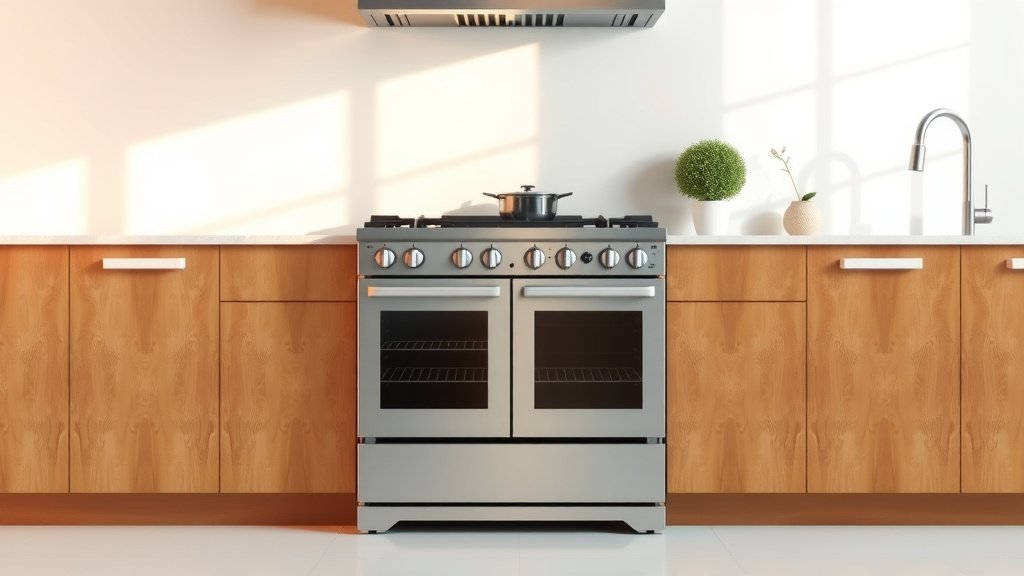
A dual fuel oven combines the best of both cooking worlds: a gas cooktop for precise, instant heat control, and an electric oven for even, consistent baking and roasting.
This versatile kitchen appliance offers the speed and responsiveness of gas burners with the dry, steady heat of an electric oven, making it a popular choice for home chefs.
- A dual fuel oven gives you gas burners on top and an electric oven below.
- You get instant heat control for stovetop cooking with gas.
- The electric oven provides very even temperatures for baking and roasting.
- They offer great flexibility for many different cooking styles.
- Expect a higher upfront cost and specific installation needs.
What Is A Dual Fuel Oven?
A dual fuel oven marries the advantages of gas cooking with electric baking. You get the quick response of gas flame for your pots and pans, plus the consistent heat of an electric element for what’s inside the oven.
Think of it as having two specialized tools in one appliance. Many experts say this setup provides optimal conditions for a wide range of culinary tasks (Consumer Reports).
How Does a Dual Fuel Oven Work?
On the top, your dual fuel oven features gas burners. These burners give you immediate heat changes, perfect for delicate sauces or searing meats quickly.
Below, the oven uses electricity. Electric ovens are known for maintaining a very steady temperature, which is ideal for baking cakes, bread, or roasting a turkey evenly.
The Best of Both Worlds
Imagine being able to simmer a delicate soup on a gas flame while baking a perfect souffle in an electric oven. That’s the beauty of a dual fuel setup.
You avoid the common pitfall of gas ovens, which can sometimes have hot spots, especially for baked goods. It really gives you control.
Key Benefits of a Dual Fuel Range
Why choose this particular oven? You gain several practical advantages that can truly enhance your kitchen experience.
Many home cooks value the flexibility and precision that a dual fuel unit brings to their cooking routines.
- Gas stovetop offers instant heat adjustments.
- Electric oven delivers consistent and uniform heat.
- Excellent for baking, roasting, and broiling.
- Often features advanced cooking modes like convection.
- Can improve your overall cooking results, say many chefs.
Potential Downsides to Consider
While dual fuel ovens are fantastic, they aren’t without their quirks. It’s smart to understand the full picture before you commit.
Knowing these points helps you make a truly informed choice for your home.
Cost Factor
You might find that dual fuel ranges generally cost more upfront than their all-gas or all-electric counterparts. This higher price reflects the specialized components and technology.
Think about your budget and how much you’re willing to invest in your kitchen’s heart.
Installation Specifics
Installing a dual fuel oven is more involved than a single-fuel unit. It requires both a gas line connection and a dedicated electrical outlet.
This could mean additional installation costs if your kitchen isn’t already set up for both utilities. We found that proper professional installation is key.
Who Should Buy a Dual Fuel Oven?
Is a dual fuel oven the right fit for you? Consider your cooking style and priorities. This appliance shines for specific types of users.
If you love to bake and also enjoy the precision of stovetop cooking, you might be the perfect candidate.
- You love to bake and want precise oven temperatures.
- You enjoy the instant control of gas burners for stovetop cooking.
- Your kitchen has access to both gas and a suitable electrical outlet.
- You cook frequently and use various techniques.
- You appreciate premium kitchen appliances.
Dual Fuel vs. All-Gas vs. All-Electric
It helps to compare dual fuel with other common oven types. Each has its own strengths, depending on your needs and kitchen setup.
Here’s a quick look at how they stack up, so you can weigh your options.
| Feature | Dual Fuel | All-Gas | All-Electric |
|---|---|---|---|
| Stovetop Heating | Gas (instant, precise) | Gas (instant, precise) | Electric (slower, less precise) |
| Oven Heating | Electric (even, consistent) | Gas (moister heat, potential hot spots) | Electric (even, consistent) |
| Baking Performance | Excellent | Good (can be moist) | Excellent |
| Roasting Performance | Excellent | Very Good | Excellent |
| Installation Needs | Gas line & 240V electric | Gas line only | 240V electric only |
| Typical Cost | Higher | Moderate | Moderate |
What to Look For When Buying
When you’re ready to choose a dual fuel oven, a few key features can make a big difference. Think about how you cook and what really matters to you.
Consider these points to ensure you pick the best model for your kitchen and lifestyle.
Oven Capacity Matters
How much food do you typically cook? If you entertain often or have a large family, you’ll want a generous oven capacity.
Check the cubic feet measurement and consider if it fits your biggest roasting pans.
Burner Power
Look at the BTUs (British Thermal Units) for the gas burners. Higher BTUs mean more powerful burners for faster boiling or searing.
Some models offer different BTU levels for varied cooking tasks, which can be very handy.
Smart Features
Many modern ovens come with smart features. Things like Wi-Fi connectivity, digital temperature probes, or self-cleaning cycles can be real time-savers.
Think about what convenience features would truly simplify your cooking routine.
Installation Tips for Your New Oven
Getting your dual fuel oven set up correctly is super important for both safety and performance. Don’t overlook these critical steps.
Often, professional installation is the smartest way to go to ensure everything is done right.
Gas Line Requirements
You absolutely need a dedicated gas line near where the oven will sit. If you don’t have one, you’ll need to have a licensed professional install it.
This is a non-negotiable step for any gas appliance in your home.
Electrical Connection
Because the oven part is electric, it requires a 240-volt electrical outlet. This is different from the standard 120-volt outlets you use for smaller appliances.
Ensure your home’s electrical system can support this, perhaps with an electrician’s help.
Conclusion
Choosing a dual fuel oven is a fantastic decision for many home cooks. You get the best of both worlds: the responsive control of gas burners and the consistent, even heat of an electric oven.
While they might require a bit more thought during installation and carry a higher price tag, the cooking performance often makes it a worthwhile investment for those who genuinely love to cook.
We found that understanding your specific cooking needs and kitchen setup will guide you to the perfect appliance. Happy cooking!
Can a dual fuel oven run on propane instead of natural gas?
Yes, many dual fuel ovens are convertible to run on propane. They usually come with a conversion kit or instructions. We recommend having a certified technician handle the conversion for safety and proper operation.
Are dual fuel ovens more energy efficient?
It depends on how you look at it. Gas cooktops are often seen as more energy-efficient for stovetop tasks due to instant heat. Electric ovens are known for maintaining very stable temperatures, which can make them efficient for baking. Overall efficiency varies by model and usage (Energy Star).
Do dual fuel ovens require special cookware?
No, you typically don’t need special cookware. You can use your existing pots and pans on the gas burners, and any oven-safe bakeware in the electric oven. Just ensure your cookware is appropriate for gas stovetops and oven use.
What is the average lifespan of a dual fuel oven?
The lifespan of a dual fuel oven can vary, but generally, you can expect them to last between 10 to 15 years with proper care and maintenance. Regular cleaning and timely repairs can help extend its useful life.
Is convection baking common in dual fuel ovens?
Yes, convection baking is a very common feature in dual fuel ovens, especially in newer models. Convection uses a fan to circulate hot air, resulting in faster and more even cooking. It’s a great benefit for many baking and roasting tasks.