
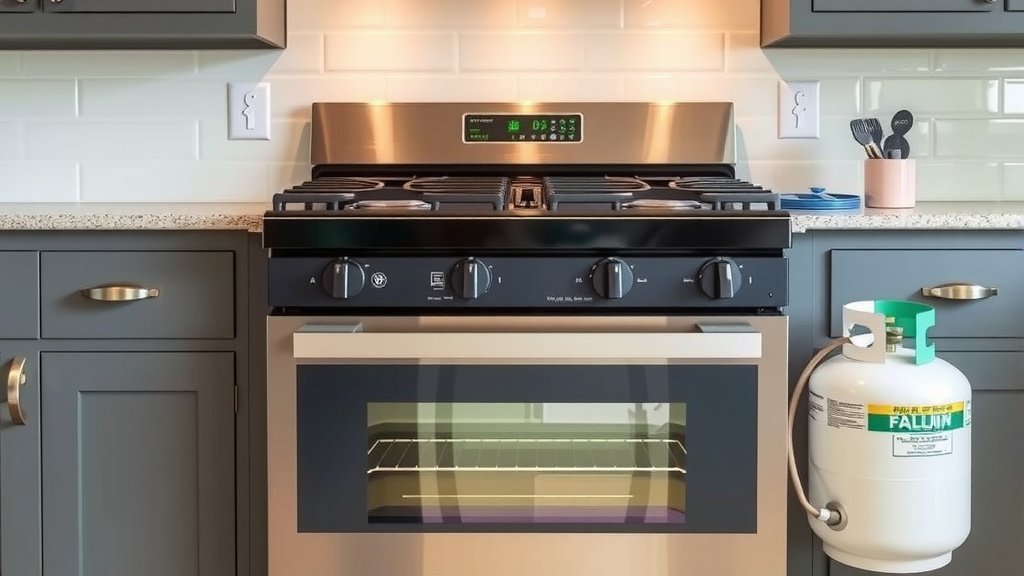
Yes, a dual fuel oven can typically use propane (LP gas) instead of natural gas, but it absolutely requires a proper conversion kit and installation by a qualified professional.
You cannot simply connect an oven designed for natural gas to a propane supply without making specific adjustments and modifications for safety and performance.
Here’s the TL;DR for what you need to know:
- Dual fuel ovens often require a professional conversion kit to switch from natural gas to propane.
- This conversion is crucial due to different gas pressures and burner orifice sizes.
- Never attempt a DIY conversion; always hire a certified appliance technician or plumber.
- Improper conversion can lead to safety hazards like gas leaks or inefficient burning.
- Check your oven’s manual and manufacturer guidelines for specific conversion instructions and warranty details.
Can Dual Fuel Oven Use Propane Instead Of Gas?
If you’re wondering whether your dual fuel oven can run on propane instead of natural gas, the straightforward answer is often yes. However, it’s not a simple plug-and-play situation. Your oven needs a professional modification to switch fuel types.
Understanding Your Dual Fuel Oven
A dual fuel oven combines the best of both worlds. You get the instant heat control of a gas cooktop, perfect for searing and simmering, paired with the consistent, even baking of an electric oven. It’s a popular choice for many home chefs. But what about the gas part?
What Powers Your Oven?
The “gas” in a dual fuel range usually refers to the cooktop burners. Most homes are plumbed for natural gas. However, if you live off the natural gas grid or prefer propane, you might be looking to use LP gas for that cooktop. This is where the conversion comes in.
Natural Gas vs. Propane: A Quick Glance
You might think gas is just gas, right? Not quite. Natural gas and propane are distinct fuels with different properties. They burn differently and require different appliance setups.
The Big Difference: Pressure and Orifices
The main difference lies in their pressure and energy content. Natural gas is delivered at a lower pressure than propane. Because of this, appliances designed for natural gas have larger openings, called orifices, to allow enough gas flow for proper combustion. Propane, being denser and stored under higher pressure, needs smaller orifices for the same heat output. Without adjustment, a natural gas appliance trying to burn propane would get too much fuel, leading to a dangerous, inefficient flame (Energy Information Administration).
The Necessary Conversion Process
Switching your dual fuel oven from natural gas to propane isn’t just a matter of changing a hose. It’s a precise procedure that ensures your appliance operates safely and efficiently.
Why Can’t You Just Connect It?
Imagine trying to drink water through a fire hose. That’s a bit like trying to run propane through a natural gas appliance. The gas would rush through too quickly, creating an unsafe and yellow flame, or perhaps not igniting properly at all. This is why a proper conversion is non-negotiable.
What Does a Conversion Kit Include?
A typical conversion kit for a dual fuel oven or range will include a few critical components. These usually consist of new burner orifices (often smaller ones), a new regulator, and sometimes specific instructions or labels. These parts ensure the correct gas flow and pressure for propane. Here’s a quick look:
| Component | Natural Gas Function | Propane (LP) Function |
|---|---|---|
| Burner Orifices | Larger openings for lower pressure. | Smaller openings for higher pressure. |
| Pressure Regulator | Manages natural gas pressure for safe operation. | Replaced or adjusted for higher LP gas pressure. |
| Conversion Instructions | Standard setup for natural gas. | Detailed steps for safe LP gas adaptation. |
The Steps to a Safe Conversion
The conversion process is specific and requires technical expertise. We found that most manufacturers provide a kit with detailed instructions. However, these steps are for professionals only. An expert will:
- Shut off the gas supply completely.
- Disconnect the appliance from the gas line.
- Remove the old natural gas orifices from the cooktop burners.
- Install the new, smaller propane orifices for each burner.
- Adjust or replace the pressure regulator to match propane’s higher pressure.
- Reconnect the appliance and check for leaks using a specialized detector.
- Test each burner to ensure proper ignition and a blue, stable flame.
Don’t Try This at Home: Professional Help is Key
We cannot stress this enough: do not attempt to convert your oven yourself. Gas appliance conversions involve working with highly flammable materials and complex pressure systems. Many experts say that improper conversion can lead to gas leaks, carbon monoxide poisoning, or even explosions (NFPA guidelines). Always call a certified appliance technician or a licensed plumber specializing in gas appliances.
Safety First: What You Need to Know
When dealing with gas appliances, safety should always be your number one concern. A proper conversion isn’t just about making your oven work; it’s about protecting your home and family.
Identifying Potential Hazards
An incorrectly converted oven poses several risks. You could have a persistent gas leak, leading to a dangerous buildup of gas in your home. Or, the burners might not combust efficiently, producing carbon monoxide, an odorless and colorless gas that can be fatal. This is why a professional check for leaks and proper flame adjustment after conversion is vital.
Warranty and Insurance Considerations
Did you know that attempting a DIY gas conversion often voids your appliance’s warranty? Manufacturer guidelines clearly state that only qualified personnel should perform these modifications. If something goes wrong and your warranty is voided, you’ll be on the hook for repair costs. Furthermore, your home insurance policy might not cover damages caused by an uncertified gas appliance modification. Always check with your insurance provider and the appliance manufacturer.
Making the Switch: Practical Considerations
So, you’ve decided to convert your dual fuel oven to propane. What are the next practical steps and things to consider?
Finding a Certified Technician
The most important step is finding the right person for the job. Look for technicians certified in gas appliance installation and service. You can often find these professionals through appliance stores, local plumbing and heating companies, or by checking with your propane supplier. Don’t be shy about asking for proof of certification and references. We found that a good technician will provide a clear estimate and explain the process to you.
Expected Costs for Conversion
The cost to convert a dual fuel oven will vary based on your location and the technician’s rates. It typically includes the cost of the conversion kit (if not already included with your appliance) and the labor for installation. While it’s an added expense, consider it an investment in your safety and the proper functioning of your appliance. Always get a few quotes before committing.
Benefits of Using Propane in Your Dual Fuel Oven
Why go through the trouble of conversion? For many, the benefits of using propane far outweigh the initial effort.
Flexibility in Location
The biggest advantage is flexibility. If you’re building a new home in a rural area without natural gas lines, or if you’re simply in a location where natural gas isn’t available, propane offers a reliable alternative. It allows you to enjoy the preferred cooking style of a gas cooktop no matter where you live. This offers true freedom for kitchen design.
Conclusion
Converting your dual fuel oven to use propane instead of natural gas is definitely possible, but it’s a task best left to the experts. By understanding the differences between the gases, ensuring a proper conversion with the right kit, and prioritizing safety, you can successfully adapt your appliance. This change gives you the flexibility to enjoy the benefits of gas cooking, even if natural gas isn’t an option for you. Always remember, when it comes to gas appliances, professional installation is paramount for peace of mind and safe operation.
Can I convert my dual fuel oven back to natural gas after using propane?
Yes, typically you can convert your dual fuel oven back to natural gas. This process also requires a professional technician to change the orifices and regulator settings back to natural gas specifications. It’s essentially the reverse of the initial conversion.
How do I know if my dual fuel oven is designed for conversion?
Most modern dual fuel ovens are designed with conversion in mind. You should check your oven’s owner’s manual. It will usually specify if an LP conversion kit is available or included, and often provides instructions for the qualified installer.
What does a propane flame look like on an oven cooktop?
A properly adjusted propane flame should be mostly blue, stable, and have a clear, sharp inner cone. If you see a lot of yellow or orange in the flame, or if it’s sputtering, it indicates inefficient burning and a potential safety issue, meaning the conversion or adjustment might be incorrect.
Is it more expensive to cook with propane than natural gas?
The cost effectiveness can vary significantly based on local prices for natural gas and propane. Generally, natural gas tends to be less expensive per therm than propane because it is delivered via pipelines. However, this varies by region and market conditions. You would need to compare local rates to determine which is more economical for you.
Will converting my dual fuel oven affect its electric oven performance?
No, converting the gas cooktop portion of your dual fuel oven from natural gas to propane will not affect the performance or functionality of the electric oven section. The electric oven operates independently of the gas supply used for the cooktop burners.
