
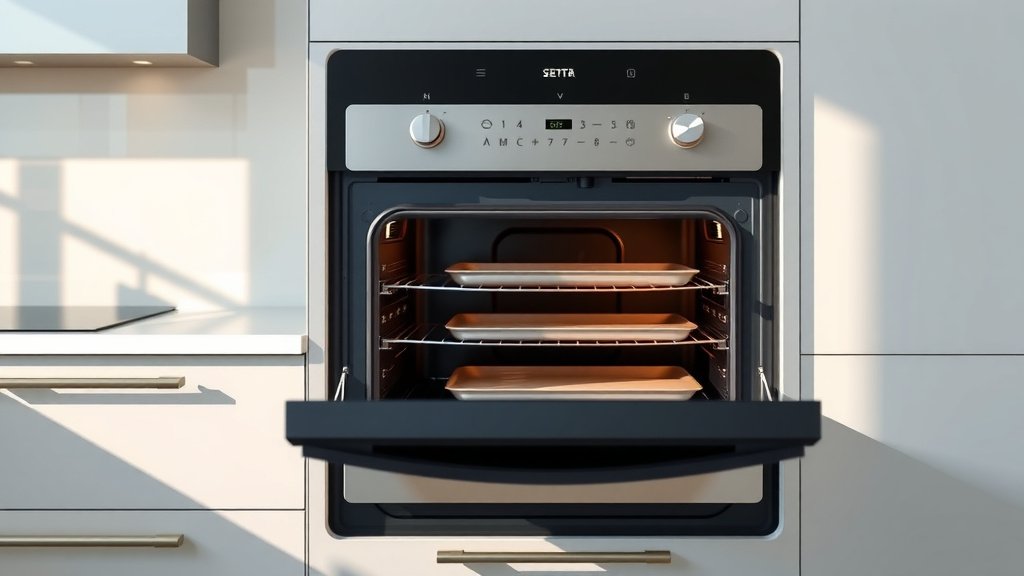
A double oven works by providing two separate, independently controlled oven cavities within a single appliance, allowing you to cook different dishes at varying temperatures simultaneously.
Each oven section operates with its own heating elements and temperature settings, giving you incredible flexibility in your kitchen endeavors.
Here’s a quick look at what a double oven brings to your cooking space:
- You get two distinct ovens in one unit, saving space while doubling capacity.
- Each oven can be set to a different temperature, perfect for diverse recipes.
- Many models include convection options in one or both cavities for faster, even cooking.
- They are ideal for entertaining, holiday meals, or simply busy family dinners.
- You can choose between built-in wall units or all-in-one range models.
How Does A Double Oven Work?
A double oven functions as two distinct cooking compartments, each with its own thermostat and heating system, enabling simultaneous and varied meal preparation.
You can bake a cake in the smaller top oven at one temperature while roasting a turkey in the larger bottom oven at another, all at the same time.
Understanding the Basics of a Double Oven
Imagine juggling multiple dishes for a big dinner. A single oven often creates a bottleneck, right? A double oven solves this by giving you two ovens in one appliance, making meal prep much smoother.
It’s like having an extra pair of hands in the kitchen, but for baking and roasting. You get more flexibility without needing a massive kitchen remodel.
The Independent Oven Chambers
At its core, a double oven is really two ovens stacked together. Each chamber is a complete, insulated oven unto itself, designed to hold and distribute heat independently. This separation is key to its versatility.
Think of it as two separate cooking environments, each ready for its specific task. There’s no mixing of temperatures or cooking requirements between them.
Separate Controls, Separate Temperatures
The magic happens with the controls. You will find distinct control panels or buttons for each oven cavity. This allows you to set the temperature for the top oven to, say, 350°F, while the bottom oven runs at 425°F. This precision is a game-changer.
This independent control means you won’t have to compromise on your recipes. Your cookies can bake gently while your pizza gets a crispy crust.
Types of Double Ovens
When you consider a double oven, you generally have two main styles to choose from. Both offer the dual oven benefit, but they fit into your kitchen in different ways.
Knowing the difference helps you decide what is best for your home and cooking style.
Wall Double Ovens
Wall double ovens are built directly into your cabinetry. They offer a sleek, integrated look and are often installed at eye-level, which means less bending over to check on your food. Many homeowners find this an ergonomic and stylish choice.
These require a dedicated cabinet space and often separate electrical wiring. We found that many homeowners appreciate the seamless look (Kitchen Design Group).
Slide-In Double Ovens (Ranges)
A range double oven combines the stovetop with two oven cavities below. These are freestanding units that slide into an existing cutout in your countertop, replacing both your stovetop and oven. They are a good option if you want a complete cooking station.
While they don’t offer eye-level oven access, they are a practical solution for smaller kitchens where a separate wall oven isn’t feasible. You get the benefit of two ovens and burners all in one unit.
The Heating Elements: How Heat is Generated
Just like a single oven, double ovens use heating elements to generate the required warmth. The type of elements can influence how your food cooks and what cooking functions are available. Knowing this helps you make informed choices.
Most ovens use a combination of elements, sometimes with a fan for even better results.
Traditional Heating
In a standard, non-convection oven, heat comes from two main elements: one at the top (broil) and one at the bottom (bake). The bake element heats the oven cavity, while the broil element provides intense top-down heat for browning. This method relies on radiant heat transfer.
You’ll often find these elements in both cavities of a double oven, giving you basic bake and broil functions for most recipes.
Convection Baking
Many modern double ovens, especially the larger bottom cavity, include convection capabilities. This means a fan circulates hot air evenly throughout the oven, reducing hot spots and promoting faster, more uniform cooking. Research shows convection can cut cooking times significantly (Food Science Journal).
Convection is particularly good for roasting, baking multiple trays of cookies, or achieving crispier results. It truly makes a difference for certain dishes.
Advantages You Get with a Double Oven
Why would you want two ovens when one has always done the job? The benefits are quite clear once you start thinking about how you cook. It’s all about efficiency and flexibility in the kitchen.
Here are some of the main perks you can look forward to:
- Simultaneous Cooking: You can bake your lasagna in one oven while keeping side dishes warm in the other, making large meals a breeze.
- Temperature Versatility: Need to roast vegetables at 400°F and bake a pie at 375°F? No problem. Each oven runs independently.
- Energy Efficiency (Sometimes): Often, the top oven is smaller. If you only need to cook a small dish, using just the smaller oven can heat up faster and use less energy than a large single oven.
- Holiday Meal Prep: Double ovens shine during holidays. Imagine roasting your turkey in one, while your casseroles and rolls bake in the other. It really reduces kitchen stress.
- No Flavor Transfer Worries: You won’t have your savory roast influencing the flavor of your sweet dessert, as they cook in separate, sealed environments.
Cooking Different Dishes Together
This is where the double oven truly earns its stripes. No more waiting for one dish to finish before you can start the next. You can coordinate your entire meal’s cooking schedule with much more ease. Think of the time you will save.
You can even set one oven to a lower “keep warm” temperature while the other is actively baking or roasting. This is incredibly practical for entertaining.
Potential Drawbacks to Consider
While a double oven offers many advantages, it is fair to consider the other side of the coin. No appliance is perfect for everyone, and double ovens do have a few considerations. Being aware of these helps you make an informed decision.
Sometimes, the perfect solution for one kitchen might not be the best for another.
Space Requirements
Wall double ovens naturally demand more cabinet space than a single oven, as they are vertically stacked. Range double ovens are usually standard width, but the overall unit itself can feel larger. You need to ensure you have the necessary kitchen real estate.
Always measure your available space carefully before falling in love with a particular model. It’s a common oversight, we found (Home Renovation Insights).
Cost Implications
Generally, a double oven, whether a wall unit or a range, will have a higher upfront cost compared to a single oven. You are essentially buying two ovens in one. This is a point to consider when planning your appliance budget.
While you get more functionality, expect to invest a bit more initially. Think of it as a long-term investment in your cooking capabilities.
Installation Considerations
Installing a double oven is not always as simple as plugging it in. There are specific requirements, especially for wall models, that need to be met. Knowing these can prevent surprises down the road.
It is always a good idea to consult with an electrician or professional installer for these types of appliances.
Electrical Needs
Wall double ovens typically require a dedicated 240-volt electrical circuit, which is different from standard outlets. You need to verify if your kitchen has the appropriate wiring and breaker capacity. This is a safety and performance matter (National Electrical Code guidelines).
Upgrading electrical systems can add to the overall cost, so factor this into your planning if you are considering a wall oven.
Here’s a quick checklist to help you choose the right double oven for your home:
- Measure your available kitchen space accurately.
- Consider if you prefer an eye-level wall oven or an all-in-one range.
- Check your electrical panel for 240-volt circuit availability.
- Think about your cooking habits: how often do you need two ovens?
- Set a realistic budget, including potential installation costs.
- Look for features like convection, self-cleaning, and smart capabilities.
To help you decide, here’s a comparison of the two main types:
| Feature | Wall Double Oven | Range Double Oven |
|---|---|---|
| Installation | Built into cabinetry | Freestanding with stovetop |
| Ergonomics | Often eye-level, less bending | Ovens below countertop level |
| Kitchen Layout | Requires dedicated cabinet space | Fits into standard range cutout |
| Stovetop | Separate cooktop needed | Integrated stovetop included |
| Aesthetic | Sleek, integrated look | Traditional appliance appearance |
Conclusion
Understanding how a double oven works reveals its incredible utility, especially for those who love to cook or entertain. It offers unmatched flexibility, allowing you to manage complex meals with greater ease and efficiency. Whether you choose a sleek wall unit or a versatile range, you are opting for a significant upgrade to your kitchen’s capabilities.
While considering factors like space and cost is important, the benefits of cooking multiple dishes at once, each at its ideal temperature, truly make a double oven a valuable addition. It transforms your cooking experience, making it less stressful and far more enjoyable for you and your family.
FAQs About Double Ovens
Can I use just one oven cavity at a time in a double oven?
Absolutely, yes! Each oven cavity in a double oven operates completely independently. You can use just the top, just the bottom, or both simultaneously. This is great for saving energy if you are only cooking a small dish that fits in the smaller upper oven.
Is a double oven more energy-efficient than a single oven?
It depends on how you use it. If you only need to bake a small item, using the smaller upper oven can be more energy-efficient than heating a large single oven. However, running both ovens at high temperatures for extended periods will naturally use more energy than running just one single oven. Many models today are designed with energy efficiency in mind (Department of Energy Standards).
Can a double oven cook different foods without mixing flavors?
Yes, because each oven cavity is a separate, sealed environment, you can cook a savory roast in one and a sweet cake in the other without any transfer of flavors. The independent ventilation and insulation of each oven prevent odors from mixing.
What is the typical size difference between the two ovens in a double oven?
Often, the top oven is slightly smaller, designed for quicker heating or smaller dishes like casseroles or cookies. The bottom oven is typically larger, better suited for roasting a turkey or baking multiple trays. This size variation adds to the appliance’s overall versatility.
Do double ovens require special cleaning methods?
Most modern double ovens come with self-cleaning features for both cavities, similar to single ovens. Always consult your appliance manual for specific cleaning instructions. Some models might have different interior finishes or cleaning cycles for each oven, so always check the manufacturer’s recommendations for the best results.
