
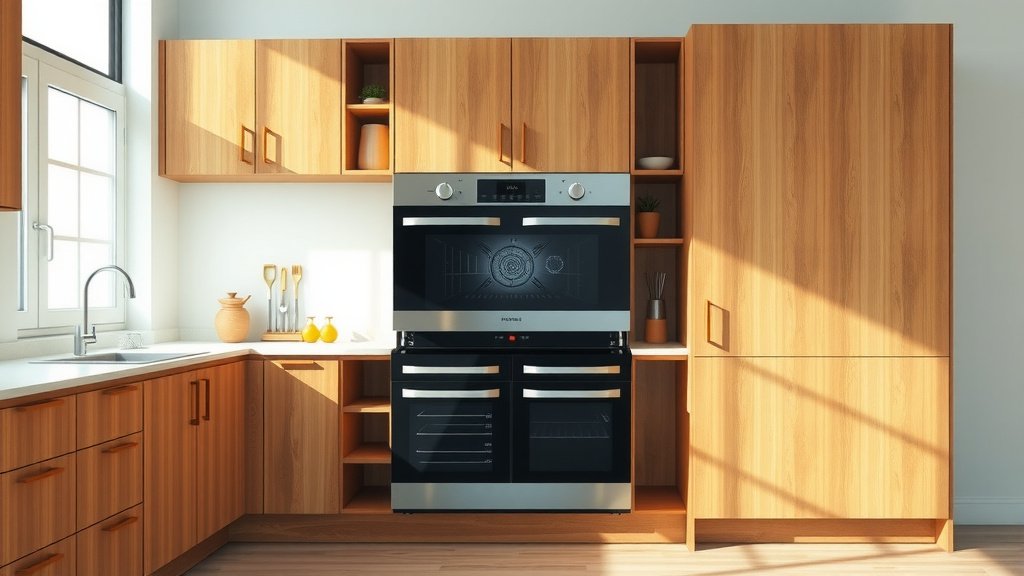
To install a double oven, you’ll first need to carefully measure your cabinet opening and confirm your electrical supply is compatible with the new unit’s requirements before wiring and securing it.
Successfully installing a double oven involves safely connecting its electrical wiring, precisely aligning the appliance within the wall cavity, and securing it firmly to prevent movement.
Too long, didn’t read? Here’s the quick rundown for installing your double oven:
- Always check your cabinet dimensions and electrical hookup for compatibility.
- Safety is key; disconnect all power at the circuit breaker first.
- Carefully wire the oven, matching colors according to the manual.
- Gently lift and slide the oven into its prepared cabinet opening.
- Secure the unit with screws and then test all oven functions thoroughly.
How To Install A Double Oven?
Installing a double oven might seem like a big project, but with the right preparation and careful steps, you can do it. You’re essentially dealing with a heavy appliance that needs precise electrical connections and a snug fit into your kitchen cabinetry.
Many experts say that taking your time and following the manufacturer’s instructions is your best approach. It’s like building a large LEGO set; each step matters for the final, working product.
Why a Double Oven? More Than Just Cooking!
Having a double oven changes your kitchen game, right? You can roast the turkey in one oven and bake sides in the other. It really opens up possibilities for big meals and entertaining.
We found that many homeowners upgrade for the convenience and flexibility it offers. It’s not just about cooking more, it’s about cooking smarter and with less stress during busy times (Consumer Reports).
Safety First, Always! Protecting Yourself and Your Home
Before you even think about grabbing tools, remember this: electricity and heavy appliances demand respect. This isn’t a task to rush through, so let’s prioritize your well-being.
Many safety guidelines point to disconnecting the power supply as the absolute first step. Head to your home’s main circuit breaker and flip off the breaker that controls your kitchen’s oven circuit. This is non-negotiable.
Tools and Materials You’ll Need: Your Installation Arsenal
Think of this as your mission prep. Having the right tools makes the job smoother and safer. You don’t want to be halfway through and realize you’re missing something important.
- Flathead and Phillips screwdrivers
- Wire strippers and cutters
- Electrical tape
- Voltage tester (non-contact is great!)
- Measuring tape
- Pencil or marker
- Level
- Gloves for protection
- A sturdy hand truck or dolly (for moving the new oven)
- At least one helper – this oven is heavy!
Checking Your Electrical Supply: The Power Source
A double oven requires a specific electrical setup, usually a 240-volt circuit. Your existing oven might have used this, but it’s always smart to double-check before you start.
We found that consulting the new oven’s manual is key here. It will list the exact voltage and amperage requirements. Your home’s electrical panel and wiring must match these numbers (National Electrical Code).
Measuring Your Cabinet Opening: The Perfect Fit
Imagine unwrapping your beautiful new oven, only to find it doesn’t quite fit. That’s a nightmare we want to avoid! So, grab your tape measure and let’s get precise.
Measure the width, height, and depth of your current cabinet opening. Compare these numbers against the specifications in your new double oven’s manual. Remember, a snug fit is good, but forcing it is not.
Old Oven Removal: Out with the Old
If you’re replacing an old unit, this is your first physical step. Remember, the old oven is likely heavy too, so take care and consider using that helper.
First, make absolutely sure the power is off. Then, locate and disconnect the wiring from the old oven. It’s usually a junction box behind the unit. Carefully pull the old oven out and move it aside.
Preparing the New Oven: Getting Ready
Your new double oven usually comes with some packaging and sometimes a power cord that needs to be attached. Read your manual for specifics.
Often, you’ll need to install the anti-tip bracket. This is a vital safety feature that prevents the oven from tipping over if someone leans on the open door. Don’t skip this step!
Wiring It Up Safely: Making the Connection
This is where precision matters most. If you’re uncomfortable with electrical work, please consider calling a certified electrician. We found that safety should always be your top priority here.
You’ll connect the oven’s wires to your home’s electrical supply. Always match the wire colors: black to black, red to red, and white or bare copper to ground. Your manual will have a clear diagram.
| Oven Wire Color | Home Wiring Color | Purpose |
|---|---|---|
| Black | Black | Hot (L1) |
| Red | Red | Hot (L2) |
| White | White | Neutral |
| Green or Bare Copper | Green or Bare Copper | Ground |
Many electrical codes require a proper ground connection to protect against shocks. Double-check all connections, ensuring they are tight and secure. Use electrical tape where necessary for extra insulation.
Securing the Oven: A Snug Home
With the wiring connected, it’s time to slide your double oven into its home. This is the heaviest part, so gather your helper and lift with your legs, not your back!
Carefully guide the oven into the cabinet opening. Once it’s in place, locate the mounting holes on the oven’s frame, usually inside the door jamb. Use the screws provided to secure the oven to the cabinet sides.
Testing Your New Double Oven: The Moment of Truth
Once everything is connected and secured, it’s time to bring your oven to life. Head back to your circuit breaker and flip the power back on.
Run a quick test. Turn on both ovens to bake and broil settings. Check if the lights work, if the fans engage, and if it starts heating up properly. Listen for any unusual sounds. Your nose might detect a new appliance smell, which is normal initially.
Common Issues and Troubleshooting: Quick Fixes
Sometimes, things don’t go perfectly on the first try. Don’t panic! We found that many issues are simple to resolve. Is the oven not turning on? Double-check the breaker and all wire connections.
If it’s heating unevenly, make sure it’s level. A slight tilt can affect performance. Always refer to your oven’s troubleshooting section in the manual for specific guidance on error codes or strange behavior.
When to Call a Pro: Knowing Your Limits
While installing a double oven is often a DIY task, there are times when calling a professional is the smartest move. If you encounter unfamiliar wiring, electrical issues, or can’t safely lift the unit, don’t hesitate.
Many experts agree that if the cabinet needs modification, or if your electrical panel requires an upgrade, a licensed contractor or electrician is your best bet. Your safety and home integrity are worth it.
Conclusion
Installing a double oven is a rewarding project that can significantly upgrade your kitchen. By following these steps, prioritizing safety, and paying close attention to your oven’s manual, you’re setting yourself up for success.
Remember, preparation is key, and don’t be afraid to ask for help with the heavy lifting or complex electrical questions. Soon, you’ll be enjoying the dual cooking power of your brand new double oven!
Frequently Asked Questions
How long does it typically take to install a double oven?
For someone with moderate DIY experience, the installation process usually takes about 2 to 4 hours, assuming the cabinet and electrical connections are already compatible. This estimate does not include the time to remove an old oven or make significant cabinet modifications.
Do double ovens use more electricity than single ovens?
Yes, a double oven, especially when both ovens are in use simultaneously, will naturally consume more electricity than a single oven. However, modern double ovens are designed with energy efficiency in mind, and individual usage will vary greatly depending on cooking habits.
Can I install a double oven if my current opening is for a single oven?
It’s generally not a direct swap. You would likely need to modify your existing cabinet opening to accommodate the larger dimensions of a double oven. This might involve cutting into cabinetry or custom building, which often requires professional carpentry skills.
What kind of electrical connection does a double oven need?
Most double ovens require a dedicated 240-volt electrical circuit. The specific amperage (e.g., 30 amp or 40 amp) will be listed in your oven’s installation manual. It’s important to verify your home’s wiring and breaker panel can support these requirements.
Is it safe to install a double oven by myself?
While many experienced DIYers can safely install a double oven, it involves heavy lifting and working with high-voltage electricity. If you’re unsure about any step, especially the electrical connections, it’s always safest to consult a professional electrician or appliance installer.
