
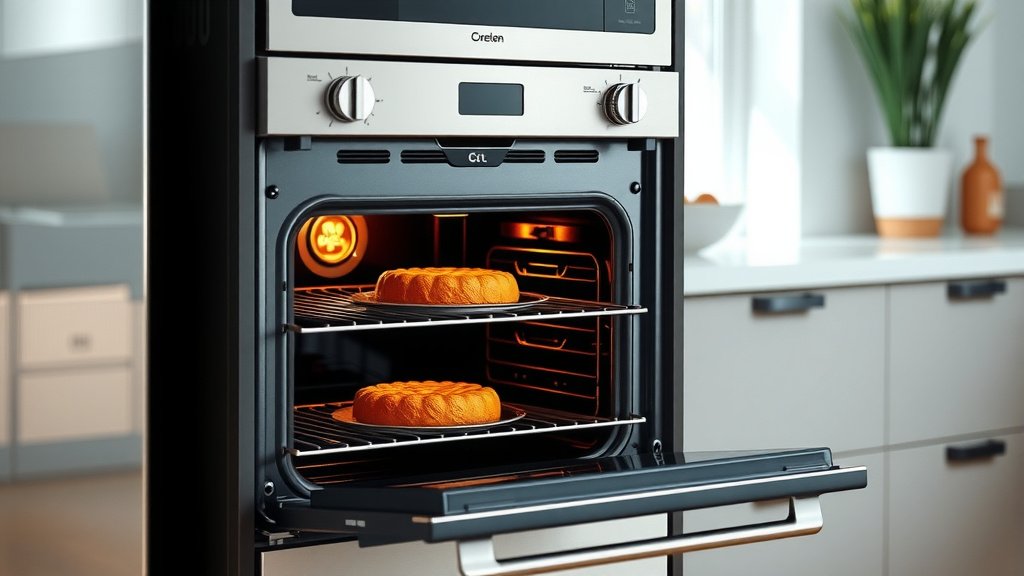
To bake in a double oven, you can prepare two dishes requiring similar temperatures or different ones simultaneously by using each oven cavity independently. This allows for efficient meal preparation, especially when hosting or cooking larger quantities of food.
You effectively double your baking capacity, letting you cook a main dish in one oven and a side or dessert in the other, simplifying complex meal timing and keeping everything warm.
- A double oven allows you to bake two different dishes at potentially two different temperatures.
- You can cook multiple items like a casserole and cookies, or a roast and a pie, all at once.
- For best results, always preheat both oven cavities you plan to use thoroughly.
- Strategic rack placement and understanding your oven’s hot spots are important for even cooking.
- This appliance is a true time-saver for holiday meals or everyday cooking for a larger household.
How To Bake In A Double Oven?
Baking in a double oven lets you cook multiple dishes at once, either at the same temperature or different ones. It’s like having two kitchens in one, making meal prep much smoother.
Understanding Your Double Oven
A double oven offers two independent cooking spaces, usually stacked one above the other. This setup is a game-changer for home cooks who frequently prepare large meals or multiple dishes.
What Makes a Double Oven Special?
Imagine Thanksgiving dinner without the oven juggle. That’s the power of a double oven. You get separate temperature controls and often separate cooking functions for each cavity. This flexibility is a huge advantage over a single oven.
For example, you can roast a turkey at a higher temperature in the bottom oven while baking a delicate pie at a lower setting in the top. It truly simplifies complex cooking scenarios, saving you time and stress.
Top Oven vs. Bottom Oven
Typically, the top oven is smaller and heats up faster. It’s often ideal for smaller items like casseroles, pizzas, or cookies. The bottom oven is usually larger and might be better for big roasts or multiple baking sheets.
Some models also feature different cooking technologies in each oven. We found that certain top ovens are equipped with a strong broiler, while the bottom might have more advanced convection capabilities (Consumer Reports).
Setting Up for Success
Before you start tossing food into both ovens, a little preparation goes a long way. Think of it like planning a road trip; you wouldn’t just jump in the car, right?
Calibrating Oven Temperatures
Even new ovens can have slight temperature variations. Many experts say it’s wise to test your oven’s accuracy. You can use an inexpensive oven thermometer for this (Mayo Clinic).
If you find a significant difference, you might need to adjust your cooking times or even consider calling a technician. Knowing your oven’s true temperature helps prevent over or under-baking.
Preheating Smartly
Always preheat both ovens you plan to use. This isn’t just a suggestion; it’s a rule for consistent results. Allow at least 15-20 minutes, or even longer for higher temperatures, especially if both are heating simultaneously.
A fully preheated oven ensures your food starts cooking at the correct temperature right away. This prevents soggy crusts or unevenly baked goods, giving you the best outcome.
Mastering Simultaneous Baking
The real magic of a double oven shines when you cook two or more things at once. It’s all about smart planning and understanding your oven’s capabilities.
Baking at the Same Temperature
This is the easiest scenario. If you have two dishes requiring the same temperature, like two trays of cookies or a casserole and a sheet pan of roasted vegetables, just pop them in. Place one in each oven cavity.
Remember to leave enough space around your dishes for proper air circulation. We found that overcrowding can lead to uneven baking (Good Housekeeping Institute).
When Recipes Need Different Temperatures
This is where your double oven truly earns its stripes. You can set the top oven to 375°F for a lasagna and the bottom to 350°F for a batch of muffins. It’s that simple.
Just ensure you keep track of which dish is in which oven and their respective cooking times. A kitchen timer for each oven can be a real helper here.
Strategic Rack Placement
Rack placement is key for even baking. Generally, for a single dish, the middle rack is best. When using both ovens, consider what you’re baking.
For items that need browning, like gratins, the top rack is good. For things that might burn on the bottom, like delicate cakes, a slightly lower rack position can be better. Many experts recommend avoiding the very top or bottom rack to prevent hot spots.
Airflow and Heat Distribution
Proper airflow prevents hot and cold spots. Don’t block vents and try to leave a few inches between dishes and the oven walls.
Think of it like a dance; every dish needs its own space to move with the heat. Good air circulation means more even cooking and consistent results across everything you bake.
The Power of Convection (If Available)
If one or both of your ovens have a convection setting, you’re in luck. Convection fans circulate hot air, cooking food faster and often more evenly. Many experts suggest reducing cooking temperature by about 25°F or shortening cooking time when using convection.
However, convection isn’t ideal for everything. Delicate items like soufflés or custards might not benefit. But for roasting vegetables, baking multiple sheets of cookies, or crisping up a casserole, it’s fantastic.
Troubleshooting Common Double Oven Hurdles
Even with two ovens, sometimes little issues pop up. It’s normal, and there are easy fixes.
Keeping Temperatures Consistent
Sometimes, opening one oven can slightly affect the temperature in the other. Try to minimize opening the doors. If you must check on a dish, do it quickly. We found that frequent door openings can drop oven temperature by 25-50°F (USDA).
Another tip is to avoid placing large, dense items too close to the oven door or vents. These items can disrupt heat flow, causing uneven cooking.
Timing Your Dishes Perfectly
This is often the biggest challenge. The best strategy is to plan. Start with dishes that have the longest cooking times. You might even bake items that finish at different times but can hold warm, like a casserole, while other things finish.
Don’t be afraid to use multiple timers. One for the top oven, one for the bottom, and maybe one for a specific step within a recipe. A little organization saves a lot of stress.
Your Double Oven Baking Checklist
- Preheat both oven cavities completely.
- Check your oven’s actual temperature with an oven thermometer.
- Place racks strategically for even heat distribution.
- Leave adequate space around dishes for airflow.
- Use separate timers for different cooking items.
- Adjust cooking times or temperatures if using convection.
Comparing Baking Scenarios in a Double Oven
To give you a clearer picture, here’s how a double oven can handle different baking needs:
| Scenario | Top Oven | Bottom Oven | Benefits |
|---|---|---|---|
| Holiday Meal Prep | Roast Turkey (325°F) | Green Bean Casserole (350°F) | Everything finishes warm and on time. |
| Everyday Baking | Chicken Breast (400°F) | Roasted Potatoes (400°F) | Full meal cooked in parallel, quick. |
| Dessert & Dinner | Chocolate Chip Cookies (350°F) | Lasagna (375°F) | Dinner and dessert ready without waiting. |
| Batch Baking | Tray of Muffins (375°F) | Tray of Scones (375°F) | Increased capacity, perfect for parties. |
Conclusion
Baking in a double oven truly elevates your cooking capabilities. It offers unparalleled flexibility, allowing you to manage multiple dishes with different temperature requirements simultaneously. By understanding your appliance, planning your meals, and paying attention to details like preheating and rack placement, you can transform your kitchen experience. This smart appliance saves time, reduces stress, and lets you create culinary masterpieces with ease. Go ahead, bake to your heart’s content!
Can I bake a cake and a roast at the same time in a double oven?
Yes, absolutely! This is one of the primary advantages of a double oven. You can set one oven to the higher temperature required for a roast and the other to the lower temperature for a cake, baking both perfectly at the same time.
Does a double oven use more energy?
A double oven generally uses more energy than a single oven if both cavities are used simultaneously. However, if you only use one cavity, it might be more energy-efficient than heating up a larger single oven for a small dish. Overall energy consumption depends on usage patterns.
What is the best rack position for even baking?
For most dishes, the middle rack position is ideal as it provides the most even heat distribution. If you’re baking multiple items or need to brown the top, you might adjust to an upper rack. For delicate items that could burn on the bottom, a lower-middle rack works well.
How do I know if my double oven temperature is accurate?
You can verify your oven’s accuracy by placing an oven thermometer inside each cavity. Set the oven to a specific temperature and let it preheat for at least 20-30 minutes. Then, read the thermometer. If there’s a significant difference, you might need to adjust your cooking times or consider professional calibration.
Can I use different cooking modes in each oven at once?
Yes, many modern double ovens allow you to use different cooking modes, such as bake in one cavity and convection roast in the other, at the same time. This versatility further enhances your cooking options and efficiency, allowing for greater customization.
