
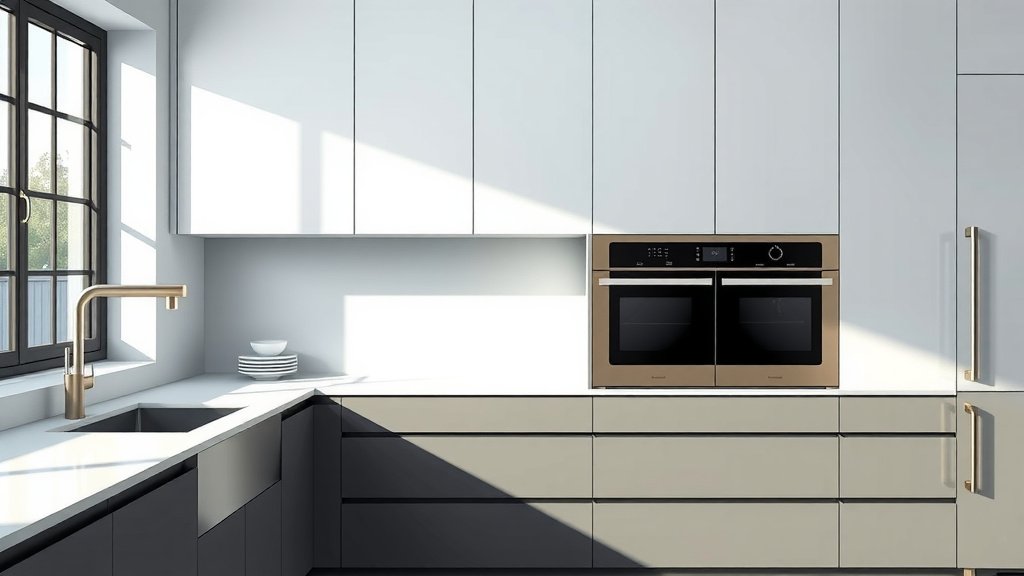
To determine what size double oven you need, measure your existing cutout or available cabinet space for a wall oven, focusing on height, width, and depth. For a double oven range, measure the width of your range opening and ensure adequate overhead clearance.
Most double ovens come in standard widths like 24, 27, or 30 inches, so knowing your exact space is your first, most important step.
Thinking about a new double oven can feel like a big project, right? Here’s a quick summary to guide you:
- Always measure your available kitchen space precisely (width, height, and depth are key).
- Standard double oven widths are commonly 24, 27, or 30 inches.
- Decide if a double wall oven or a double oven range best suits your kitchen layout and cooking style.
- Consider your family size and how often you entertain to determine the capacity you really need.
- Double-check all appliance dimensions against your measurements before making any purchase.
What Size Double Oven Do I Need?
You need a double oven that fits your kitchen’s specific cutout dimensions, typically either 24, 27, or 30 inches wide, while also meeting your cooking capacity needs. Getting this measurement right is the most important step.
Why Double Ovens Are a Kitchen Powerhouse
Double ovens are a fantastic addition for many homes. Imagine baking cookies in one oven while roasting a chicken in the other, all at different temperatures. It’s incredibly convenient.
This setup significantly cuts down on cooking time for large meals. It also gives you amazing flexibility, especially around holidays or when entertaining guests (Cook’s Illustrated).
Choosing the right size means you can unlock all these benefits without any installation headaches. We found that most homeowners appreciate the extra space.
Understanding Standard Double Oven Dimensions
When you start looking at double ovens, you’ll notice they generally come in a few standard widths. These are usually 24 inches, 27 inches, or 30 inches wide.
The height and depth can vary more, depending on the manufacturer and specific model. This is why careful measurement is absolutely essential for a perfect fit.
Let’s look at the most common types and their typical dimensions.
Wall Oven vs. Double Oven Range: What’s the Difference?
Before you measure, it’s good to know if you’re looking for a double wall oven or a double oven range. Each has its own measurement needs.
A double wall oven is built directly into your cabinetry. It frees up floor space and can be installed at eye level for easier access.
A double oven range combines a cooktop with two ovens below it, typically fitting into the same space as a standard single range. This can be a great space-saving option if you lack wall space.
Measure Up: Getting Your Kitchen Ready
Grab your tape measure. This step determines everything. Always measure the existing opening if you’re replacing an old unit, or the cabinet space if you’re installing new.
Measure three key dimensions: width, height, and depth. Jot these down carefully. We found that a small error here can lead to big problems later.
Key Measurements for Wall Ovens
For a double wall oven, you’ll measure the cutout in your cabinet.
- Width: Measure from inside edge to inside edge of the cabinet opening.
- Height: Measure from the top inside edge to the bottom inside edge of the opening.
- Depth: Measure from the front of the cabinet opening to the back wall. Remember to account for any pipes or electrical outlets.
Most manufacturers provide a “cutout dimensions” guide. Your measurements should closely match these requirements for the oven you select.
Measuring for a Double Oven Range
If you’re considering a double oven range, you’ll measure the space between your countertops.
You’ll primarily need the width of the opening. Most ranges are standard 30-inch widths. You’ll also want to note the depth from the wall to the front of your cabinet.
Additionally, check the overhead clearance needed for the cooktop and controls. This helps ensure it doesn’t interfere with over-the-range microwaves or cabinets.
Here’s a general guide for common double oven sizes, but always verify with specific product specs:
| Oven Type | Common Width (Inches) | Typical Height (Inches) | Typical Depth (Inches) |
|---|---|---|---|
| 24-inch Double Wall Oven | 23.5 – 24 | 49 – 52 | 23 – 25 |
| 27-inch Double Wall Oven | 26.5 – 27 | 50 – 52.5 | 23 – 25 |
| 30-inch Double Wall Oven | 29.5 – 30 | 51 – 53.5 | 23 – 25 |
| 30-inch Double Oven Range | 29.8 – 30 | 35.5 – 36 (to cooktop) | 26 – 28 (including handles) |
Considering Your Cooking Habits
Think about how you cook. Are you a frequent baker who needs two separate temperatures often? Or do you mainly use one oven and just need a little extra space for holiday feasts?
If you rarely use both ovens, a smaller 24 or 27-inch model might be plenty. However, if you often host large gatherings, a 30-inch double oven offers the most internal capacity.
Many experts say to buy the largest internal capacity that comfortably fits your space and budget (Good Housekeeping).
Family Size and Entertaining Needs
A larger family or a love for entertaining definitely points towards needing more oven space. Two smaller ovens might not provide the volume you need for a turkey and multiple side dishes.
A 30-inch double oven generally gives you the most flexibility for multiple large items. This can really make a difference on Thanksgiving!
Kitchen Layout and Cabinetry
Your kitchen layout plays a huge role. Do you have a dedicated cabinet stack for a wall oven? Or is your kitchen designed for a traditional range placement?
If you’re planning a kitchen renovation, you have more freedom. If you’re replacing an existing appliance, you’re usually limited to the current cutout size.
Remember that the new oven’s aesthetic should also blend with your current kitchen design. We found that mismatched appliances can stick out.
Beyond Dimensions: Other Important Factors
Once you nail down the size, a few other things are worth considering. These can greatly impact your satisfaction with your new double oven.
Installation and Venting
Double ovens, especially wall models, require specific electrical connections. Ensure your kitchen wiring can handle the power requirements of your chosen appliance.
Proper venting is also important, particularly for gas models. Consult with an electrician or plumber if you are unsure about your home’s capabilities (Electrical Safety Foundation International).
Energy Efficiency
Look for ENERGY STAR certified models. These ovens are designed to use less energy, which can save you money on utility bills over time.
While the initial cost might be slightly higher, the long-term savings can be worth it. Research often connects energy-efficient appliances with lower operating costs (Department of Energy).
Smart Features and Technology
Many modern double ovens come with smart features. Think about Wi-Fi connectivity, self-cleaning cycles, or convection baking options.
Do these features matter to you? They can add convenience, but they might also increase the price. Decide what’s truly important for your cooking style.
Making Your Final Decision: A Quick Checklist
Ready to choose? Here’s a simple checklist to guide you:
- Did I measure my cutout or opening three times?
- Does the oven’s capacity match my cooking and entertaining needs?
- Does it fit my budget and aesthetic preferences?
- Have I confirmed the electrical or gas requirements?
- Is there enough clearance for doors and controls?
Conclusion
Choosing the right double oven size doesn’t have to be overwhelming. Start with accurate measurements of your available space. Then, consider your cooking habits, family size, and kitchen layout.
Whether you opt for a 24, 27, or 30-inch model, ensure it aligns with both your practical needs and your culinary ambitions. A carefully chosen double oven will serve as a reliable and versatile center for your kitchen for many years.
What is the most common double oven size?
The most common double oven size is 30 inches wide, offering the most internal cooking capacity and fitting into standard cabinet dimensions for many homes.
Can I replace a single oven with a double oven?
Replacing a single oven with a double oven is often possible if you have sufficient cabinet space above or below the existing opening. You would likely need to modify or install new cabinetry to accommodate the double oven’s greater height.
Do all double ovens require a 240V outlet?
Yes, nearly all electric double ovens, whether wall ovens or ranges, require a dedicated 240-volt electrical outlet. Gas models will need a 120-volt outlet for electronic controls and an appropriate gas line.
How much space do I need around a double oven for ventilation?
Manufacturers typically specify minimum clearances for ventilation around double ovens in their installation guides. Generally, you need a small amount of space (often 1/8 to 1/4 inch) on the sides for air circulation, though the primary venting happens through the oven’s own internal system.
Should I get a double wall oven or a double oven range if I have limited space?
If you have limited space, a double oven range might be a better choice as it combines the cooktop and two ovens into one appliance that fits a standard range opening. Double wall ovens require dedicated cabinet space that might not be available in smaller kitchens.
