
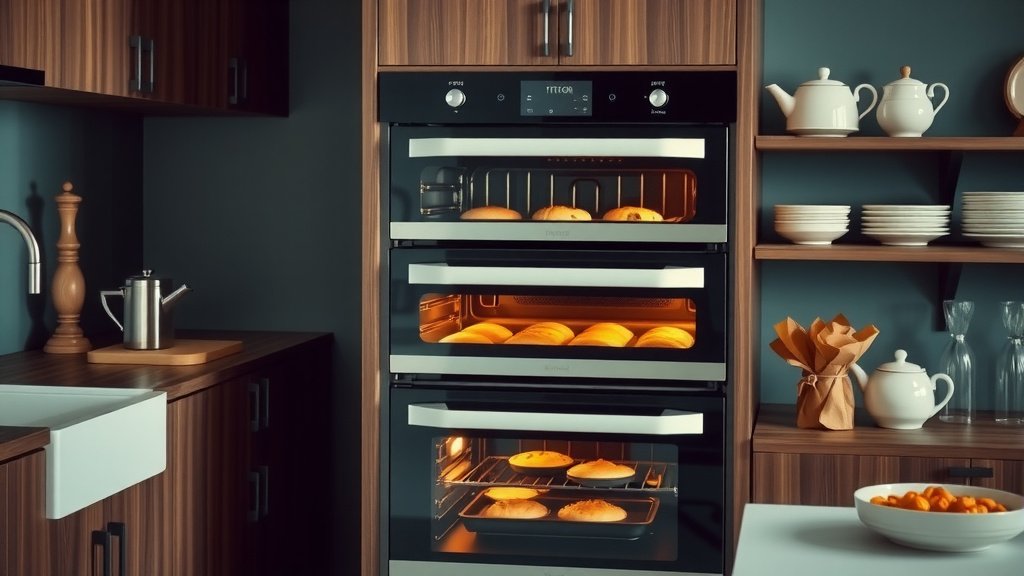
To use a double oven for entertaining, strategically plan your menu around different cooking temperatures and times, leveraging each oven cavity for separate dishes like a roast in one and sides or desserts in the other.
This allows you to cook multiple items simultaneously at their optimal settings, making your entertaining smoother and more efficient.
Here’s the quick scoop on mastering your double oven for your next party:
- Plan your menu with dishes needing different temperatures or timings.
- Use one oven for high-heat items and the other for lower-temp sides or desserts.
- Prep as much as possible beforehand to save time on the big day.
- Don’t be afraid to utilize both ovens for maximum cooking power.
- It truly transforms your entertaining experience, making it less stressful.
How To Use A Double Oven For Entertaining?
Using a double oven for entertaining means orchestrating your menu to maximize both cooking cavities simultaneously.
You can bake a large turkey in one oven while roasting vegetables or keeping appetizers warm in the other, simplifying meal preparation for guests.
Why Double Ovens Are Your Entertaining Secret Weapon
Hosting a dinner party can feel like a culinary juggling act, right? You’re trying to bake, roast, and keep everything warm at once. This is where a double oven truly shines. It’s like having an extra set of hands in the kitchen, giving you unmatched flexibility.
Think of your double oven as a powerful kitchen assistant. It removes a lot of the stress associated with timing multiple dishes, letting you focus on your guests. Many home cooks discover that this appliance becomes central to their entertaining strategy.
Stress-Free Meal Prep
Imagine your main course needs a high temperature while a delicate dessert bakes at a lower one. With a single oven, you’re forced to wait, or compromise. A double oven lets you cook both at their ideal settings, saving you precious minutes and minimizing worry.
We found that having two separate ovens greatly reduces the rush during the final hour. You can cook a large roast in one section and casseroles in the other, without any temperature conflicts. This means less running around and more enjoying your own party.
Serving Hot Food Always
One of the biggest challenges when entertaining is keeping all the food hot until it’s time to serve. A double oven solves this beautifully. You can use one oven for active cooking and the second, lower-temperature oven to simply hold cooked items at a warm, ready-to-eat state.
Many experts say this is a key benefit, ensuring every dish reaches the table perfectly warm (culinary guides). No more cold side dishes ruining a beautifully prepared main course. Your guests will notice the difference!
Mapping Out Your Menu Strategy
The secret to mastering your double oven for entertaining starts with smart menu planning. Don’t just pick dishes; think about their cooking needs. What temperatures do they require? How long do they bake or roast?
Consider dishes that have similar cooking times but different temperatures. Or, perhaps dishes that finish cooking and can comfortably rest in a warming oven. This thoughtful approach helps you use both ovens to their fullest potential.
Temperature Zones Explained
Your double oven gives you two distinct temperature zones. You might have one oven set to 400°F for crispy roasted vegetables and the other at 325°F for a slow-cooked chicken or a bubbling lasagna. This flexibility is what makes entertaining easier.
We found that assigning specific roles to each oven works well. One could be your “hot zone” for searing or browning, and the other your “gentle zone” for baking or slow roasting. This simplifies the cooking process immensely.
Timing Your Dishes Right
Successful entertaining often comes down to timing. With two ovens, you can stagger your cooking. Perhaps your main dish goes in an hour before your side dishes. Then, when the main dish rests, the sides can finish perfectly.
Research often connects proper timing with a less stressful hosting experience. It’s about creating a smooth flow rather than a chaotic sprint. You can even use one oven to keep rolls warm while dessert bakes in the other.
Prepping Like a Pro: Ahead of Time
The hours leading up to a party can be hectic. That’s why pre-preparation is your best friend when using a double oven for entertaining. Anything you can chop, mix, or partially cook in advance will save you immense stress later.
This strategy allows you to calmly load your ovens when the time comes. Many successful hosts swear by doing as much as possible the day before, or even earlier. It frees you up to enjoy your guests.
The Power of Partial Cooking
Some dishes, like certain casseroles or roasted vegetables, can be partially cooked beforehand. Then, on the day of the party, they only need a final blast in one of your ovens to heat through and brown. This is a huge time-saver.
For example, you might par-bake a potato gratin or pre-roast root vegetables. Then, pop them into an oven at 375°F for 20 minutes while your main course finishes in the other. It’s a smart way to manage your cooking load.
Maximizing Space and Efficiency
You have two ovens, but that doesn’t mean you have unlimited space. Think about how to use each cavity efficiently. Choosing the right size baking dishes and arranging them well helps. Don’t try to cram too much in.
Air circulation is key for even cooking (home economics studies). Give your dishes room to breathe. Using the appropriate rack levels also plays a significant role in getting everything cooked perfectly.
Rack Placement Matters
Different dishes cook best on different racks. Hotter, faster cooking often happens on middle or upper racks. Lower racks are good for items that need more time or a gentler heat, like a large roast. Knowing this helps optimize your double oven.
When you have two ovens, you can dedicate one to items needing specific rack positions. Perhaps all your desserts go on the middle rack of the smaller oven, while main dishes get the lower rack in the larger oven.
Tips for Different Courses
Let’s talk practical application for your party menu. Your double oven excels at handling the variety of a multi-course meal. You can tackle appetizers, main dishes, sides, and desserts without breaking a sweat.
Consider how each course might benefit from its own oven. This approach helps maintain ideal serving temperatures and freshness for every item you present to your guests.
Appetizers and Sides
Imagine keeping warm appetizers like mini quiches or sausage rolls in one oven at a low temperature, say 200°F, while your green bean casserole bakes at 350°F in the other. This ensures everything is hot and ready when guests arrive.
You could also crisp up party snacks in one oven while baking rolls or bread in the other. The versatility is truly fantastic for managing multiple smaller dishes that might otherwise compete for oven space.
Main Courses and Desserts
This is where the double oven truly shines for the main event. A large turkey or roast can cook slowly in one oven, while pies, cobblers, or even a sheet cake bake perfectly in the second oven at a different temperature. No more choosing between a hot dinner and a warm dessert.
Many experts suggest using the larger oven for your main course, as it often requires more space and consistent heat. The smaller oven can then handle sides or desserts with precision (kitchen appliance guides).
Common Entertaining Pitfalls to Sidestep
Even with the convenience of a double oven, a few common mistakes can trip up even the most seasoned host. Knowing these can help you avoid them and keep your party running smoothly.
It’s about making your double oven work for you, not against you. A little foresight goes a long way in preventing last-minute stress during your celebration.
The Overcrowded Oven Mistake
It’s tempting to load up an oven when you have two, but overcrowding is still a no-go. Air needs to circulate for even cooking and browning. If you pack too many dishes in, you’ll end up with unevenly cooked food.
Always give your dishes space. If you have too many items, consider which ones could be cooked on the stovetop or even served cold. Sometimes less is more for quality.
Forgetting Preheat Times
Your ovens need time to reach the correct temperature. Don’t pop food in the moment the oven alerts you it’s “ready.” Give it another 10-15 minutes to stabilize. This is especially true for baking delicate items.
Preheating properly is critical for consistent results. Remember, two ovens mean two separate preheating processes. Factor this into your timing, particularly for your first set of dishes.
Here’s a look at how you might plan your oven usage for a typical holiday meal:
| Dish | Top Oven Temp | Bottom Oven Temp | Time |
|---|---|---|---|
| Roasted Turkey | — | 325°F | 3-4 hours |
| Green Bean Casserole | 375°F | — | 30 mins |
| Dinner Rolls (warming) | 200°F | — | 15 mins |
| Apple Pie | — | 375°F (final 45 mins) | 60 mins total |
Your double oven truly offers a helping hand. Here’s a quick checklist for your next entertaining event:
- Finalize your guest list.
- Plan your menu, considering oven temperatures.
- Make a grocery list.
- Do all possible prep work the day before.
- Preheat ovens fully before adding food.
- Use oven timers for each cavity.
Conclusion
Using a double oven for entertaining transforms your hosting experience from a stressful dash to a smooth, enjoyable celebration. It’s more than just an appliance; it’s a strategic partner that gives you the flexibility and control you need.
By thoughtful menu planning, smart timing, and utilizing both cavities efficiently, you can serve a variety of hot, perfectly cooked dishes with ease. Embrace your double oven, and you’ll find entertaining becomes a real pleasure, letting you shine as a host without the kitchen chaos.
How do I preheat both ovens in a double oven?
You typically set the temperature for each oven cavity independently using their respective controls. Most double ovens allow you to preheat both at the same time, each to a different desired temperature, so you can start cooking multiple dishes simultaneously.
Can I bake and roast at different temperatures in a double oven?
Absolutely! That’s one of the primary advantages of a double oven. You can set the upper oven to a higher temperature for roasting vegetables or meats, while the lower oven bakes a cake or casserole at a completely different, lower temperature. This flexibility is what makes it ideal for entertaining.
What are the ideal dishes for double oven entertaining?
Dishes that require different cooking temperatures or finishing times are perfect. Think a large roast or turkey in one oven, while side dishes like green bean casserole, roasted potatoes, or even baked desserts like pies or cookies cook in the other. Anything that needs to be kept warm while other items finish also works well.
How do I prevent flavors from mixing between ovens?
Generally, flavors do not transfer between separate oven cavities in a double oven. The individual seals and ventilation systems are designed to keep air and odors contained within each compartment. You can confidently cook savory and sweet items at the same time without flavor interference.
Is a double oven worth it just for entertaining?
Many hosts find a double oven incredibly worthwhile for entertaining. It significantly reduces stress by allowing multi-dish cooking, better timing, and the ability to keep food warm. Beyond entertaining, it also offers great convenience for everyday meal prep, especially for larger families or batch cooking.
