
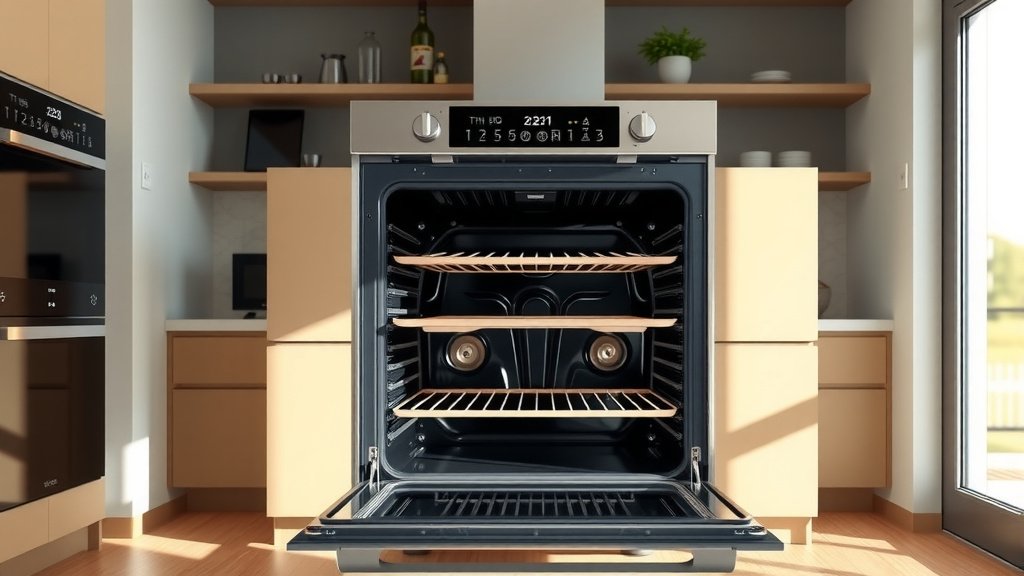
To adjust racks in a double oven, you simply pull the rack towards you until it stops, then lift the front slightly and slide it out. To reposition, align the rack with your desired guides and push it back in smoothly.
Understanding how to adjust racks in a double oven allows you to optimize heat distribution for different dishes, ensuring even cooking and perfect results every time.
- Adjusting oven racks is key for even cooking in double ovens.
- Always ensure the oven is cool before handling racks for safety.
- Higher racks are great for browning, lower for slow cooking.
- Using both ovens efficiently means matching rack position to your dish.
- Proper rack placement helps prevent burned bottoms or undercooked tops.
Ever found yourself juggling multiple dishes in your double oven, wondering why one gets perfectly golden while another burns on the bottom? The secret often lies in your oven rack placement. It’s not just about sliding them in; it’s about understanding heat and airflow. Let’s dive into how you can become a double oven rack master!
How To Adjust Racks In A Double Oven?
Adjusting racks in a double oven involves safely removing and reinserting them into different guide levels. This simple action can dramatically change how your food cooks.
Why Rack Position is So Important
Think of your oven as a heat chamber with hot air constantly moving. Different rack positions place your food in distinct zones within this chamber. A rack too high might burn the top of your casserole. A rack too low could leave your cookies with scorched bottoms.
We found that strategic rack placement directly impacts heat distribution. This means crispy crusts, even browning, and fully cooked centers are within your reach. It’s like having a superpower for your baking and roasting.
Safety Check Before You Start
Before you even think about touching those racks, safety is paramount. Always make sure your oven is completely cool. Many experts say that oven interiors can hold heat for a long time, posing a burn risk. Using oven mitts is a good habit, just in case.
Also, clear out any clutter around the oven. You want a clear path to pull racks out and put them back in. This prevents accidental slips or dropping a hot rack.
Getting to Know Your Oven Racks
Your double oven likely comes with several oven racks, usually two or three per cavity. These racks slide into guide rails on the oven’s side walls. Each rail corresponds to a different rack level. Take a moment to peek inside and count them. Notice how some racks have a slight curve or a safety stop at the front.
Some ovens even feature a gliding rack on ball bearings. These are fantastic for heavy roasts. Understanding your specific racks helps you use them most effectively.
Simple Steps to Adjust Oven Racks
Adjusting oven racks is quite straightforward once you get the hang of it. It’s like changing gears on a bike – a small move for a big difference.
Removing Racks Safely
To remove a rack, gently pull it towards you until it reaches its stop point. You’ll feel a little resistance. Then, lift the front edge of the rack slightly. This allows the back of the rack to clear the guide, letting you slide it all the way out. Some oven models might require a bit more lift than others (appliance user guides often confirm this).
Putting Racks Back In
To put a rack back, align the rack’s side rails with your desired guide level. Push the rack gently into the oven. You might need to tilt the front up slightly to get it past the initial stop. Once past the stop, it should slide in smoothly. Make sure it’s fully inserted and sitting level before closing the oven door. A loose rack could cause spills.
Finding the Best Rack Spot for Your Food
Where you place your dish truly matters. Heat rises, so the top of your oven is generally hotter. The bottom often offers more gentle, even heat.
Using the Upper Oven for Quick Cooking
The upper oven cavity is usually smaller and heats up faster. This makes it perfect for dishes needing quick browning or smaller portions. Think of cheese melting on nachos or browning the top of a casserole.
When using the upper oven, we often find that the middle or upper-middle racks work best for most baking and broiling tasks (culinary experts agree).
Lower Oven Levels for Even Roasting
The lower oven cavity provides more space, ideal for larger items like roasts or multiple baking sheets. The heat distribution tends to be more consistent lower down.
For items needing a solid base or a long, slow bake, the bottom or lower-middle rack in the larger oven is usually your friend. This prevents bottoms from burning while allowing the dish to cook thoroughly. Research often connects these lower positions with gentler, more even baking (various cooking school curricula).
When to Use Convection Rack Settings
Many double ovens come with convection settings. Convection circulates hot air with a fan, creating a more even temperature throughout the oven. This means you can often use multiple racks at once without sacrificing evenness. We find that convection is great for baking cookies or roasting vegetables on two racks simultaneously.
However, when using convection, you might need to adjust your baking time or temperature slightly downwards. Some cooking manuals suggest reducing both by about 25% or 25 degrees Fahrenheit respectively. Always check your specific oven’s manual!
Quick Tips for Double Oven Rack Use
Here’s a handy guide for common foods and their ideal rack positions. Remember, every oven is a little different, so these are starting points.
| Food Type | Ideal Rack Position | Why It Works |
|---|---|---|
| Baked Goods (Cakes, Cookies) | Middle Rack (either oven) | Even heat, uniform browning |
| Roasts (Poultry, Beef) | Lower Middle Rack (lower oven) | Gentle, thorough cooking |
| Pizzas & Breads | Bottom Rack (either oven) | Crispy crust development |
| Casseroles | Middle Rack (either oven) | Cooks through, prevents burnt top/bottom |
| Broiling | Top Rack (upper oven) | Intense direct heat for browning |
A Quick Checklist for Rack Adjustment
Feeling a bit overwhelmed? Here’s a simple checklist to keep you on track:
- Is the oven completely cool?
- Do I know which rack level is best for my dish?
- Are the racks clean and sliding easily?
- Have I checked the oven manual for specific recommendations?
- Is there enough space for proper airflow around my food?
Troubleshooting Common Rack Issues
Sometimes, racks can get a little sticky or dirty. If your racks are hard to slide, they might need a good cleaning. Built-up grease and food debris can cause friction. Many household cleaning guides suggest that a thorough cleaning with oven cleaner or even a paste of baking soda and vinegar can help. For smoother sliding, some appliance care tips suggest applying a tiny amount of vegetable oil to the rack guides. Always ensure the oven is off and cool before doing this.
Conclusion
Mastering how to adjust racks in a double oven isn’t just a kitchen chore; it’s a skill that elevates your cooking. By paying attention to where you place your dishes, you take control of heat distribution, leading to consistently better results. Whether you’re baking a delicate cake or roasting a hearty turkey, the right rack position can make all the difference. So go ahead, experiment, and find the sweet spot for all your culinary creations!
FAQ: Can I use different rack positions in each oven cavity?
Yes, absolutely! That’s one of the biggest advantages of a double oven. You can set the top oven for high-heat broiling on a top rack while the bottom oven slow-roasts a large item on a lower-middle rack. This flexibility is key to cooking multiple dishes with different requirements simultaneously.
FAQ: How do I clean sticky oven racks?
For sticky racks, many homeowners find success by soaking them in hot, soapy water overnight in a bathtub or large basin. You can also make a paste with baking soda and a little water, apply it to the racks, let it sit for a few hours, then scrub and rinse. For stubborn grime, specialized oven cleaners can be used, always following product instructions carefully.
FAQ: What if my oven racks are hard to slide?
If your oven racks are stiff, they likely need cleaning. Food debris and grease can build up on the rack and the oven guides. After cleaning, applying a very thin layer of cooking oil or graphite lubricant to the rack guides can help them slide more smoothly. Only apply a minimal amount to avoid smoking during use.
FAQ: Should I preheat the oven with the racks inside?
Yes, it’s generally recommended to preheat your oven with the racks in their desired positions. This ensures the racks themselves are hot and won’t cool down your food when you place it inside. It also helps maintain a more consistent temperature from the moment your food enters the oven.
FAQ: Can I use parchment paper on any rack level?
Parchment paper is safe to use on any rack level within its recommended temperature limits, which are usually around 400-425°F (200-220°C). Always check the parchment paper’s packaging for specific temperature ratings. Avoid using it under a broiler, as the direct, intense heat can cause it to burn.
