
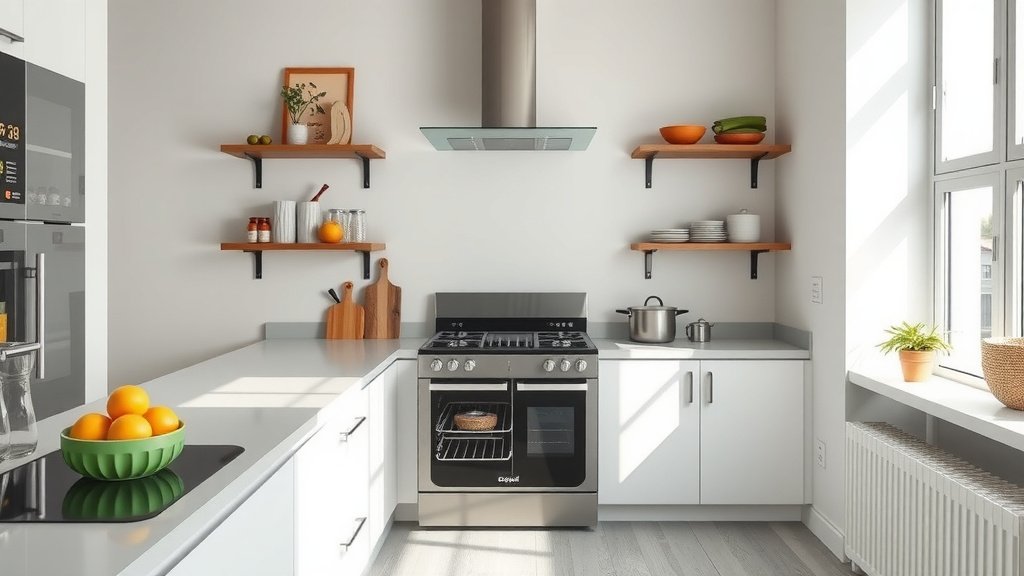
You can reduce energy use with a double oven by only heating the smaller cavity for smaller meals, matching oven size to your dish, and making smart use of residual heat.
Preheating efficiently and cooking multiple items at once also helps your double oven operate more energy-efficiently.
Here’s a quick look at how you can save energy with your double oven:
- Utilize the smaller oven cavity for single dishes to save on heating time.
- Cook multiple dishes simultaneously when both ovens are on, maximizing each use.
- Turn off the oven a few minutes early, letting residual heat finish the cooking.
- Ensure your oven door seals are tight to prevent heat loss and wasted energy.
- Use convection settings for faster cooking times and more even heat distribution.
How To Reduce Energy Use With Double Oven?
Many homeowners choose a double oven for its amazing flexibility and ability to handle large meals. However, you might wonder if all that power means higher energy bills. The good news is, with a few smart habits, your double oven can be surprisingly energy-efficient.
Let’s explore practical ways to cut down on energy use without sacrificing your cooking needs. You’ll find these tips easy to adopt and very rewarding for your wallet.
Smart Cavity Choice: Your First Energy Saver
Imagine you’re just baking a single tray of cookies or a small casserole. Do you really need to heat up a giant oven? Absolutely not! Your double oven offers a brilliant solution.
Always use the smaller oven cavity for modest cooking tasks. It heats up faster and requires less energy to maintain temperature. This simple choice makes a big difference.
Why Smaller is Often Better
Think of it like this: why turn on a stadium’s floodlights to read a book? The smaller oven is your focused spotlight. It uses less power to reach the desired temperature and holds that heat with less effort. Research by appliance experts consistently points to this as a top energy-saving strategy.
Batch Cooking for Double the Efficiency
When you do need both ovens, or even just one larger one, make it count. Planning your meals to cook multiple dishes simultaneously is a fantastic way to optimize energy.
If you’re roasting vegetables in one oven, why not bake a dessert in the other? Or, if using a single large cavity, fill it up! This approach means you’re not preheating the oven multiple times for different items.
Maximizing Your Oven’s Potential
Cooking several dishes at once means you only pay for one heating cycle. This is where your double oven truly shines, offering an advantage over a single-cavity model. Many experts say this is a key benefit of having two ovens (Energy Star guidelines).
Harnessing Residual Heat: A Clever Trick
Did you know your oven retains a lot of heat even after it’s turned off? This lingering warmth can be your secret weapon against energy waste. It’s like getting free cooking time!
For dishes with longer cooking times, try turning off the oven 5-10 minutes before the food is fully cooked. The residual heat will finish the job beautifully. This works especially well for roasted meats and casseroles.
Finishing Dishes Without Extra Power
This technique prevents the oven from drawing power for those final minutes. It’s a small adjustment, but it adds up over time, helping you reduce energy use with a double oven. Your food will still be perfectly cooked, and you’ll save a little energy.
Preheating Wisely: Don’t Waste Heat
Preheating is essential for many recipes, but it doesn’t need to be excessive. Most recipes assume you preheat, but you don’t need to leave it on longer than necessary.
Aim to put your food in as soon as the oven reaches the target temperature. We found that waiting too long after preheating simply wastes energy, as the oven cycles to maintain heat while empty.
Quick Checks for a Hot Start
Don’t open the oven door constantly to check on food either. Each time you open the door, about 25 degrees of heat escapes, forcing the oven to work harder to recover. Use the oven light instead! It helps keep that precious heat inside.
Seal the Deal: Check Your Gaskets
An oven door that doesn’t seal properly is like leaving a window open in winter. Heat leaks out, and your oven has to constantly work harder to maintain temperature. This is a silent energy drain.
Periodically inspect the rubber gasket around your oven doors. Are there any cracks, tears, or stiff spots? If so, it might be time for a replacement. A simple paper test can confirm a good seal: place a dollar bill in the door and close it. If you can pull the bill out easily, your seal might be weak.
Preventing Heat Leaks
A tight seal ensures heat stays inside, right where it belongs. This simple maintenance step can significantly reduce the energy your double oven consumes. Think of it as putting on a cozy blanket for your oven.
Here’s a quick checklist to ensure your double oven is running efficiently:
- Use the smaller oven for smaller meals.
- Bake multiple items at once.
- Check and clean oven door seals regularly.
- Use the convection setting when possible.
- Avoid frequent door opening during cooking.
- Turn off the oven a few minutes early.
Convection Power: Faster, Better Baking
Many modern double ovens come with a convection setting. If yours does, use it! Convection circulates hot air evenly throughout the oven cavity, cooking food up to 25% faster.
This means less time the oven needs to be on, directly translating to energy savings. Plus, the even heat often results in better browning and more consistent results, especially for baking and roasting.
Understanding the Benefits
When using convection, remember to adjust your recipes. You might need to lower the temperature by about 25 degrees Fahrenheit or shorten the cooking time. Studies indicate that convection ovens are generally more energy-efficient than conventional ones (Department of Energy).
Decluttering Your Oven for Better Airflow
A dirty oven with baked-on food or too many racks can hinder airflow. This makes your oven work harder to distribute heat evenly, increasing energy use.
Keep your oven clean and remove any unnecessary racks before you start cooking. We found that a clean, uncluttered oven simply performs better and uses less energy.
Internal Oven Cleanliness Matters
Just like a clear path helps you walk faster, clear space inside your oven helps heat move freely. Regular cleaning ensures your oven heats up and cooks efficiently. This is particularly true if you want to reduce energy use with a double oven.
Choosing the Right Cookware
The type of bakeware you use can also play a role in energy efficiency. Dark-colored, dull metal pans absorb heat more effectively than shiny, light-colored pans, often leading to faster cooking times.
Glass and ceramic dishes also retain heat well, meaning you might be able to lower your oven temperature by about 25 degrees Fahrenheit for some recipes. This small adjustment can save energy.
Material Matters for Heat Transfer
Here’s a quick comparison of common bakeware materials:
| Bakeware Type | Heat Absorption | Energy Efficiency Impact |
|---|---|---|
| Dark Metal | High | Good – cooks faster, may need lower temps. |
| Light/Shiny Metal | Medium | Moderate – reflects heat, potentially longer cook times. |
| Glass/Ceramic | High (retains) | Excellent – retains heat, allows lower temps. |
Strategic Meal Planning
One of the most powerful tools for reducing oven energy use is good old-fashioned meal planning. By thinking ahead, you can group oven-cooked meals together.
For example, if you plan to bake a chicken on Monday, consider also baking some sweet potatoes or a casserole for Tuesday’s dinner. This way, you heat the oven once for multiple uses. This is especially easy with a double oven.
Batch Cooking for the Week
Cooking several items in one go means less oven activation throughout the week. This reduces the number of preheating cycles and overall energy consumption. Your double oven makes this kind of efficiency a breeze.
Conclusion
Your double oven offers incredible cooking versatility, and with these smart strategies, it doesn’t have to be an energy hog. By making conscious choices about which cavity to use, how you preheat, and utilizing features like convection, you can significantly reduce your energy footprint.
Embrace these tips, from checking your seals to intelligent meal planning, and you’ll find yourself enjoying delicious meals while keeping those energy bills in check. Your double oven is a powerful tool, and now you know how to wield it with maximum efficiency!
Can I use different temperatures in each cavity of a double oven to save energy?
Yes, absolutely! The main advantage of a double oven is its ability to operate each cavity at different temperatures. This allows you to cook dishes with varying heat requirements simultaneously, which is more energy-efficient than using two separate single ovens or heating one large oven to two different temperatures consecutively.
Does the self-cleaning feature on a double oven use a lot of energy?
The self-cleaning cycle does use a significant amount of energy because it heats the oven to a very high temperature (around 800-900°F) for several hours to incinerate food residue. While convenient, it’s best to use it sparingly and strategically, perhaps after heavy use or when energy rates are lower, if applicable in your area.
Is it more energy-efficient to use a toaster oven for small items instead of a double oven?
Generally, yes. For very small tasks like toasting bread, reheating a single slice of pizza, or baking a couple of cookies, a toaster oven or even a microwave is far more energy-efficient than heating up even the smaller cavity of a double oven. Smaller appliances require less power and heat up much faster.
How often should I calibrate my double oven for optimal energy use?
Many experts recommend checking your oven’s calibration every one to two years. An uncalibrated oven might run hotter or colder than the set temperature, causing you to overcook, undercook, or extend cooking times, thus wasting energy. A simple oven thermometer can help you verify its accuracy.
Does opening the oven door frequently really impact energy use significantly?
Yes, it does! Each time you open the oven door, a substantial amount of heat escapes (some sources estimate up to 25-50°F). The oven then has to work harder and use more energy to regain the lost temperature. Rely on the oven light or timer alerts instead of peeking inside too often.
