
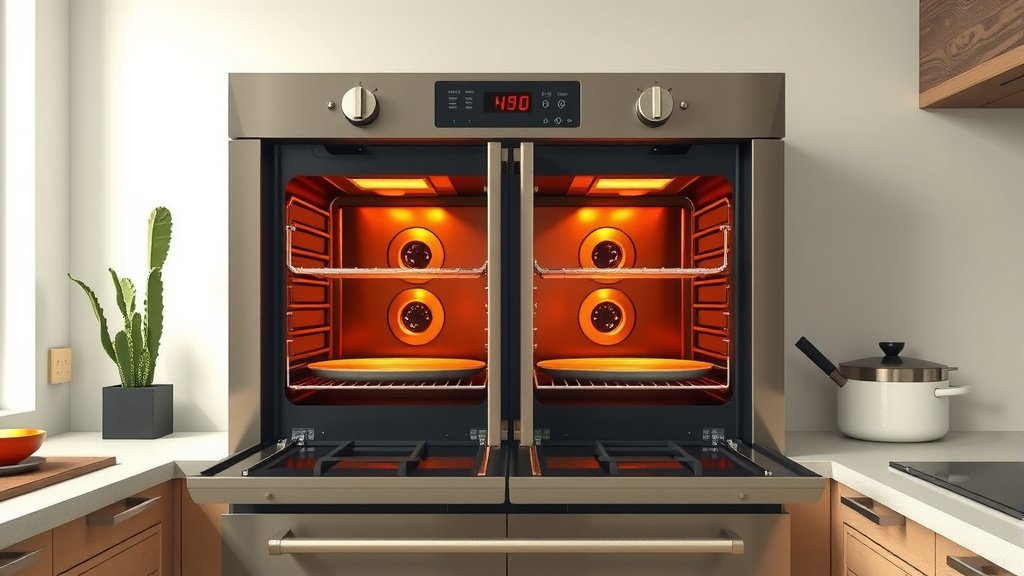
A double oven can typically reach temperatures ranging from a warm 170°F (77°C) up to a scorching 550°F (288°C), depending on the model and specific cooking needs.
Both upper and lower compartments of a double oven are designed to achieve these high temperatures independently, giving you flexible cooking options for various dishes simultaneously.
- Double ovens can heat from 170°F to 550°F, offering great cooking versatility.
- You can set each oven cavity to a different temperature at the same time.
- Upper ovens often heat quicker, while lower ovens accommodate larger items well.
- Accurate temperature control is vital for successful baking and roasting.
- These appliances save time and energy, especially when preparing big meals.
How Hot Does A Double Oven Get?
Most double ovens can heat up anywhere from a gentle 170°F (77°C) to a very hot 550°F (288°C), giving you immense flexibility for various cooking tasks.
This wide temperature range is one of the main benefits of having a double oven in your kitchen. You’re essentially getting two distinct cooking environments.
Understanding Double Oven Temperatures
Think of a double oven as two separate cooking units stacked together. Each section has its own heating elements and controls.
This means you can bake a delicate cake at 350°F (175°C) in one oven while roasting a chicken at 425°F (218°C) in the other.
Many experts say this independent temperature control is what truly sets them apart from single ovens (Appliance Standards Program).
Typical Temperature Range for Baking
For most baking needs, you’ll find yourself using temperatures between 325°F (163°C) and 400°F (204°C). This range is perfect for cookies, cakes, and casseroles.
The consistent heat of a double oven helps ensure your baked goods come out evenly cooked and golden brown.
Reaching High Roasting Temperatures
When it comes to roasting meats or vegetables, you might need higher temperatures. Double ovens easily hit 400°F (204°C) to 475°F (246°C).
This allows for a beautiful sear on your roasts while cooking them thoroughly inside. We found that many recipes suggest these higher heats for optimal texture.
Broil and Self-Clean Settings
Most double ovens also feature a broil setting, often reaching temperatures well over 500°F (260°C). This is fantastic for caramelizing, toasting, or finishing dishes.
Additionally, many models include a self-cleaning cycle. During this process, the oven can reach extremely high temperatures, sometimes exceeding 800°F (427°C), to incinerate food residue (Consumer Reports).
Remember, you should always remove racks before starting a self-clean cycle to protect them.
Why Two Ovens are Better Than One for Heat Control
Having two ovens means you’re not juggling cooking times and temperatures for different dishes. No more cold side dishes waiting for the main course to finish!
It’s like having an extra pair of hands in the kitchen, helping you maintain perfect heat for every component of your meal.
Factors Affecting Your Oven’s Heat
Several things can influence how hot your double oven actually gets and maintains its temperature. Are you getting a consistent bake?
Things like insulation quality, the oven’s age, and even how often you open the door play a role. A well-insulated oven holds heat more efficiently.
Oven Calibration Matters
Is your oven truly hitting 350°F when you set it there? Oven temperatures can drift over time. Many experts suggest checking calibration occasionally.
You can use an inexpensive oven thermometer to test accuracy. If it’s off, sometimes your oven can be recalibrated, often a simple adjustment (GE Appliances).
This simple step ensures your recipes turn out as expected, every single time. Accurate temperature is critical for baking success.
Upper vs. Lower Oven: Any Heat Differences?
While both cavities are designed to reach the same maximum temperatures, there can be subtle differences in how they perform.
We found that the upper oven often preheats faster due to its smaller size. The lower oven, being larger, sometimes has a more even heat distribution for big items.
| Oven Cavity | Typical Use | Common Temperature Range |
|---|---|---|
| Upper Oven | Quick preheat, broiling, smaller dishes, casseroles | 350°F – 550°F (175°C – 288°C) |
| Lower Oven | Large roasts, multiple sheet pans, slow cooking | 300°F – 450°F (149°C – 232°C) |
Energy Efficiency and Double Ovens
You might wonder if two ovens use more energy. It’s true that running both at full blast can consume more power.
However, for smaller meals, using just the smaller upper oven can be more energy-efficient than heating a full-sized single oven (Energy Star).
This means you can actually save energy if you cook strategically. Think about your cooking needs each day.
Preheating for Optimal Heat Performance
Always preheat your double oven fully before putting food inside. This is not just a suggestion; it’s a cooking rule!
Preheating ensures the oven cavity reaches and stabilizes at the set temperature. This prevents uneven cooking and helps food cook as intended.
Waiting for the preheat signal means your food experiences consistent heat from the moment it enters. It’s a small step that makes a big difference.
Maintaining Your Oven’s Heat Performance
To keep your double oven heating correctly for years, some regular care is helpful. Regular cleaning prevents built-up grease from impacting efficiency.
Also, ensuring the oven door seals are intact is crucial. A faulty seal lets heat escape, making your oven work harder and leading to temperature fluctuations.
- Inspect door seals regularly for damage.
- Clean spills promptly to prevent baked-on residue.
- Use an oven thermometer to check temperature accuracy.
- Avoid frequent door opening during cooking.
- Refer to your oven’s manual for specific care instructions.
Conclusion
A double oven offers incredible versatility, allowing you to cook at a broad range of temperatures, typically from 170°F to 550°F, in two independent cavities.
This means you can tackle complex meals with ease, cooking different dishes at their ideal temperatures simultaneously. Understanding its capabilities ensures your culinary creations are always perfectly cooked.
With proper care and calibration, your double oven will continue to be a powerful, flexible tool in your kitchen for many years.
How do I know if my double oven is reaching the correct temperature?
You can verify your double oven’s temperature accuracy by placing a standalone oven thermometer inside each cavity. Compare its reading to your oven’s digital display or knob setting. If there’s a significant difference, you might need to recalibrate your oven.
Can both sections of a double oven be set to different temperatures at the same time?
Yes, absolutely! That’s one of the primary advantages of a double oven. Each oven cavity has its own controls and heating elements, allowing you to set completely different temperatures simultaneously for different dishes.
Is it more energy efficient to use a double oven than a single oven?
It depends on what you’re cooking. For smaller dishes, using just one of the smaller double oven cavities can be more energy-efficient than heating up a large single oven. However, running both ovens at high temperatures for extended periods will consume more energy than a single oven.
What is the typical maximum temperature for a double oven’s self-cleaning cycle?
During a self-cleaning cycle, a double oven can reach very high temperatures, often exceeding 800°F (427°C). This extreme heat incinerates food debris into ash, making it easy to wipe away once the cycle is complete and the oven has cooled.
Are double ovens hotter at the top or bottom?
While both the upper and lower cavities of a double oven are designed to reach the same set temperature, the upper oven may sometimes preheat faster or feel slightly hotter due to its smaller size and closer proximity to the top heating element. The lower oven often provides a more even heat for larger items.
