
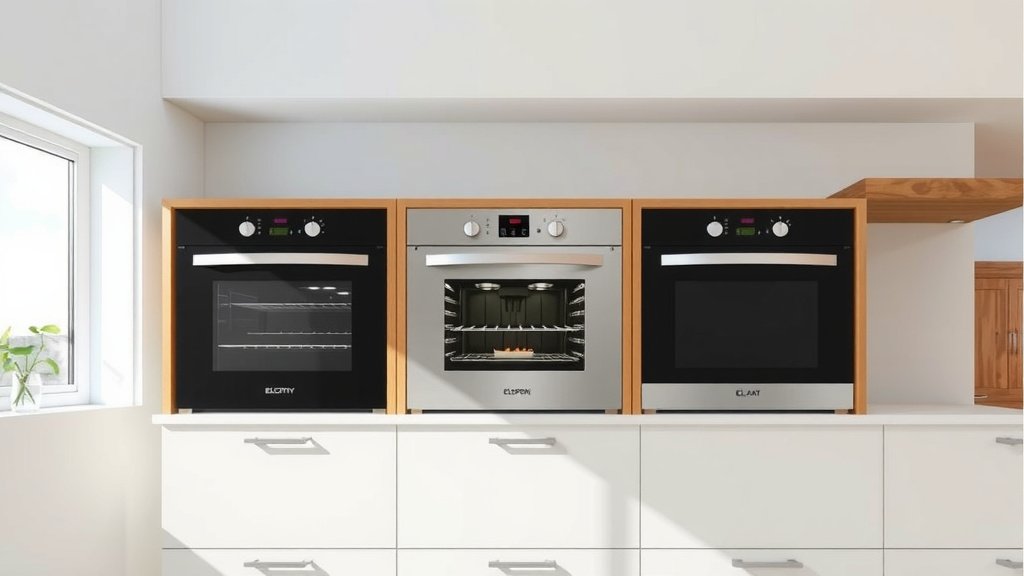
Generally, convection ovens use the least electricity for cooking most meals.
Their efficient air circulation helps food cook faster and at lower temperatures, making them a smart choice for saving energy.
TL;DR: Here’s a quick rundown to save you energy:
- Convection ovens are your best bet for overall energy savings.
- Small countertop ovens like toaster ovens are great for smaller meals.
- Microwaves are unbeatable for reheating or quick cooking, but not traditional baking.
- Proper usage and maintenance are just as vital as the oven type.
- Always match your oven size to the meal to avoid wasting energy.
Which Oven Type Uses Least Electricity?
If you’re asking about saving on your electricity bill, you’re not alone. Many of us are looking for ways to trim down household costs. When it comes to ovens, the answer often points towards convection technology.
Convection ovens are designed with a fan and exhaust system. This setup circulates hot air evenly around your food. Think of it as a gentle, warm breeze speeding up the cooking process.
Convection Ovens: The Energy Savers
Why do convection ovens shine in energy efficiency? It’s all about that airflow. The circulating air ensures consistent heat distribution. This means you can often cook at lower temperatures and for shorter times.
Lower temperatures and shorter times directly translate to using less electricity. We’ve found that they can cook up to 25% faster than conventional models (Energy Star). Imagine getting dinner on the table sooner and with less guilt about the power usage!
How Convection Works Its Magic
A small fan inside the oven moves the hot air around. This air movement helps transfer heat more effectively to your food. It removes the “cold spots” you might find in a regular oven.
Many experts say this process prevents a “halo” of cooler air from forming around your dish. It makes sure every inch of food gets cooked uniformly. This efficiency is a big win for your wallet.
Conventional Ovens: The Traditional Choice
Conventional ovens, sometimes called thermal ovens, are what most of us grew up with. They use heating elements at the top and bottom to create heat. This heat then radiates into the oven cavity.
These ovens don’t have a fan for air circulation. The heat rises naturally, which can sometimes lead to uneven cooking. This means you might need to rotate your dishes or cook them longer.
Energy Use in Conventional Ovens
Because there’s no forced air, conventional ovens typically require higher temperatures and longer cooking times. This directly translates to more electricity consumption per cooking session. They’re still good for many recipes, but less energy-efficient.
For example, if a recipe calls for 350°F in a conventional oven, you might use 325°F in a convection oven. That small temperature difference, combined with shorter cooking times, adds up to savings.
Countertop and Toaster Ovens: Small but Mighty
For small tasks, a full-size oven can be overkill. That’s where countertop ovens or toaster ovens become heroes. They are much smaller, meaning there’s less space to heat up.
Heating a smaller space requires less energy. If you’re just baking a couple of potatoes or toasting some garlic bread, these small appliances are incredibly efficient. Don’t underestimate their power!
When to Use a Toaster Oven for Energy Savings
Think about reheating leftovers, baking a single serving, or making a quick snack. A toaster oven heats up faster and uses significantly less electricity than your main oven. It’s like using a tiny skillet instead of a huge pot for one egg.
We found that for meals smaller than a full casserole, a toaster oven can save you a lot of energy. It’s a smart choice for solo meals or light cooking tasks (Department of Energy).
Microwave Ovens: Speed and Specificity
While not a traditional “oven” for baking, the microwave deserves a mention for its unique efficiency. Microwaves heat food by exciting water molecules directly. This makes them incredibly fast for specific tasks.
For reheating, defrosting, or quickly cooking certain foods, nothing beats a microwave for energy use. It heats the food itself, not the air around it, which is a very efficient process. Just remember, it won’t give you that crispy roast chicken skin!
Key Factors That Impact Your Oven’s Electricity Use
The type of oven is just one piece of the puzzle. How you use and maintain your oven also plays a huge part in its electricity consumption. Let’s look at some important considerations:
- Oven Size: A larger oven means more space to heat, using more energy.
- Insulation Quality: Better insulated ovens hold heat in more effectively.
- Cooking Habits: Frequent door opening or unnecessary preheating wastes energy.
- Age of Oven: Older ovens might be less efficient due to worn seals or technology.
- Cleanliness: A dirty oven can actually be less efficient, as grime absorbs heat.
Practical Steps to Slash Your Oven’s Energy Bill
Even with the most energy-efficient oven, you can always do more. Here are some smart habits you can pick up:
Match Oven Size to Meal
If you’re baking a single cookie sheet, don’t heat up your biggest oven. Use a toaster oven or your smallest conventional oven. It’s like driving a compact car for a quick errand instead of a large SUV.
Preheat Wisely
Do you really need to preheat for 15 minutes? Many recipes don’t require extensive preheating. For quick tasks, putting food in a cold oven and then turning it on can work. We’ve found that preheating often accounts for a significant portion of total energy use.
Don’t Peek!
Opening the oven door lets out heat, dropping the internal temperature. Your oven then has to work harder to regain that lost heat. Use the oven light or trust your timer. Resist the urge to peek!
Batch Cook When You Can
Are you using your oven for one dish? Try cooking multiple items at once. Roast veggies on one rack, chicken on another. This maximizes each cooking session, spreading the energy cost over more food.
Check Your Oven Seals
The rubber gasket around your oven door keeps heat inside. If it’s cracked, torn, or loose, heat will escape. A simple check and replacement if needed can save you a surprising amount of energy.
Oven Type Energy Efficiency Comparison
Here’s a quick overview of how different oven types stack up in terms of typical energy use for common cooking tasks:
| Oven Type | Best Use Case | Relative Energy Efficiency | Considerations |
|---|---|---|---|
| Convection Oven | Roasting, baking, large meals | High (most efficient for traditional baking) | Faster cooking, lower temps often possible |
| Conventional Oven | General baking, roasting | Medium | Slower, higher temps, can have hot spots |
| Toaster/Countertop Oven | Small meals, reheating, snacks | Very High (for small tasks) | Limited capacity, quick heating |
| Microwave Oven | Reheating, defrosting, quick cooking | Extremely High (for specific tasks) | Not for baking or browning |
Your Energy-Saving Oven Checklist
Ready to make your oven use more efficient? Here’s a quick checklist:
- Use a convection oven whenever possible for baking and roasting.
- Grab the toaster oven for small portions and quick snacks.
- Avoid preheating your oven for long periods unless the recipe truly demands it.
- Resist opening the oven door; use the light to check on food.
- Cook multiple dishes at once to make the most of each heating cycle.
- Ensure your oven door seal is tight and in good condition.
Conclusion
Choosing the oven type that uses the least electricity truly boils down to your cooking needs. For overall baking and roasting, a convection oven is the clear winner due to its superior air circulation and efficiency. However, for smaller tasks, a toaster oven or even a microwave can be significantly more energy-friendly.
Beyond the oven itself, your cooking habits play a huge role. By being mindful of preheating, batch cooking, and keeping your oven well-maintained, you can easily trim down those electricity bills. Every little bit helps, right? Happy cooking!
What is the most energy-efficient temperature for baking?
There isn’t one “most” efficient temperature, as it depends on the recipe. However, using the lowest effective temperature possible, combined with minimal preheating, will generally save energy. Convection ovens allow you to bake at slightly lower temperatures than conventional ones.
Does cleaning my oven help with energy efficiency?
Yes, absolutely! A clean oven is more efficient. Food spills and grease absorb heat, making your oven work harder to reach and maintain the desired temperature. Regular cleaning helps ensure the heat is reflected and used effectively for cooking your food.
Should I use aluminum foil to line my oven for easier cleanup?
While convenient for cleanup, lining the entire bottom of your oven with aluminum foil can actually block heat vents and affect heat distribution. This can make your oven less efficient and even damage it. It’s best to place foil on a lower rack to catch drips or use a baking sheet.
How much energy does preheating an oven actually use?
Preheating can use a surprising amount of energy. Some research suggests it can account for 10-20% of your oven’s total energy consumption for a given cooking session. This is why minimizing preheat time or avoiding it when possible is a good energy-saving strategy.
Is it better to turn off the oven a few minutes before food is done?
Yes, this is a smart trick! Ovens retain heat for a while after being turned off. You can often turn off your oven 5-10 minutes before your food is fully cooked. The residual heat will finish the job, saving you a little extra electricity. Just be sure to check that your food is cooked through before serving.
