
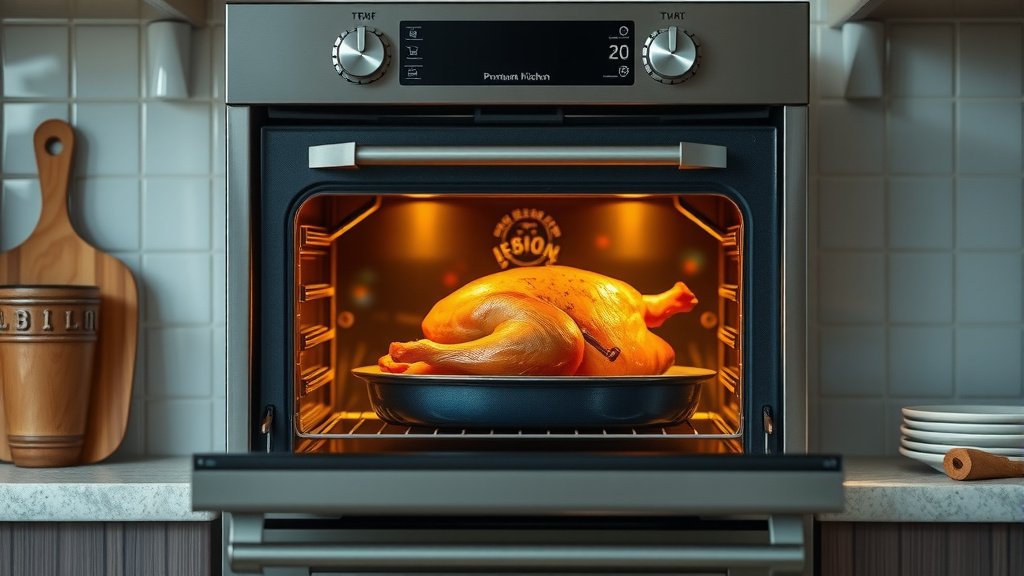
Generally, a convection oven cooks most evenly because it circulates hot air, removing cold spots and ensuring consistent temperatures throughout the cavity.
This active airflow helps to brown food uniformly and cook items faster than traditional radiant heat ovens, making your cooking journey smoother.
Here’s the scoop on even oven cooking:
- Convection ovens reign supreme for even heat distribution.
- They use a fan to circulate hot air, eliminating cold spots effectively.
- Look for “true convection” for the very best results in your kitchen.
- Proper preheating and smart rack placement also play a big part.
- Even the best ovens need a little help from you for perfect cooking.
What Oven Cooks Most Evenly?
A convection oven consistently cooks most evenly, thanks to its built-in fan that distributes heat uniformly across your dishes.
This clever design actively pushes hot air around, helping to eliminate those frustrating cold spots common in standard ovens.
Understanding Convection Oven Magic
Have you ever noticed how some cookies on a tray are perfectly golden, while others are still pale? That’s often a sign of uneven oven heat.
Convection ovens were created to combat this very problem, giving you a more reliable cooking experience every time.
How Does Convection Actually Work?
Imagine a tiny wind tunnel inside your oven. A convection oven has a fan, and sometimes an extra heating element, that forces hot air to circulate.
This moving air surrounds your food, transferring heat much more efficiently than still air. It’s like having a gentle, consistent breeze cooking your meal.
Why Even Heat Matters for Your Dishes
Even heating isn’t just about avoiding burnt edges and raw centers. It’s about consistent texture and flavor for every bite.
Think about a roasted chicken with crispy skin all over, or a cake that rises uniformly without a dome or sunken center. That’s the dream!
True Convection Versus Standard Convection
When you’re shopping, you’ll hear about “standard convection” and “true convection.” What’s the difference for evenness?
Standard convection just adds a fan to a regular oven. True convection, also called European convection, adds a third heating element around the fan.
This extra element preheats the air before it enters the oven cavity, offering the most consistent and even heat possible (Appliance Retailer Research).
| Oven Type | Heat Source | Air Circulation | Evenness Score |
|---|---|---|---|
| Conventional (Standard) | Bottom/Top elements | Still air | Good |
| Standard Convection | Bottom/Top elements | Fan-assisted | Better |
| True Convection | Bottom/Top + Fan Element | Fan-assisted + Preheated | Best |
When to Embrace Convection Cooking
Convection is a culinary superpower for many dishes. When you want food to be browned, crispy, and cooked through efficiently, it’s your best friend.
Many experts say it shines brightest for roasting, baking multiple items, and anything that benefits from a good crust (Culinary Institute Research).
Baking Perfect Cookies and Cakes
Are you baking a big batch of cookies? Or perhaps several sheet pans of roasted vegetables?
Convection allows you to cook multiple trays at once without rotating them, saving you time and giving you uniform results.
Roasting Meats and Vegetables Like a Pro
For juicy roasts with perfectly caramelized exteriors, convection is a game-changer. The circulating air helps create that desirable Maillard reaction.
Vegetables also become wonderfully tender inside with crisp edges. It’s a chef’s secret for golden perfection.
Situations When You Might Skip Convection
While convection is great, it’s not always the answer. Some delicate dishes prefer a more gentle, static heat.
Think about soufflés, custards, or quick breads. These often benefit from the traditional, less aggressive cooking environment.
Beyond Convection: Other Factors for Evenness
Even with the most evenly cooking oven, you still play a role. A great oven needs a great operator!
Small habits can make a huge difference in your results, regardless of your oven type.
Preheating is Not Optional
Opening your oven door too soon can cause heat fluctuations. Give your oven time to reach and stabilize its temperature.
Many ovens need 15-20 minutes past the “ready” beep to truly heat through (Consumer Reports data).
Rack Position: Where Your Food Sits Matters
Most recipes suggest the middle rack for general baking and roasting. This position offers the most balanced heat distribution.
Using the top rack for broiling or the bottom for a crispy crust can be effective, but stick to the middle for overall evenness.
Don’t Crowd Your Oven
Air needs space to move, especially in a convection oven. Overcrowding your oven blocks air circulation, leading to uneven cooking.
Give your dishes breathing room. If you have many items, it’s often better to cook in batches.
Dealing with Persistent Hot Spots
Even the best ovens can have slight variations. How do you manage those sneaky hot spots?
Knowing your oven’s quirks can actually make you a better cook. It’s about adaptation and smart strategies.
Oven Calibration and Thermometer Use
Sometimes, your oven’s thermostat might not be accurate. We found that many home ovens are off by 10-25 degrees (Professional Kitchen Research).
An inexpensive oven thermometer can tell you the true temperature. If it’s consistently off, your oven might need calibration.
- Get a good oven thermometer.
- Always preheat thoroughly.
- Rotate dishes halfway through cooking if you suspect hot spots.
- Avoid opening the oven door too often.
- Use light-colored bakeware for more even baking.
- Clean your oven regularly; grime can affect heat distribution.
Considering Steam Ovens for Ultimate Moisture
While convection is king for even dry heat, what about dishes that need moisture? Enter the steam oven, or combi-steam oven.
These ovens introduce steam into the cooking environment, which can lead to incredibly moist and evenly cooked food, especially for bread or delicate fish.
The Power of Combi-Steam
A combi-steam oven blends steam with convection heat. This combination can create the most delicious and evenly cooked results for many dishes.
The steam prevents drying out, while the convection ensures even browning. It’s a fantastic option for truly high-end, consistent cooking.
Conclusion
So, which oven cooks most evenly? For general baking and roasting, a true convection oven takes the crown. Its fan and dedicated heating element work together to deliver consistent, circulating hot air, making those cold spots a thing of the past.
However, remember that even the best oven needs a little help. Proper preheating, smart rack placement, and avoiding overcrowding are your allies in the quest for perfect dishes. By understanding your oven and applying these simple techniques, you’ll be cooking more evenly in no time. Happy cooking!
How often should you rotate food in a convection oven?
Generally, you don’t need to rotate food in a true convection oven. Its primary purpose is to eliminate hot spots and ensure even cooking. If you notice uneven browning, check if your oven is truly preheated or if you’ve overcrowded the cavity.
Can I use any baking dish in a convection oven?
Yes, you can use most baking dishes. However, metal pans often produce crisper, browner results, while glass or ceramic might cook a bit slower. Dark-colored pans absorb more heat, potentially leading to faster browning, so adjust cooking times or temperatures if needed.
Do convection ovens cook faster than conventional ovens?
Yes, convection ovens typically cook food 25% faster than conventional ovens. The circulating hot air transfers heat more efficiently. It’s often recommended to reduce the recipe’s suggested temperature by 25 degrees Fahrenheit or shorten the cooking time.
Is a steam oven better than a convection oven for even cooking?
A combi-steam oven (which uses both steam and convection) offers a different kind of evenness, particularly for moisture and texture. While a convection oven excels at dry, even heat for browning, a combi-steam oven provides incredibly moist, evenly cooked food, ideal for breads, fish, and reheating without drying.
What is the best temperature for baking in a convection oven?
When converting a recipe from a conventional oven to a convection oven, a common guideline is to reduce the temperature by 25 degrees Fahrenheit (about 15 degrees Celsius). So, if a recipe calls for 350°F in a conventional oven, try 325°F in your convection oven and monitor your food closely.
