
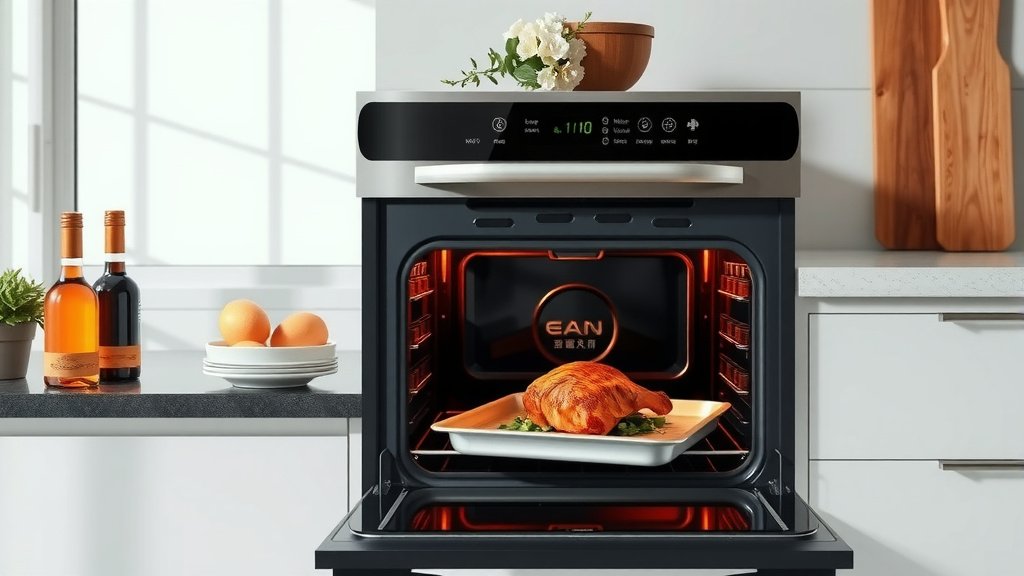
For achieving a beautifully browned crust and moist interior when roasting meat, a convection oven often stands out as the best choice.
Its circulating hot air ensures even cooking and promotes a superior crispy skin, making it ideal for many cuts of meat.
- A convection oven is generally the top choice for roasting meat due to its even heat and superior browning.
- Conventional ovens work well too, but might need manual turning for consistent results.
- Consider your budget, kitchen space, and how often you roast to make the best decision.
- Maintaining proper temperature and moisture is key, no matter your oven type.
- Steam ovens offer an excellent balance of moisture and crisping for high-end roasting.
Which Oven Type Is Best For Roasting Meat?
A convection oven generally provides the best environment for roasting meat, thanks to its fan-assisted heat distribution.
This oven type ensures uniform cooking and helps create that desirable crispy exterior we all love.
Choosing the right oven can feel like a big decision. You want that perfectly cooked roast, right? Think juicy on the inside, crispy on the outside.
We’re here to guide you through the options, helping you understand what each oven type brings to your kitchen.
What Makes a Great Roasting Oven?
When you roast meat, you are not just cooking it. You are aiming for a transformation. Good roasting means developing flavor and texture.
Several factors play a role in achieving this ideal outcome. Let’s look at the most important ones.
Even Heat Distribution is Key
Imagine your roast cooking perfectly on one side, but raw on the other. No fun, right?
Even heat distribution ensures your meat cooks uniformly from all angles. This prevents burnt spots or undercooked areas.
Controlling the Temperature Precisely
Roasting needs stable temperatures. A constant heat cooks the meat gently and thoroughly.
Ovens that fluctuate too much can make your roast dry out or cook inconsistently. Precision is a big win here.
Balancing Moisture and Browning
This is the magic trick of roasting. You want a crispy, flavorful crust, but you also want a moist, tender interior.
An ideal oven helps you achieve both without compromise. It’s about creating that delicious contrast.
Convection Ovens: Your Roasting Champion?
Many experts agree that convection ovens excel at roasting. This is often because of how they move hot air around.
If you’re serious about perfectly browned roasts, this oven type is usually a top recommendation (Good Housekeeping).
How Convection Works for Meat
Convection ovens use a fan to circulate hot air. This circulating air surrounds your meat from every side.
It cooks faster and more evenly than traditional ovens. This also helps create that beautiful crispy skin we often seek.
Tips for Using Your Convection Oven
When using convection, you might need to adjust recipes. Many suggest lowering the temperature by 25°F (15°C).
Also, check your roast earlier than usual. It often cooks quicker than you expect due to the efficient heat transfer.
Conventional Ovens: The Reliable Standard
Most homes have a conventional oven. These ovens heat from elements at the top and bottom.
They are perfectly capable of roasting meat well. They might just require a little more attention from you.
Getting Great Results with Conventional Heat
With a conventional oven, you might need to turn your roast partway through cooking. This helps promote even browning.
Using a good roasting pan can also make a big difference. It helps to catch drippings and distribute heat around the meat.
Other Oven Types for Roasting
While convection and conventional are common, other ovens also offer great roasting possibilities.
Some might be perfect for specific needs or provide a more premium cooking experience.
Rotisserie Ovens for Unique Roasts
If you dream of whole chickens or large cuts slowly turning, a rotisserie oven is fantastic. It bastes the meat in its own juices.
This method creates incredibly juicy meat with an all-around crispy skin. It’s a specialized, but highly effective, roasting method.
Combination Steam Ovens: The High-End Pick
These ovens combine dry heat with steam. Imagine perfectly moist meat that still gets a fantastic browned crust.
Steam ovens are gaining popularity for their ability to keep food moist while crisping the exterior. Many culinary experts praise their results.
Making Your Choice: Key Considerations
So, which one is right for you? It depends on your cooking style, budget, and what kind of roasts you make most often.
Think about these points before you decide:
- Budget: Convection ovens can be pricier than standard conventional models.
- Space: Some specialized ovens, like larger rotisserie units, need more counter or cabinet space.
- Frequency: How often do you plan to roast? A dedicated convection oven might be worth it if you roast often.
- Recipe Adaptability: Are you comfortable adjusting recipes for different oven types?
- Desired Outcome: Do you prioritize speed, ultimate crispiness, or maximum juiciness?
Oven Types for Roasting Meat Comparison
Here’s a quick look at how different oven types compare when it comes to roasting meat:
| Oven Type | Heat Distribution | Browning Capability | Moisture Retention | Cooking Speed |
|---|---|---|---|---|
| Convection | Excellent (Fan-forced) | Superior | Good | Fast |
| Conventional | Good (Radiant) | Good | Good | Standard |
| Rotisserie | Excellent (Rotation) | Excellent (Even) | Very Good (Self-basting) | Standard |
| Combination Steam | Excellent (Steam + Fan) | Excellent | Outstanding | Fast |
Pro Roasting Tips for Any Oven
No matter your oven, a few universal tips will elevate your roasting game:
- Always bring your meat to room temperature before roasting. This helps it cook more evenly.
- Use a meat thermometer. This is the only way to ensure your meat is cooked safely and perfectly.
- Don’t overcrowd the roasting pan. Give the meat space for air to circulate and promote browning.
- Rest your roast after cooking. This allows the juices to redistribute, leading to a more tender and juicy result.
- Pat the meat dry before seasoning. A dry surface helps achieve that beautiful crispy crust.
Conclusion
Ultimately, a convection oven often comes out on top for roasting meat, thanks to its even heat and browning power.
However, your trusty conventional oven can still produce delicious results with a little extra care. For specialized needs or premium results, consider a rotisserie or a combination steam oven.
The best oven type is truly the one that fits your lifestyle, budget, and helps you create those mouth-watering roasts you love. Happy roasting!
Can I roast meat in a toaster oven?
Yes, you can roast small cuts of meat in a toaster oven. It works well for things like chicken breasts, pork chops, or small vegetable roasts. Just ensure the meat fits without touching the heating elements, and adjust cooking times as toaster ovens often heat up faster.
What is the ideal temperature for roasting most meats?
Many experts suggest a roasting temperature between 325°F (160°C) and 400°F (200°C) for most meats. Lower temperatures are better for larger, tougher cuts that need more time to tenderize, while higher temperatures are good for smaller cuts to achieve a quick crust.
How do I prevent my roast from drying out?
To keep your roast moist, consider using a meat thermometer to avoid overcooking. Basting periodically, using a roasting pan with a rack, and resting the meat properly after cooking all help retain juices. Some cooks also use brining or marinating as a preventative measure.
Should I cover my roast with foil?
You can cover your roast with foil for part of the cooking time, especially if it starts browning too quickly. This helps trap moisture and prevents the exterior from burning. However, remove the foil for the last portion of cooking to allow the skin or crust to crisp up nicely.
Is it better to roast meat low and slow or hot and fast?
Both methods have their merits. Roasting meat low and slow (around 250-300°F) is ideal for larger, tougher cuts, making them very tender. Roasting hot and fast (around 400-450°F) is great for smaller cuts or when you want a very crispy skin and quick cooking, like with poultry.
