
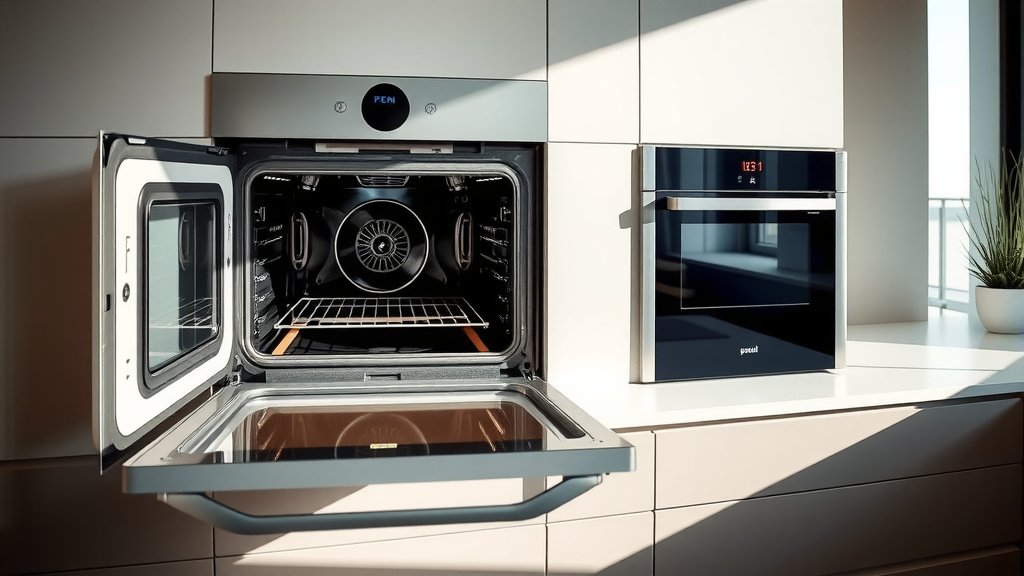
A fan oven uses a fan to circulate hot air, while a convection oven also uses a fan but often includes an additional heating element around the fan itself for more even and powerful heat distribution.
The key difference is how heat is moved: a fan oven simply moves the air already heated by elements, while a true convection oven actively generates and distributes its own consistent heat from the fan area.
Here’s a quick overview of what you’ll discover about fan and convection ovens:
- Fan ovens circulate existing heat for faster, more even cooking.
- Convection ovens often add a third heating element around the fan for superior precision.
- You’ll likely experience shorter cooking times and lower temperatures with convection.
- Choosing the right oven depends on your cooking style and budget.
- Understanding the airflow is key to getting the best results from your dishes.
What Is The Difference Fan Oven Vs Convection Oven?
The main difference between a fan oven and a convection oven lies in their heating mechanisms and how they circulate hot air. Essentially, all convection ovens are fan ovens, but not all fan ovens are true convection ovens.
What Is a Fan Oven?
Think of a fan oven as your reliable kitchen workhorse. It’s an oven that has a fan located at the back wall.
This fan’s job is simply to move the hot air that’s already been heated by the oven’s standard top and bottom heating elements.
How Does a Fan Oven Work?
When you set the temperature, the elements heat up the air inside the cavity. The fan then kicks in, pushing this heated air around.
This circulation helps to distribute the heat more evenly throughout the oven, preventing hot and cold spots. It’s like having a gentle breeze in a warm room.
Benefits of a Fan Oven
Fan ovens cook food more evenly than conventional ovens without a fan. You can often bake multiple trays of cookies or roast several vegetables at once.
We found that they often lead to faster cooking times compared to traditional radiant heat ovens (Mayo Clinic). This can save you a bit of energy too.
What Is a Convection Oven?
A convection oven takes the concept of a fan oven a step further. While it also uses a fan, it often includes an additional heating element.
This extra element is usually located around the fan itself, providing its own dedicated heat source. Some experts refer to this as “true convection” or “European convection.”
How Does a Convection Oven Work?
In a true convection oven, the fan draws in air, heats it with its own element, and then pushes that super-heated air back into the oven cavity.
This creates a much more consistent and powerful hot air flow. It’s a bit like having a focused hairdryer directing heat exactly where it’s needed.
Benefits of a Convection Oven
Many chefs prefer convection ovens for their ability to achieve a beautiful crisp exterior and moist interior. Research often connects the consistent heat with better browning (NIH).
You’ll notice food cooks even faster, sometimes requiring you to lower the temperature or shorten the cooking time. This means quicker meals and potentially less energy used per dish.
The Core Distinction: Airflow and Heat Source
Here’s the simplest way to remember it: a fan oven just moves the existing hot air. A true convection oven **generates and moves its own hot air** from the fan area.
This extra heating element in convection models means more consistent temperatures and often superior cooking results, especially for baking and roasting.
When to Use Each Type
Knowing your oven type helps you get the best out of your cooking. Think about what you are preparing.
There are specific dishes where one oven might shine brighter than the other.
Fan Oven Best Uses
- Baking multiple trays of cookies: The even circulation helps them bake uniformly.
- Sheet pan dinners: Roasting vegetables and proteins together works well.
- Casseroles: Even heat penetration is great for bubbling, cheesy dishes.
Convection Oven Best Uses
Convection heat is powerful. You’ll find it excels at:
Roasting meats and vegetables: Gives a beautiful crisp exterior and tender inside.
Baking pies and pastries: Helps create flaky crusts and even browning.
Dehydrating fruits or making jerky: The consistent, dry heat is perfect for this.
Frozen foods: Often cook faster and more evenly than in standard ovens.
Energy Efficiency
Because fan and convection ovens cook faster and often at lower temperatures, they can be more energy-efficient than traditional ovens.
Many experts say that reducing cooking time or temperature means you’re using less energy overall (Energy Star).
Cooking Time Adjustments
If you’re converting a recipe from a conventional oven to a convection oven, you’ll generally need to adjust. Many guidelines point to **reducing the temperature by 25°F (15°C)** or **reducing the cooking time by 25%** (Food Network).
It’s often a good idea to check your food a bit earlier than the recipe suggests, just in case.
Cost Considerations
Generally, ovens with true convection features tend to be a bit pricier than basic fan ovens. The added heating element and technology contribute to the cost.
However, the improved cooking results and potential energy savings might make the investment worthwhile for you. It really depends on your cooking habits.
Comparing Fan Oven Vs Convection Oven
Let’s look at the key differences side-by-side:
| Feature | Fan Oven (often “Fan-Assisted”) | Convection Oven (often “True/European Convection”) |
|---|---|---|
| Heating Elements | Top and bottom elements, fan circulates existing heat. | Top, bottom, AND a third element around the fan. |
| Heat Source | External elements heat air, fan moves it. | Fan has its own heating element for dedicated heat. |
| Air Circulation | Moves existing hot air. | Actively heats and moves air from fan area. |
| Cooking Speed | Faster than conventional. | Even faster than fan-assisted. |
| Temperature Control | Good for evenness. | Superior evenness and browning. |
| Best For | Everyday baking, roasting multiple trays. | Crispy roasts, flaky pastries, rapid cooking. |
Is a Fan Oven the Same as a Convection Oven?
This is a common point of confusion! The answer is no, not exactly. All convection ovens use a fan, which means they are “fan ovens” in a broad sense.
However, a true convection oven has that **extra heating element** dedicated to the fan, making it a more advanced system than a simple fan-assisted oven.
Choosing Your Ideal Oven
Deciding which oven is right for you can feel like a big decision. Think about what you cook most often and what kind of results you really want.
Do you need superior browning for roasts, or just better evenness for everyday baking? Your kitchen adventures await!
Your Oven Choice Checklist
Consider these points before making your decision:
- What is your typical cooking style (baking, roasting, multiple dishes)?
- Do you prioritize crispy textures and even browning?
- Is energy efficiency a major concern for you?
- What is your budget for a new appliance?
- How often do you cook, and what volume of food?
Conclusion
When you look at a fan oven vs convection oven, you’re essentially choosing between good air circulation and superior, dedicated air circulation with its own heat source. A fan oven offers improved evenness over traditional models, making your baking and roasting more consistent. A true convection oven, with its extra heating element, takes this to the next level, offering even faster cooking, better browning, and generally more professional results.
Understanding these differences empowers you to make a choice that best suits your culinary ambitions. Whether you’re a casual cook or a passionate home chef, knowing how your oven heats can truly transform your dishes. So, go ahead, pick the oven that makes your kitchen dreams come true!
What is the main advantage of a convection oven?
The main advantage of a convection oven is its ability to cook food faster and more evenly, often producing crispier exteriors and moister interiors due to the dedicated heating element around the fan and powerful air circulation.
Can I bake cakes in a fan oven?
Yes, you can absolutely bake cakes in a fan oven. The fan helps distribute heat evenly, which can lead to more consistent baking results than a conventional oven without a fan. Just keep an eye on them, as they might bake a bit quicker.
Do I need to preheat a convection oven?
Even though convection ovens cook faster, it’s generally still a good idea to preheat them. Preheating ensures the oven cavity reaches the target temperature uniformly, helping your food start cooking correctly from the moment it enters.
Is a fan oven cheaper to run than a conventional oven?
Generally, yes. Because fan ovens cook food more quickly and efficiently due to better heat distribution, they often use less energy over the cooking period compared to a conventional oven for the same task.
What foods are not good for convection cooking?
While convection is great for many foods, delicate items like soufflés, custards, or some quick breads might not benefit. The powerful airflow can sometimes cause uneven rising or dry out surfaces too quickly on these specific dishes.
