
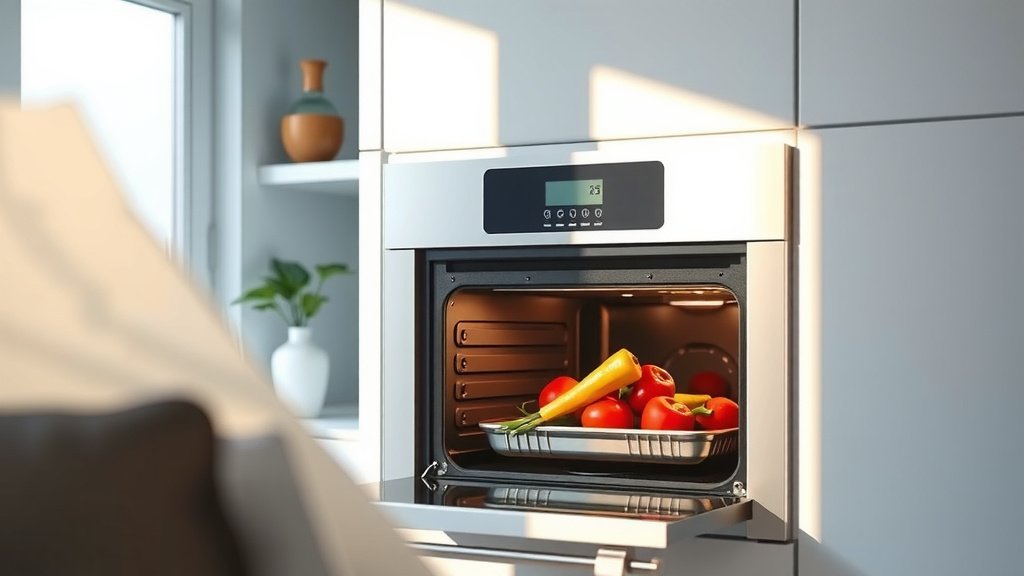
For perfectly roasted vegetables, a convection oven often stands out as the best choice. Its circulating hot air ensures even cooking and delightful crispiness every time.
If you prioritize nutrient retention and a tender texture, a steam oven offers superior results, gently cooking your vegetables without drying them out.
- A convection oven excels at roasting and crisping vegetables due to its fan-assisted heat.
- Steam ovens are ideal for preserving nutrients and moisture, yielding tender, vibrant results.
- Air fryers offer a quick, crispy solution for smaller batches of veggies, similar to convection.
- Consider your desired texture and batch size to pick the ideal oven for your vegetables.
What Oven Is Best For Cooking Vegetables?
A convection oven is often your top choice for cooking vegetables, thanks to its fan that circulates hot air. This creates a uniform temperature, ensuring your veggies roast evenly and get delightfully crispy.
Thinking about how to get those beautiful, flavorful vegetables on your plate? You’re not alone. We all want our veggies to be perfectly cooked, full of nutrients, and delicious. Let’s explore the best oven options for achieving just that.
Understanding Oven Types for Vegetable Cooking
Different ovens bring unique strengths to the kitchen. When it comes to vegetables, some ovens simply perform better. Your goal determines the best tool.
The All-Star: Convection Ovens
A convection oven uses a fan to move hot air around the oven cavity. This airflow means heat surrounds your food from all sides, cooking it faster and more evenly. You’ll find edges brown beautifully and interiors stay tender.
Many experts say convection is excellent for roasting vegetables (Mayo Clinic). It’s perfect for broccoli, carrots, potatoes, and bell peppers. You get that satisfying caramelization without mushiness.
The Classic: Conventional Ovens
Your standard conventional oven relies on radiant heat from heating elements. It’s a workhorse for many dishes, including vegetables. Think of it as a gentler, more gradual cooking method.
While effective, a conventional oven might take a bit longer to achieve crispy textures. You may also notice some hot spots, so flipping your veggies is key for even browning.
The Nutrient Preserver: Steam Ovens
Have you ever tried steaming vegetables? A steam oven takes this concept to the next level. It uses steam to cook your food, helping to retain vitamins, minerals, and natural colors.
Many nutritionists suggest that steam cooking helps vegetables keep more of their nutritional value (Cleveland Clinic). If you want vibrant, tender-crisp vegetables without added oil, a steam oven is a fantastic option.
The Quick Crisper: Air Fryer Ovens
An air fryer is essentially a compact convection oven, designed for rapid heat circulation. It’s fantastic for getting a really crisp exterior on smaller batches of vegetables, like Brussels sprouts or green beans.
We found that air fryer ovens excel at creating a “fried” texture with much less oil. If you want super-fast, super-crispy veggie snacks, this could be your go-to device.
Comparing Oven Types for Your Vegetables
Let’s look at how each oven stacks up when you’re preparing vegetables. Consider what texture and cooking style you prefer.
| Oven Type | Best For | Pros for Vegetables | Cons for Vegetables |
|---|---|---|---|
| Convection Oven | Roasting, crisping, baking | Even cooking, faster, crispy texture, better browning | Can dry out delicate vegetables if overcooked, may require temperature adjustment |
| Conventional Oven | Baking, slow roasting | Simple to use, familiar, good for tender baking | Less even browning, slower cook times, can lead to uneven textures |
| Steam Oven | Steaming, delicate vegetables | Preserves nutrients, maintains moisture, vibrant colors, gentle cooking | No browning or crisping, often a dedicated appliance or specific oven mode |
| Air Fryer Oven | Small batches, quick crisping | Very fast, exceptionally crispy results, minimal oil needed | Limited capacity, needs shaking for evenness, can be noisy |
Choosing the Right Oven for Your Veggie Goals
So, which one should you pick? It really depends on what you value most. Are you after speed, crispiness, or nutrient preservation?
For Crispy, Roasted Perfection
If you dream of perfectly roasted potatoes, carrots, or broccoli with crispy edges, a convection oven is king. The fan ensures consistent hot air, making every part of your veggie delicious. Research shows that convection cooking can reduce overall cooking time (NIH).
For Health and Hydration
Want to keep your vegetables bright, tender, and full of goodness? A steam oven is your best friend. It gently cooks, locking in nutrients and natural flavors. Imagine vibrant green beans or perfectly steamed asparagus.
For Speedy Snacks
If you’re often cooking smaller portions and want a super quick, crispy outcome, reach for an air fryer. It’s amazing for those times you want crispy Brussels sprouts in a flash.
Pro Tips for Cooking Vegetables in Any Oven
Regardless of your oven type, a few simple tricks can elevate your vegetable game. These tips ensure your veggies are always a hit.
- Don’t overcrowd the pan: Give your vegetables space. This allows air to circulate, promoting even cooking and browning. If you pack them too tightly, they’ll steam instead of roast.
- Use enough oil: A light coating of oil helps transfer heat and prevents sticking. It also contributes to that desirable crispy texture. Olive oil or avocado oil are great choices.
- Season generously: Salt, pepper, herbs, and spices transform bland veggies into flavorful delights. Don’t be shy with your seasonings!
- Preheat your oven: Always let your oven reach the target temperature before adding vegetables. This initial blast of heat helps achieve a good sear and consistent cooking.
- Flip halfway: For most roasting, tossing or flipping your vegetables halfway through cooking promotes even browning on all sides.
Your Vegetable Oven Checklist
When you’re ready to cook, run through this quick checklist for optimal results.
- Did I preheat my oven to the correct temperature?
- Are my vegetables cut into similar sizes for even cooking?
- Have I lightly coated them with oil and seasonings?
- Is my baking sheet spaced appropriately, not overcrowded?
- Do I have a timer set to avoid overcooking?
Conclusion
Choosing the best oven for cooking vegetables really comes down to your priorities. For most home cooks aiming for versatile, crispy, and evenly roasted vegetables, a convection oven is a fantastic choice. If you prioritize health and vibrant, tender results, consider a steam oven. And for quick, extra-crispy smaller portions, an air fryer might be your secret weapon.
Remember, the best oven is the one you use confidently and effectively. Experiment with temperatures and timings, and you’ll consistently create delicious, healthy vegetable dishes for your family.
What temperature is best for roasting vegetables?
Many cooks find that a temperature between 400-425°F (200-220°C) is ideal for roasting most vegetables. This high heat promotes caramelization and crispiness without drying them out too much. For convection ovens, you might reduce the temperature by 25°F.
Can I use an air fryer to roast large amounts of vegetables?
An air fryer is excellent for quick, crispy results with smaller batches of vegetables. If you need to cook a large amount for a family meal or meal prep, you’ll find a convection or conventional oven more efficient. Air fryers have limited capacity and work best when not overcrowded.
Do steam ovens cook vegetables faster than conventional ovens?
Steam ovens often cook vegetables more quickly than conventional ovens, especially for steaming or blanching. The moist heat transfers very efficiently. However, they don’t brown or crisp vegetables, so if that’s your goal, a roasting oven is better.
Should I cover vegetables when roasting them?
Generally, you should not cover vegetables when roasting. Covering them creates steam, which prevents browning and crisping. If you want tender, steamed vegetables, then covering might be appropriate, but for roasting, leave them exposed to the direct heat.
What kind of baking sheet should I use for roasting vegetables?
A heavy-duty, light-colored metal baking sheet is best for roasting vegetables. Darker sheets can cause over-browning. Look for a sheet with a rim to keep everything contained. Using parchment paper or a silicone mat can also help with non-stick and easy cleanup.
