
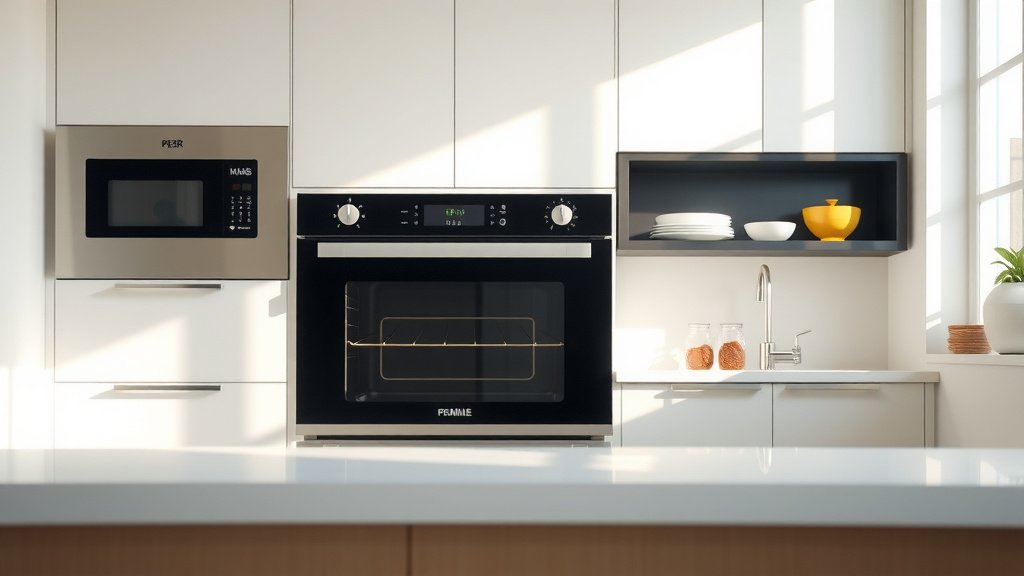
A conventional electric oven generally requires the least maintenance among common oven types you’ll find in homes today.
Its simpler design, without gas lines or complex self-cleaning mechanisms, often means fewer parts to wear out or clean manually, making it a low-maintenance choice.
Here’s a quick overview of what to expect:
- Electric conventional ovens are usually the easiest to keep clean and functioning.
- They avoid the extra care sometimes needed for gas lines or advanced features.
- Routine wiping and occasional deep cleaning are typically all that is needed.
- Self-cleaning features can reduce effort but might introduce more repair points.
- Convection and steam ovens often have specific cleaning steps to consider.
Which Oven Requires Least Maintenance?
You’re looking for an oven that won’t add extra chores to your already full plate, right? The simplest answer, based on our research, points to the conventional electric oven. It stands out for its straightforward operation and minimal upkeep requirements.
Think of it this way: less complexity often means less to go wrong. A basic electric oven does its job without many bells and whistles, translating directly into fewer maintenance headaches for you.
Understanding Oven Types and Their Maintenance Needs
When you’re choosing an oven, maintenance might not be the first thing on your mind. But it is a big deal! Different oven types have their own quirks and care instructions. Knowing these upfront can save you a lot of time and potential frustration.
We’ve found that the internal workings and cleaning features play a huge role in how much effort you’ll put in. Let’s break down the common choices you might be considering for your kitchen.
The Conventional Electric Oven: Your Low-Maintenance Champion
Why do experts often recommend a conventional electric oven for low maintenance? It comes down to its core design. These ovens use electric heating elements to cook your food. There are no gas lines to worry about, unlike their gas counterparts.
Cleaning is usually a simple affair. You wipe up spills as they happen, and periodically do a deeper clean. There are fewer moving parts compared to other models, meaning less to potentially break or need fixing.
Why Gas Ovens Add a Bit More to Your To-Do List
Gas ovens cook food using a flame, which brings a different set of maintenance considerations. You have the gas line itself, which needs proper installation and occasional checks for safety. This isn’t usually a DIY task, often requiring a professional (Consumer Reports).
Some users also report that gas ovens can produce more moisture during cooking. This extra moisture might lead to more condensation and build-up inside the oven, potentially requiring more frequent wiping to keep it sparkling clean.
Self-Cleaning Ovens: A Double-Edged Sword?
A self-cleaning oven sounds like a dream, doesn’t it? Many models, both electric and gas, offer this feature. It uses very high heat to burn off food residue, turning it into ash you can wipe away. This can certainly save you scrubbing time.
However, this intense heat can sometimes be hard on the oven’s components. Some experts suggest that the high temperatures can stress the oven’s electronics or even damage the oven cavity’s finish over time. So, while it helps with cleaning, it might introduce other potential issues.
Do Convection Ovens Demand Extra Care?
Convection ovens add a fan that circulates hot air. This feature helps food cook more evenly and sometimes faster. It’s a fantastic cooking aid, but does it mean more work for you? Not necessarily a lot more, we found.
The fan and its motor are additional components, yes. But usually, the fan is enclosed and doesn’t add much to cleaning. You’ll still primarily focus on wiping the interior surfaces. Many convection ovens are also self-cleaning, combining features for convenience.
Steam Ovens: A Deeper Dive into Maintenance
Steam ovens cook food using, you guessed it, steam! They often have a water reservoir that needs regular filling and, importantly, regular cleaning. Limescale and mineral deposits can build up in the water lines and reservoir if not managed.
You’ll need to descale a steam oven periodically, much like a coffee maker (Mayo Clinic recommends descaling for water-using appliances). This extra step makes them a bit more involved in terms of maintenance than a conventional electric oven. However, the benefits of steam cooking are often worth the extra effort for many home cooks.
Built-in vs. Freestanding: Does It Matter?
When thinking about maintenance, the form factor of your oven – built-in or freestanding – usually plays a smaller role than the oven type itself. Both can be electric or gas, conventional or convection. The main difference is accessibility for repairs.
A freestanding range is generally easier for a technician to pull out and service if needed. A built-in oven might require more specialized maneuvering. But for everyday cleaning and care, the type of oven inside matters most.
Comparing Oven Maintenance at a Glance
Let’s look at how different oven types stack up in terms of typical maintenance.
| Oven Type | Maintenance Level | Common Maintenance Tasks | Key Considerations |
|---|---|---|---|
| Conventional Electric | Low | Wipe interior, clean elements (if exposed) | Few moving parts, simple design |
| Gas Oven | Moderate | Wipe interior, clean burner caps, check gas line | Gas line safety, potential moisture build-up |
| Electric Convection | Low to Moderate | Wipe interior, clean fan area (rarely) | Added fan, but often self-cleaning |
| Gas Convection | Moderate | Wipe interior, clean burner caps, check gas line, fan area | Combines gas and convection complexities |
| Steam Oven | High | Wipe interior, descale water reservoir/lines, clean steam generator | Requires regular descaling due to water use |
| Self-Cleaning (any type) | Low (daily) / Moderate (long-term) | Wipe ash after cycle; potential for component stress | Reduces manual scrubbing, but high heat can affect parts |
Essential Tips for Extending Your Oven’s Life
No matter which oven you choose, a few simple habits can dramatically reduce maintenance. We’ve found that proactive care makes a huge difference. Think of it as preventative medicine for your appliance.
These small steps keep your oven happy and working well for years. They prevent minor issues from becoming costly repairs down the road, saving you both time and money.
Daily Habits That Reduce Oven Maintenance
Want to keep your oven performing at its best with minimal fuss? Try incorporating these quick routines into your kitchen life:
- Wipe up spills immediately: Fresh spills are easy to clean. Baked-on grime is much harder.
- Use oven liners: These catch drips and splatters, protecting the oven floor.
- Ventilate during cooking: Reduces grease and steam buildup inside the oven cavity.
- Avoid abrasive cleaners: These can damage the oven’s interior finish.
- Check door seals: A clean, intact seal prevents heat loss and improves efficiency.
When to Call a Professional for Oven Service
Sometimes, a problem goes beyond a simple wipe-down. If your oven isn’t heating properly, has an unusual smell, or makes strange noises, it’s time to call in the pros. We often find that ignoring these signs can lead to bigger problems.
Especially with gas ovens, any suspected gas leak or issue with the gas line needs immediate professional attention for safety (NIH advises caution with gas appliance issues). Don’t try to fix these complex issues yourself. It’s always safer to trust an expert.
The Cost of Neglect: Why Maintenance Pays Off
Skipping oven maintenance might seem like a time-saver in the short term. But believe us, it rarely pays off. Over time, neglected ovens can develop serious issues. Minor grease buildup can turn into hard-to-remove carbon deposits.
These problems not only affect your oven’s performance but can also lead to more expensive repairs or even necessitate a premature replacement. A little routine care truly goes a long way in protecting your investment.
Conclusion
If your main goal is minimizing maintenance, a conventional electric oven is your strongest contender. Its simplicity in design and operation translates directly to fewer potential issues and easier cleaning for you. While self-cleaning features can save manual effort, remember they might add complexity in other ways.
Ultimately, regardless of the oven type you choose, consistent, simple care habits are the real secret to a long-lasting, problem-free appliance. A little effort often prevents big headaches, keeping your kitchen humming along smoothly for years to come.
What is the easiest oven to clean manually?
The easiest oven to clean manually is typically a conventional electric oven without a self-cleaning feature. Its interior surfaces are usually smooth and free from complex nooks and crannies that can trap grease, making regular wiping straightforward.
Are self-cleaning ovens truly maintenance-free?
No, self-cleaning ovens are not entirely maintenance-free. While they greatly reduce manual scrubbing, you still need to wipe out the ash after a cleaning cycle. Additionally, the high heat used can sometimes stress oven components, potentially leading to other maintenance needs over time.
How often should I clean my oven for optimal maintenance?
For optimal maintenance, you should wipe up spills and splatters as soon as they cool. A deeper clean, whether manual or using a self-cleaning cycle, is generally recommended every 3-6 months, depending on how frequently you use your oven and what you cook.
Does the size of an oven affect its maintenance needs?
The size of an oven doesn’t significantly change its maintenance type, but a larger oven simply has more surface area to clean. This means manual cleaning might take a bit longer in a bigger model. The core maintenance tasks remain similar regardless of size.
Can I use any cleaning product on my oven?
No, you should only use cleaning products specifically designed for ovens. Harsh or abrasive cleaners can damage the oven’s interior finish, especially on self-cleaning models where the enamel is different. Always check your oven’s manual for recommended cleaning agents and methods to avoid damage.
