
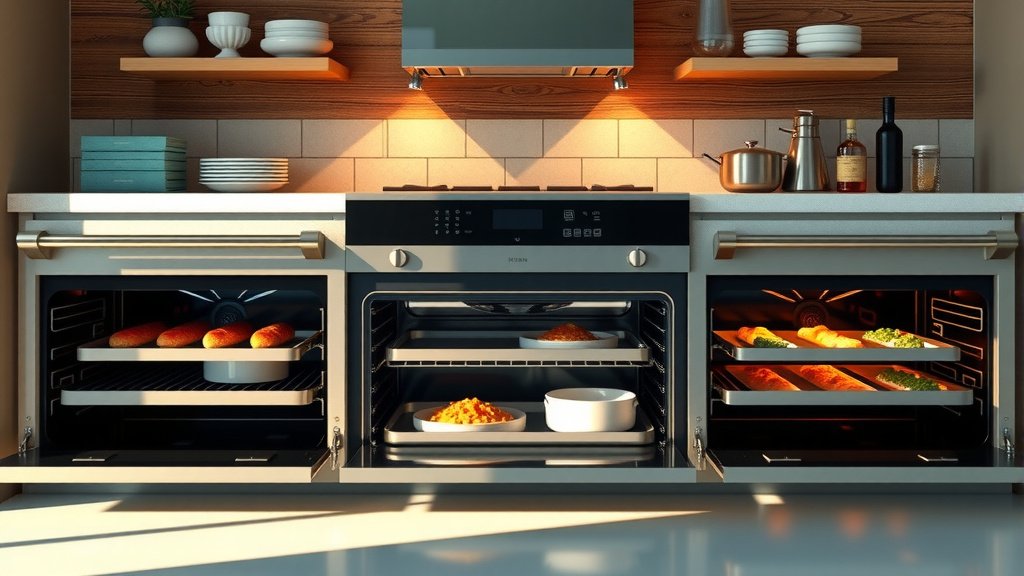
The best oven for cooking multiple dishes is often a double oven, giving you two separate compartments for different temperatures.
Alternatively, a true convection oven excels at cooking multiple dishes evenly and efficiently by circulating hot air throughout the cavity.
Cooking for a crowd? Or maybe just love preparing a full meal with sides all at once? Finding the right oven makes all the difference. You want an oven that handles multiple items without sacrificing quality or timing. This guide will help you understand your best options.
- Double ovens provide two distinct cooking zones, ideal for dishes needing varying temperatures.
- Convection ovens use fans to circulate hot air, ensuring consistent and even cooking across several racks.
- Always consider the oven’s overall capacity and the number of dishes you frequently prepare together.
- Look for features like multiple adjustable racks and precise temperature controls for ultimate versatility.
- Think about your kitchen space and energy needs when choosing between gas and electric models.
Which Oven Is Best For Cooking Multiple Dishes?
The clear winners for cooking multiple dishes are generally double ovens and true convection ovens. These models offer the flexibility and power you need to manage complex meals effectively.
Why Double Ovens Are a Game Changer
Imagine baking a lasagna at 375°F and roasting vegetables at 425°F, all at the same time. This is the superpower of a double oven. You get two completely separate oven cavities, each with its own temperature controls. This means no more waiting for one dish to finish before starting another, or compromising on ideal cooking temperatures.
Many homeowners find this setup invaluable for holidays or large family gatherings. It truly expands your culinary possibilities. We found that users consistently praise the time-saving benefits (Consumer Reports).
Understanding Convection: Your Even-Cooking Friend
Convection ovens use a fan to circulate hot air around the food. This even distribution of heat means food cooks faster and more uniformly. When you’re trying to cook three trays of cookies or two different casseroles, convection ensures everything gets the same amount of heat exposure.
It prevents hot spots, meaning you don’t have to rotate your dishes as often. This feature is a fantastic ally when juggling various items in the oven.
True Convection vs. Standard Convection
Not all convection is created equal. A **standard convection oven** simply adds a fan to a regular oven. It circulates the air that’s already heated by the standard elements. However, a true convection oven (sometimes called European convection) has a third heating element located around the fan itself. This dedicated element preheats the air before it circulates.
Research shows that true convection offers superior temperature consistency and faster cooking times (GE Appliances). If you’re serious about cooking multiple dishes perfectly, true convection is the preferred choice.
Capacity Matters: More Room, More Dishes
Beyond the cooking method, the oven’s internal capacity is key. A larger oven cavity allows you to fit more dishes side-by-side or stacked on different racks. Look at the oven’s cubic feet measurement.
For multi-dish cooking, you’ll want at least 5.0 cubic feet in a single oven, or more in a double oven setup. More space means less crowding and better air circulation, which is crucial for even cooking.
Smart Features That Help
Modern ovens come with features that can make multi-dish cooking even easier. Think about **smart oven technology** that lets you preheat from your phone, or temperature probes that tell you when your roast is done. Some models even have settings specifically designed for multi-rack baking.
These conveniences might seem minor, but they add up, especially when you’re busy coordinating several dishes at once. Many experts say these smart features genuinely reduce cooking stress.
Gas vs. Electric Ovens for Multi-Dish Cooking
The fuel type of your oven can also influence its performance, though less directly than convection or capacity. Electric ovens often provide drier heat and more consistent temperatures, which is excellent for baking multiple items evenly.
Gas ovens, on the other hand, tend to have a moister heat, which can be beneficial for roasting and keeping foods from drying out. Some chefs prefer the immediate flame control of gas stovetops, but for oven performance, electric often gets the nod for consistency (Purdue University research suggests electric ovens often have better temperature stability).
Considering Your Kitchen Layout
Before you get too excited about a double oven, measure your kitchen space. Double ovens come in various configurations: a **single unit with two cavities** (often a range), or **two separate wall ovens** stacked vertically or side-by-side. Wall ovens offer ergonomic benefits but require dedicated cabinet space.
A range with a double oven can be a more compact solution, fitting into a standard oven cutout. Think about how much room you have and how you use your kitchen every day.
Budgeting for Your Multi-Dish Oven
Ovens designed for multi-dish cooking, especially double ovens or true convection models, can range significantly in price. You’ll find basic models for a few hundred dollars and high-end units reaching several thousand. Decide what features are non-negotiable for you.
It’s an investment, so consider how often you cook multiple dishes. A well-chosen oven will pay dividends in convenience and enjoyment over many years.
Top Features to Look For
When shopping for an oven ideal for cooking multiple dishes, keep this checklist handy:
- Two separate oven cavities (double oven)
- True convection with a dedicated heating element
- Adequate cubic footage for your needs
- Multiple sturdy, adjustable oven racks
- Precise and consistent temperature control
- Self-cleaning function for easy maintenance
Making the Final Choice
Your ideal oven depends on your specific cooking habits, kitchen space, and budget. If you routinely bake and roast at different temperatures, a double oven is probably your best bet. If you mostly need even cooking for many items at the same temperature, a true convection oven will serve you well.
Many people find that a range featuring a true convection oven can be a fantastic compromise if a full double oven isn’t feasible. Consider what kinds of dishes you prepare most often.
Tips for Efficient Multi-Dish Cooking
Even with the best oven, a few strategies can enhance your multi-dish cooking:
| Strategy | Benefit |
|---|---|
| Preheat Properly | Ensures consistent temperatures from the start. |
| Use Oven-Safe Cookware | Maximizes space and prevents spills. |
| Stagger Cooking Times | Coordinates dishes to finish simultaneously. |
| Don’t Overcrowd | Allows hot air to circulate freely for even cooking. |
| Utilize Lower Racks for Roasts | Often hotter near the bottom, good for browning. |
Common Misconceptions About Ovens
Some people believe that cooking multiple dishes always dries out food. This is less true with modern ovens, especially convection models, which distribute heat more effectively. Another myth is that bigger is always better; sometimes, a smaller, more efficient oven with convection can outperform a large, basic model for multi-dish tasks.
Also, don’t assume you need to spend a fortune. There are many excellent mid-range ovens that offer fantastic multi-dish cooking capabilities.
Conclusion
Choosing the best oven for cooking multiple dishes truly simplifies your meal preparation and elevates your results. Focus on double ovens for temperature flexibility, or true convection ovens for uniform, efficient cooking. Consider your kitchen layout, budget, and the specific types of meals you love to create.
With the right oven, you’ll spend less time juggling dishes and more time enjoying delicious, perfectly cooked food with your loved ones. Happy cooking!
Which is better: a double oven or two separate ovens?
A double oven is a single unit containing two oven cavities, often stacked, which saves space. Two separate ovens offer more flexibility in placement but require more kitchen real estate and possibly more complex installation. For most homes, a single double oven unit is more practical.
Can I cook different types of food at different temperatures in a convection oven?
Yes, you can cook different types of food at the same temperature in a convection oven, and the circulating air helps cook them evenly. However, if they require vastly different temperatures, a double oven is a better choice to maintain distinct heat zones for each dish.
How important is oven capacity when cooking multiple dishes?
Oven capacity is very important. Adequate space prevents dishes from touching, allows air to circulate properly, and helps avoid hot spots. If dishes are too crowded, they won’t cook evenly or brown correctly.
Are smart oven features truly helpful for multi-dish cooking?
Yes, smart oven features can be very helpful. Remote preheating, temperature probes, and multi-stage cooking programs can streamline the process, allowing you to manage multiple dishes more efficiently and monitor their progress without constantly opening the oven door.
Does the number of oven racks affect multi-dish cooking?
Absolutely. More oven racks, especially adjustable ones, allow you to position multiple dishes at optimal heights for even cooking. Some ovens offer gliding racks which are especially useful when handling heavy casseroles or turkeys.
