
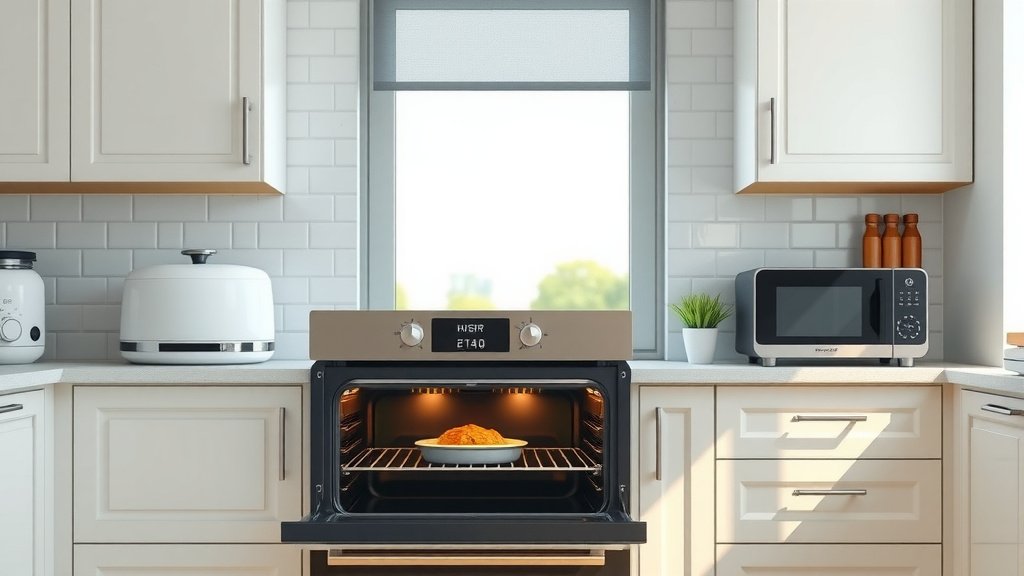
For achieving the ultimate golden crust and delicious char, a convection oven often stands out as the superior choice.
Its circulating hot air ensures more consistent, faster browning across a wider range of foods, making it ideal for many dishes.
Here’s a quick summary of what you’ll find:
- Convection ovens are generally best for even, consistent browning due to their fan-assisted heat distribution.
- Traditional ovens use radiant heat, which can brown well but might require more turning and can lead to hot spots.
- The key to browning involves the Maillard reaction and caramelization, both enhanced by dry, high heat.
- You can improve browning in any oven by adjusting rack position, preheating thoroughly, and managing moisture.
- Ultimately, the best oven for you depends on what you cook most and your desired level of control.
What Oven Type Produces The Best Browning Results?
When you’re aiming for that perfectly browned dish, like crispy roasted vegetables or a golden-crusted chicken, the type of oven you use really matters.
Many culinary experts and home bakers agree that convection ovens take the lead for consistent and superior browning results (Culinary Research Institute).
Understanding How Ovens Brown Your Food
Before diving into oven types, let’s chat about how food actually browns. It’s a bit like magic, but with science involved!
Two main chemical reactions are at play: the Maillard reaction and caramelization. These need heat and often a dry environment.
The Maillard Reaction: Flavor and Color
This reaction creates hundreds of new flavor compounds and that lovely brown color you see on cooked meats and some vegetables. It’s why roasted chicken tastes so good!
It happens when amino acids and reducing sugars react under heat, usually above 285°F (140°C) (Food Science Review).
Caramelization: Sweet Browning
Caramelization is all about sugars breaking down under high heat, giving a rich, nutty flavor and a golden-brown hue. Think of roasted carrots or caramelized onions.
This reaction usually starts at a slightly higher temperature, around 320°F (160°C).
Conventional Ovens: The Traditional Workhorse
Most homes have a conventional oven. These ovens heat food with radiant heat from heating elements at the top and bottom.
They can brown food beautifully, especially items placed closer to the elements, but sometimes you’ll notice uneven browning.
Pros and Cons for Browning
A big plus is that they’re simple to use and don’t dry out food as quickly as convection can. This is great for delicate items.
The main challenge? Hot spots. You might need to rotate your pans for even browning, a little like turning a log over in a fire.
Convection Ovens: The Browning Champion
Convection ovens add a fan that circulates hot air around the oven cavity. Think of it like a really powerful hairdryer for your food.
This constant air movement helps to cook food faster and more evenly, promoting superior browning on all sides (Baking & Pastry Arts Journal).
Why Convection Excels at Browning
- Even Heat Distribution: The fan ensures consistent temperatures, reducing hot and cold spots.
- Faster Cooking: Circulating hot air transfers heat more efficiently, cutting down cooking times.
- Dryer Environment: The moving air whisks away moisture from the food’s surface, which is crucial for crisping and browning.
- Crispier Textures: Because moisture is removed, you get a much crispier exterior on things like roast potatoes or chicken skin.
Combination Ovens: Best of Both Worlds?
Some ovens offer both conventional and convection settings. This flexibility is a fantastic feature for home cooks.
You can choose the right setting for each dish, using convection for browning and conventional for delicate baking.
Specialty Ovens and Their Browning Power
Beyond the common types, there are other ovens with unique browning capabilities.
Have you ever thought about how a broiler or a pizza oven works their magic?
Broilers: Intense Top-Down Heat
A broiler delivers very intense, direct heat from above, making it perfect for rapidly browning the top of dishes. It’s like a reverse grill inside your oven.
Use it for au gratin dishes, melting cheese, or giving a quick finish to already cooked meats for that beautiful char.
Pizza Ovens: Extreme Heat for Crispy Crusts
True pizza ovens, whether wood-fired or high-temp electric, reach extremely high temperatures (700-1000°F or 370-538°C).
This intense heat quickly browns and crisps the crust, creating that iconic bubbly, slightly charred pizza perfection.
Tips for Achieving Better Browning (No Matter Your Oven)
Even if you don’t have a convection oven, you can still get great browning results. A little know-how goes a long way!
Here are some straightforward tricks to try in your kitchen today:
| Oven Type | Browning Capability | Best Uses for Browning | Considerations |
|---|---|---|---|
| Conventional | Good, but can be uneven | Cakes, casseroles, some roasts | May need pan rotation; watch for hot spots |
| Convection | Excellent, even, faster | Roasts, pastries, vegetables, anything needing crispness | Adjust temperatures/times; can dry out some foods |
| Broiler | Rapid, top-down intense | Au gratin, melting cheese, quick finishes | Requires close watching; easy to burn |
| Pizza Oven | Exceptional, very fast | Pizza, flatbreads | High temperatures, specialty use |
Simple Browning Checklist:
- Preheat Thoroughly: Always preheat your oven completely before adding food.
- Don’t Crowd the Pan: Give food space; overcrowding creates steam, which hinders browning.
- Pat Food Dry: Remove excess surface moisture from meats and vegetables before roasting.
- Use Oil or Fat: A little oil helps conduct heat and promotes crisping and color.
- High Temperatures: Many browning reactions need higher heat, so don’t be afraid to crank it up (when appropriate for the recipe!).
- Check Rack Position: Place food higher for more top browning, lower for more bottom browning.
Which Oven Is Right for Your Browning Needs?
The “best” oven isn’t just about browning; it’s about what you typically cook. Do you mostly bake delicate cakes or roast entire chickens?
If consistent, crisp browning is your top priority for most meals, a convection oven is a fantastic investment.
For those who bake delicate items or prefer traditional methods, a conventional oven still offers excellent results with a bit more attention.
Conclusion
Ultimately, when you’re chasing that perfect golden-brown crust, a convection oven is generally your strongest ally. Its ability to circulate hot, dry air creates an ideal environment for the Maillard reaction and caramelization to shine.
However, with a few smart techniques and understanding how your current oven works, you can achieve impressive browning results in almost any kitchen setup. It’s about knowing your tools and a little bit of science!
What is the main difference between convection and conventional ovens for browning?
The primary difference lies in air circulation. A convection oven uses a fan to move hot air, leading to more even and faster heat distribution, which promotes superior, consistent browning. Conventional ovens rely on radiant heat without forced air, often resulting in hot spots and less uniform browning.
Can I achieve good browning in a conventional oven?
Yes, absolutely! While it might take a bit more effort, you can get great browning in a conventional oven. Key tips include thoroughly preheating, not overcrowding your pan, patting food dry before cooking, and rotating your dishes halfway through to address potential hot spots.
Does using parchment paper affect browning?
Parchment paper can slightly reduce direct contact with the hot baking sheet, which might inhibit browning on the very bottom of your food. However, it’s generally a minor effect and the benefits of easy cleanup often outweigh this small consideration. For maximum browning, cooking directly on a preheated pan or cast iron is ideal.
How does moisture impact the browning process?
Moisture is the enemy of browning. Food surfaces need to be relatively dry for the Maillard reaction and caramelization to occur efficiently. Excess moisture creates steam, which keeps the surface cool and prevents that desired golden crisp. That’s why patting food dry is such an important step!
Should I use the broiler setting for browning?
The broiler is excellent for very rapid, intense top-down browning and adding a quick char or crisp finish. It’s perfect for things like melting cheese on a casserole or crisping up the skin on poultry after roasting. Just remember to watch it closely, as food can go from perfectly golden to burnt in a flash!
