
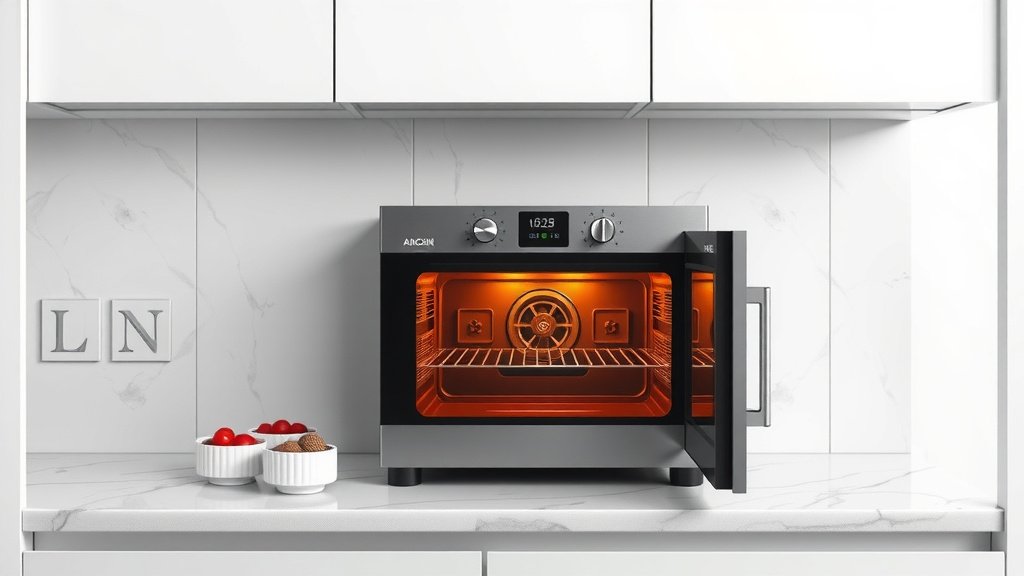
To use a countertop oven for the first time, begin by unpacking it, cleaning the interior, and then plugging it in. Always run a burn-off cycle to remove manufacturing odors before cooking any food.
Get familiar with the temperature dial and timer, as understanding these controls is key for your first successful baking or toasting experience with a countertop oven.
- Unpack and clean your new countertop oven thoroughly before its first use.
- Perform an initial “burn-off” cycle to eliminate any new appliance smells.
- Understand the basic controls: temperature, timer, and function settings.
- Always preheat your oven for even cooking results.
- Prioritize safety by placing it on a stable, heat-resistant surface away from walls.
How To Use A Countertop Oven For The First Time?
Using a countertop oven for the first time is surprisingly simple, almost like welcoming a new kitchen assistant. Your first steps involve setting it up correctly and understanding its basic operations.
Unboxing Your New Kitchen Buddy
Opening the box for your new countertop oven is exciting. Gently remove all packaging materials. Make sure to check for any hidden bits of Styrofoam or tape inside the oven cavity itself.
We found that leaving packaging behind can cause burning smells during the first use. Look for the user manual and keep it handy; it’s your best friend here.
The All-Important First Clean
Before any food goes in, give your oven a good wipe-down. Use a damp cloth with mild soap to clean the interior and exterior surfaces. Rinse and dry it completely (Food Safety.gov).
Many experts say this step removes dust and manufacturing residues. Don’t forget the racks and crumb tray.
Setting Up for Success: Placement is Key
Where you put your oven matters a lot. Find a flat, stable, heat-resistant surface. Always ensure there’s enough space around the oven for ventilation.
Research suggests leaving at least four to six inches from walls or cabinets. This prevents heat buildup and protects your surfaces.
The “Burn-Off” Cycle: Clear the Air
This step is often overlooked but crucial. The burn-off cycle helps eliminate any factory odors or residues.
Set your oven to its highest temperature and let it run for about 10-15 minutes (Consumer Reports). It might smell a bit during this process, so open a window!
Getting to Know Your Controls
Your countertop oven probably has a few main dials or buttons. You’ll typically find controls for temperature, time, and cooking function. These are your main tools.
Spend a moment turning each knob and seeing what it does. It’s like learning the steering wheel in a new car.
Temperature Control: Finding the Heat
The temperature dial lets you set how hot your oven gets. Common ranges are from 150°F to 450°F. Recipes will always tell you the right temperature.
We found that accuracy can vary slightly, so consider an oven thermometer for precise cooking if you bake often.
Timer Functions: Set It and Forget It
Most countertop ovens include a timer. This feature is a lifesaver for preventing overcooked food. Some timers shut off the oven automatically when done.
Others simply alert you with a chime. Knowing how your timer works helps you avoid kitchen mishaps.
Cooking Modes: Beyond Just “Bake”
Many models offer various functions like bake, toast, broil, and sometimes even convection. Each mode changes how heat is delivered inside.
Bake uses even heat from top and bottom elements. Broil uses high heat from the top. Convection uses a fan to circulate hot air for faster, more even cooking.
Your First Cooking Endeavor: Keep It Simple
For your very first dish, pick something easy. Toast is a classic choice. Or perhaps a simple batch of frozen cookies or small frozen pizza.
This allows you to get a feel for the oven without complex recipes. You’re learning, not competing on a cooking show!
- Choose a simple item like toast or a small pastry.
- Always preheat the oven before adding food.
- Place food in the center of the rack for best results.
- Monitor cooking closely, especially the first time.
- Use oven mitts for safety when removing food.
Preheating: A Must for Even Cooking
Just like a full-size oven, preheating is essential. It brings the oven to the correct temperature before you introduce your food.
This prevents uneven cooking and ensures your meals come out perfectly. Think of it as warming up before a workout.
Using the Racks and Trays
Your oven comes with a wire rack and a baking pan, often a crumb tray too. Place your food directly on the rack or in an oven-safe dish on the rack.
The crumb tray catches drips and crumbs, making cleanup easier. Always empty it regularly to prevent burning smells.
| Feature | What It Does | First-Time Tip |
|---|---|---|
| Temperature Dial | Sets the oven’s heat level. | Match recipe requirements exactly. |
| Timer | Counts down cooking duration. | Use it every time to prevent burning. |
| Function Dial | Selects cooking mode (Bake, Broil, Toast). | Start with “Bake” for most dishes. |
| Crumb Tray | Catches fallen food bits. | Empty after each major use. |
Safety First: Tips You Can’t Ignore
Countertop ovens get very hot. Always use oven mitts or pot holders when handling hot items. Keep flammable items like paper towels away from the oven.
Many guidelines point to unplugging the oven when not in use (UL Standards). Also, avoid placing anything on top of the oven during operation.
Regular Cleaning for Longevity
After your first few uses, make a habit of cleaning your oven. A clean oven performs better and lasts longer. Wipe up spills immediately when the oven is cool.
The crumb tray should be emptied frequently. This simple routine keeps your oven in top shape.
What Can You Cook? More Than You Think!
From frozen waffles to reheating leftovers, baking small batches of cookies, or even roasting a small chicken, these ovens are versatile. They are great for quick meals or side dishes.
You’ll find yourself reaching for it constantly for tasks that don’t justify heating a large oven.
Conclusion
Your new countertop oven is a fantastic addition to your kitchen, offering convenience and efficiency. By following these straightforward steps for its first use, you’ll quickly become comfortable with its operation. Remember the initial clean, the burn-off cycle, and understanding its basic controls. Soon, you’ll be cooking up a storm, enjoying all the benefits of this handy appliance.
How do I stop my new countertop oven from smelling like plastic?
The best way to eliminate a plastic or chemical smell from your new countertop oven is to perform a burn-off cycle. Set it to its highest temperature and let it run empty for 10-15 minutes in a well-ventilated area. This burns off manufacturing residues, removing the odor.
Can I use aluminum foil in a countertop oven?
Yes, you can generally use aluminum foil in a countertop oven for lining pans or covering food. However, avoid letting foil touch the heating elements, as this can be a fire hazard. Never line the crumb tray or the bottom of the oven directly with foil, as it can trap heat and damage the appliance.
What is the difference between a toaster oven and a countertop oven?
While often used interchangeably, a toaster oven is typically smaller and primarily designed for toasting bread and heating small items. A countertop oven, often slightly larger, offers more advanced features like convection, broader temperature ranges, and multiple cooking functions (bake, broil, roast), making it more versatile than a basic toaster oven.
Do countertop ovens use a lot of electricity?
Countertop ovens are generally more energy-efficient than full-sized ovens for smaller tasks. They heat up faster and use less power for short cooking times because of their smaller internal volume. For larger meals, a traditional oven might be more efficient, but for quick everyday use, the countertop model is a great choice.
Is it normal for a countertop oven to make noise?
Some countertop ovens, especially those with convection fans, will make a gentle humming or whirring noise during operation. Clicking sounds can also be normal as heating elements cycle on and off to maintain temperature. If you hear loud, unusual noises, consult your user manual or contact customer support.
