
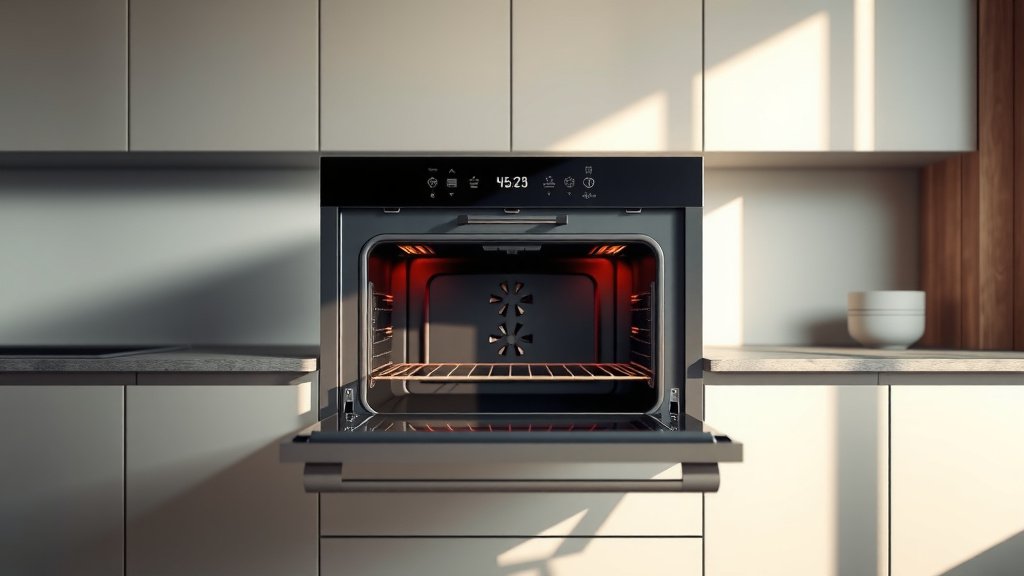
A countertop oven typically reaches temperatures between 200°F (93°C) and 450°F (232°C), with some models going up to 500°F (260°C).
The exact maximum temperature a countertop oven can achieve depends on its design, wattage, and specific heating elements.
Here’s a quick look at what you need to know about your countertop oven’s heat:
- Most countertop ovens heat up to 450°F, ideal for many recipes.
- Some high-end models can reach 500°F for faster cooking or specialty tasks.
- Factors like wattage and insulation play a big part in heat performance.
- Always allow space around your oven for proper ventilation and safety.
- A good oven thermometer helps you verify the internal temperature.
How Hot Does A Countertop Oven Get?
Most countertop ovens are designed to reach temperatures similar to their full-sized counterparts, often hitting between 200°F and 450°F.
Some models even push higher, up to 500°F, offering versatility for various dishes.
Thinking about getting a countertop oven, or wondering if your current one is up to snuff? You’re in the right place!
These compact kitchen workhorses pack a lot of heat, but how much exactly? Let’s dive in and see what makes them tick.
Understanding the Heat Range
When you turn on your countertop oven, you’re looking for consistent, reliable heat. We found that the vast majority of these ovens operate within a range suitable for most everyday cooking and baking.
This means you can easily roast vegetables, bake cookies, or even reheat leftovers to perfection. It’s all about matching the oven’s capability to your culinary needs.
Average Maximum Temperatures
What’s the typical peak temperature you can expect? We’ve observed that many standard countertop ovens cap out around 400°F to 450°F.
However, newer, more advanced models, especially those with air frying functions, might reach 500°F or even slightly higher (Consumer Reports).
This extra heat can be great for achieving crispy crusts or quick searing.
Factors Affecting Countertop Oven Heat
It’s not just about turning a dial; several things determine how hot your countertop oven gets and how well it holds that heat.
Understanding these can help you choose the right oven and get the best performance from it.
Wattage and Power
Think of wattage as your oven’s engine. A higher wattage, generally between 1200 and 1800 watts for countertop models, means it can generate heat more quickly and maintain higher temperatures more efficiently.
More power usually translates to a more robust heating experience.
Insulation Quality
Good insulation is like a cozy blanket for your oven. It keeps the heat inside where it belongs, leading to more consistent cooking temperatures and better energy use.
Poor insulation can mean heat loss, making your oven work harder and potentially giving you unevenly cooked food.
Heating Elements
Most countertop ovens use electric heating elements, often made of quartz or nichrome, located at the top and bottom.
The number and placement of these elements, along with whether they have convection fans, greatly influence how quickly and evenly your oven heats up and cooks.
Brand and Model Variations
Just like cars, different brands and models offer different features and build qualities. Some brands specialize in ovens that prioritize speed, while others focus on precision and even baking.
It’s always a good idea to check reviews and specifications for the model you’re considering.
Is Your Countertop Oven Getting Hot Enough?
Ever wonder if your oven is truly at the temperature you set? It’s a common question!
Even the best ovens can have slight variations, and an oven thermometer is your best friend here (National Institute of Standards and Technology).
If you’re noticing your food isn’t cooking as expected, it might be time for a quick checkup.
Here’s a quick checklist to help you:
- Use a reliable oven thermometer to test the actual internal temperature.
- Ensure the oven door seals tightly; a faulty seal can let heat escape.
- Clean your oven regularly, as grease buildup can affect efficiency.
- Avoid overcrowding the oven, which can block air circulation and heat.
- Allow proper preheating time; don’t rush it for accurate temperatures.
Safety Considerations for High Heat
With great heat comes great responsibility, right? Countertop ovens get hot, both inside and out. Safety is always a priority in the kitchen.
It’s vital to be mindful of where you place your oven and how you operate it.
External Surface Temperatures
While the inside of your oven is a furnace, the outside can also get surprisingly hot, especially on the sides and top. Many experts advise against touching the exterior surfaces during and immediately after operation.
Always remember that these appliances are designed to generate high heat, so caution is key.
Proper Placement and Ventilation
Where do you put your oven? Give it some breathing room! We found that it’s crucial to place your countertop oven on a heat-resistant surface and maintain at least 4-6 inches of clearance from walls, cabinets, and other objects.
This ensures proper airflow and helps prevent any heat damage or fire hazards (U.S. Consumer Product Safety Commission).
Comparing Countertop Ovens to Full-Size Ovens
Are they really that different in terms of heat? Both types of ovens aim to cook your food, but there are some distinctions in how they achieve and distribute heat.
Here’s a simple comparison to give you a clearer picture:
| Feature | Countertop Oven | Full-Size Oven |
|---|---|---|
| Max Temperature | Typically 450-500°F | Usually 500-550°F |
| Preheat Time | Faster (5-10 mins) | Slower (10-20 mins) |
| Heat Consistency | Good, but can vary by model | Excellent, generally very even |
| Energy Use | More efficient for small tasks | Better for large batches |
Optimizing Your Countertop Oven’s Performance
Want to get the most out of your compact cooker? A few simple tricks can make a big difference in how effectively your countertop oven gets and stays hot.
Think of it as giving your oven a little tune-up for better cooking results.
Always preheat thoroughly to the desired temperature. Using an oven-safe thermometer inside can help you verify the actual heat before you place your food.
Also, try to arrange food in a single layer for even cooking, allowing heat to circulate properly around each item.
Conclusion
So, how hot does a countertop oven get? They can reach impressive temperatures, typically between 200°F and 450°F, with many advanced models hitting 500°F.
These temperatures make them incredibly versatile for a wide range of cooking tasks, from simple toast to roasted chicken.
By understanding the factors that influence heat and practicing safe usage, you can master your countertop oven and enjoy perfectly cooked meals every time. Happy cooking!
How long does a countertop oven take to heat up?
Most countertop ovens are quite speedy, usually reaching their set temperature within 5 to 10 minutes. This is often faster than a full-size oven, making them a great choice for quick meals.
Can I bake a full-size cake in a countertop oven?
The ability to bake a full-size cake depends on the internal dimensions of your specific countertop oven. While smaller models might not fit a standard 9-inch round pan, many larger ones are perfectly capable, so check your oven’s specifications.
Are countertop ovens energy efficient?
For smaller tasks, yes! Because they have a smaller cavity to heat, countertop ovens are generally more energy efficient than a large conventional oven when you’re cooking small portions or single dishes. For larger meals, a full-size oven might be more efficient.
Why is my countertop oven smoking?
Smoking can occur for a few reasons. Often, it’s due to food residue or grease spills burning off the heating elements or interior surfaces. A thorough cleaning can usually fix this. If the smoke is excessive or persists, it could indicate an electrical issue, and you should stop using the oven and contact customer support.
What is the ideal temperature for roasting vegetables in a countertop oven?
For delicious roasted vegetables, many recipes suggest temperatures between 400°F and 425°F (200°C and 220°C). This range allows them to brown nicely and become tender in about 20-30 minutes, depending on the vegetable and cut size.
