
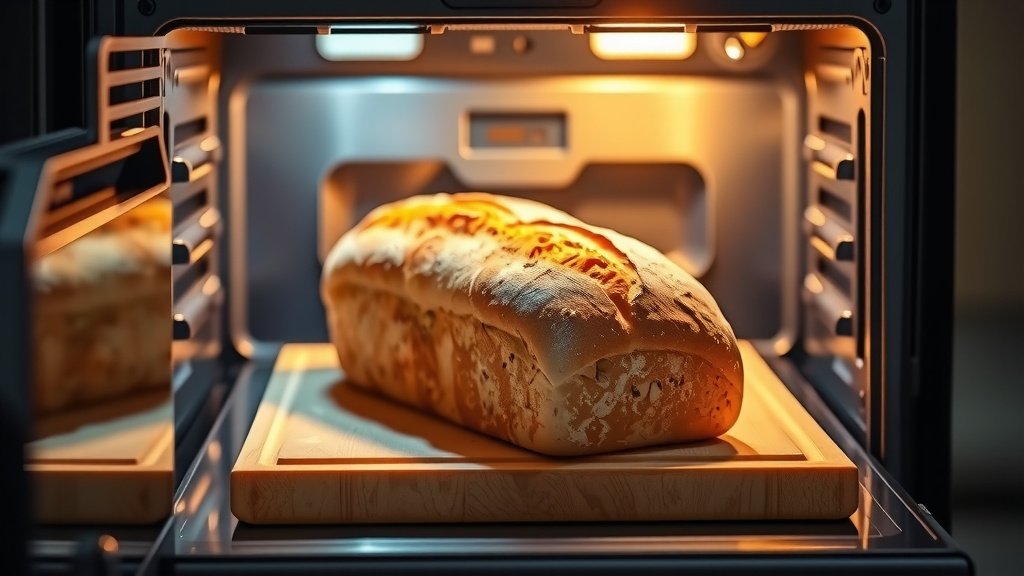
Yes, you absolutely can bake bread in a countertop oven, especially smaller loaves, rolls, and quick breads.
While a full-size oven might offer more space, a good countertop model can produce surprisingly delicious results with the right approach.
- Countertop ovens are perfectly capable of baking various types of bread, especially smaller forms.
- You’ll need to understand its limitations, like capacity and heat distribution, for the best results.
- Preheating properly and using an oven thermometer are vital steps for success.
- Creating steam is often helpful for a good crust, even in a compact oven.
- Don’t expect to bake giant artisan loaves, but delicious everyday bread is certainly possible.
Can You Bake Bread In A Countertop Oven?
You can certainly bake bread in a countertop oven, making it a fantastic option for many home bakers. We found that these ovens excel at smaller projects and often use less energy than their full-size counterparts.
Why Consider a Countertop Oven for Baking Bread?
Perhaps you have a small kitchen, or maybe your main oven is already busy. A countertop oven offers incredible convenience and flexibility. It heats up faster, saving you time and energy on smaller baking tasks, which is a real bonus.
Many home cooks appreciate the compact size. It means you can still enjoy fresh, homemade bread without needing a large dedicated space (research by various kitchen appliance experts often points to this benefit).
The Limitations You Might Face
While they are handy, countertop ovens do come with some limitations you should know about. They simply don’t have the same capacity as a standard oven, nor always the same precise heat distribution.
Size Matters for Your Loaf
The internal space of your countertop oven will dictate the size and shape of your bread. Forget about baking a giant sourdough boule; you’ll likely need smaller loaf pans or baking sheets. Always measure your oven’s interior before picking out a recipe.
Heat Distribution and Hot Spots
Countertop ovens can sometimes have hot spots or uneven heating. This means one side of your bread might brown faster than the other. Don’t worry, we’ll cover some easy fixes for this.
Getting Your Countertop Oven Ready for Bread
Preparation is key for any baking project, and it’s especially true for countertop ovens. A little extra care before you start can make a big difference in your final loaf.
Preheat Like a Pro
You might think simply setting the temperature is enough, but a thorough preheat is essential. Your bread needs a hot environment from the moment it enters the oven to get a good rise. Give your countertop oven at least 15-20 minutes to preheat fully (culinary schools often stress this point).
Don’t Forget the Oven Thermometer!
Many experts say built-in oven thermometers can be inaccurate. Placing a separate oven thermometer inside is a smart move. This way, you can be sure your oven has reached the correct temperature before you bake. It removes any guesswork and helps prevent under or over-baking.
Best Bread Types for Countertop Ovens
Not all bread is created equal when it comes to smaller ovens. Focusing on certain types will give you the best chance of success and minimize frustration. Think small and adaptable.
- Quick Breads: Banana bread, zucchini bread, and other fast loaves are perfect.
- Dinner Rolls: Small, individual rolls bake beautifully and evenly.
- Focaccia or Flatbreads: These don’t require much height and bake well on a small pan.
- Small Loaves: Think mini sandwich loaves or rustic peasant breads that fit your oven.
- Muffins or Biscuits: These are always a win in a countertop oven.
Tips for Achieving a Great Crust
That crispy, golden crust is a hallmark of good bread, right? You can absolutely achieve it in a countertop oven with a few simple tricks. It’s all about managing moisture and heat.
Creating Steam is Key
Steam in the early stages of baking helps the crust stay pliable, allowing the bread to expand fully. It also contributes to a beautiful, crisp crust. You can try carefully placing a small, oven-safe dish of hot water on the oven floor. Or, mist the oven walls with a spray bottle during the first few minutes (be quick and careful!).
What About Larger Loaves or Sourdough?
Baking a large, rustic sourdough loaf in a countertop oven presents more challenges. The smaller space means less room for steam and often less consistent heating for a thick crust. It’s not impossible, but you might need to adjust your expectations for the final product (many artisan bakers share this view).
For bigger, more traditional bread, a full-size oven still holds an advantage. However, for a smaller sourdough batard or rolls, your countertop oven can be surprisingly effective.
| Feature | Countertop Oven for Bread | Full-Size Oven for Bread |
|---|---|---|
| Capacity | Limited to smaller loaves, rolls, flatbreads | Accommodates larger loaves, multiple items |
| Preheat Time | Generally faster | Takes longer to heat fully |
| Energy Use | Lower for smaller batches | Higher, especially for single items |
| Heat Distribution | Can be less even; may have hot spots | Generally more consistent, but varies by model |
| Steam Creation | More challenging due to small size | Easier with larger water trays or Dutch ovens |
| Ideal For | Everyday breads, rolls, small quick breads | Artisan loaves, sourdough boules, large batches |
Troubleshooting Common Countertop Baking Issues
Even with the best intentions, you might run into a snag or two. Don’t let it discourage you! Knowing how to fix common problems will make you a more confident baker. We often learn the most from our little mishaps.
Dealing with Uneven Baking
If your bread is browning more on one side, it’s a classic hot spot issue. Try rotating your bread halfway through the baking time. You can also lightly tent any overly browned areas with aluminum foil. This helps to slow down the browning without stopping the baking inside.
Essential Equipment for Countertop Bread Baking
Having the right tools makes all the difference, even with a smaller oven. Here’s a quick checklist to ensure you’re set up for success:
- A reliable oven thermometer
- Small loaf pans or baking sheets
- Parchment paper for easy release
- A small, oven-safe dish for water
- An accurate kitchen scale
- A cooling rack for air circulation
Conclusion
Baking bread in a countertop oven is not just possible; it’s a rewarding experience. While you might need to adjust your expectations for massive artisan loaves, these compact ovens are incredibly capable. They offer a fantastic way to enjoy fresh, homemade bread without heating up your entire kitchen. With a little care in preheating, monitoring temperatures, and understanding its limitations, you can consistently bake wonderful bread. So, go ahead and give it a try. Your kitchen will smell amazing, and you’ll love the fresh results.
Can I use a Dutch oven in a countertop oven?
It depends entirely on the size of your Dutch oven and the internal dimensions of your countertop oven. Many countertop ovens are too small to accommodate a standard 5-6 quart Dutch oven. Always measure your oven’s interior space and compare it to your Dutch oven’s dimensions, including handles, before attempting to use it.
How do I prevent my bread from burning on top in a countertop oven?
If the top of your bread is browning too quickly, you can gently tent it with aluminum foil during the last part of the baking process. This helps to shield the top from direct heat while allowing the rest of the bread to continue baking and the crust to develop properly.
Do countertop ovens use more electricity than a full-size oven?
For smaller baking tasks, countertop ovens generally use less electricity than a full-size oven. They have a smaller cavity to heat, so they reach temperature faster and require less energy to maintain that heat. However, if you are baking multiple batches, the energy savings might diminish.
Can I bake different types of bread at the same time?
Baking different types of bread simultaneously in a countertop oven is not recommended. Each type of bread often requires specific baking times and temperatures. Plus, the limited space might lead to uneven baking. It’s best to bake one type of bread at a time for optimal results.
What is the ideal temperature for baking bread in a countertop oven?
The ideal temperature for baking bread in a countertop oven is generally the same as for a full-size oven, usually between 375°F to 450°F (190°C to 230°C), depending on the recipe. However, always use an oven thermometer to ensure accuracy, as countertop oven thermostats can sometimes vary.
