
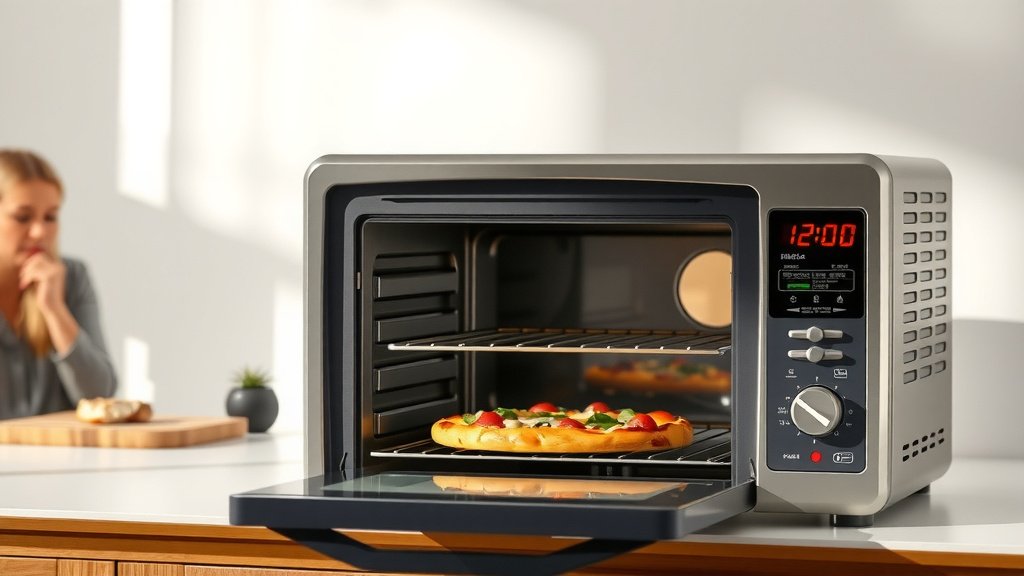
To cook frozen food in a countertop oven, always preheat the oven to the temperature specified on the food packaging. Place the frozen item directly on a baking sheet or in an oven-safe dish, then cook for the recommended time, adding a few extra minutes if needed.
For best results, remove any plastic packaging, ensure the food is evenly spaced, and use a meat thermometer to confirm safe internal temperatures, especially for meats and poultry (USDA).
- Get started quickly: Always preheat your countertop oven to the package instructions.
- Unwrap and space: Remove all plastic and give your food room to breathe for even cooking.
- Adjust as needed: Frozen items might need a bit more time than conventional oven instructions suggest.
- Stay safe: Use a food thermometer to check internal temperatures, especially for proteins.
- Prevent issues: Foil can help prevent burning, and turning can ensure even browning.
How To Cook Frozen Food In A Countertop Oven?
Cooking frozen food in a countertop oven is straightforward. You will simply need to follow the package directions closely, keeping your oven’s size and heating capabilities in mind for small adjustments.
Why Choose a Countertop Oven for Frozen Meals?
Countertop ovens are incredibly handy, aren’t they? They heat up fast and use less energy than a full-sized oven. We often find that for single servings or quick family meals, they are simply more efficient and convenient.
Saving Time and Energy
Think about it like this: heating a small box versus heating a whole room. A countertop oven focuses its heat directly on your food. This means faster preheating and often shorter cooking times for many frozen items.
Understanding Your Countertop Oven’s Power
Not all countertop ovens are created equal. Some are basic toaster ovens, while others boast advanced features. Knowing what your model can do helps you get the best results, especially with frozen meals.
Convection vs. Traditional
Does your oven have a convection setting? This feature uses a fan to circulate hot air. Many experts say that convection cooking is ideal for frozen foods. It helps them cook more evenly and often crisps them up beautifully (NIH research indicates uniform heating is key).
The Golden Rules for Frozen Success
Cooking frozen food successfully isn’t rocket science, but there are a few simple steps. These rules will guide you to a perfectly cooked meal every time, making sure your frozen food experience is top-notch.
Always Read the Package Instructions
This might seem obvious, but it’s crucial. Manufacturers spend time figuring out the best way to cook their product. The package will tell you the ideal temperature and cooking time. Consider it your first and best guide.
Preheat is Your Best Friend
Don’t skip preheating! A preheated oven ensures your food starts cooking at the correct temperature. This prevents a soggy exterior or uneven cooking, especially for items like frozen pizzas or fries. A hot start is a happy start for your food.
Preparing Your Frozen Meal
Once you’ve checked the instructions, a little preparation goes a long way. This isn’t just about putting food in; it’s about setting it up for success. We’re talking about getting the food ready for its oven adventure.
Unwrapping and Placement
Remove all plastic wrap, cardboard, or foam trays before cooking. Many experts advise using a metal baking sheet or an oven-safe dish. Make sure there’s enough space between items for air to circulate. Don’t crowd the oven, as this can lead to uneven cooking.
Temperature and Time Adjustments
Sometimes, the instructions are for a standard oven, not a compact countertop model. You might need to adjust things slightly. We often find that a watchful eye is your best tool here, helping you get that perfect cook.
When to Add Extra Time
Generally, frozen foods take a bit longer than their fresh counterparts. If the package says 20 minutes, you might need 25-30 minutes in a countertop oven, especially for thicker items. Keep an eye on it, checking frequently, and remember, patience is a virtue.
The Role of Aluminum Foil
Is your frozen lasagna browning too fast on top? A loose tent of aluminum foil can be a lifesaver. It protects the surface from over-browning while the inside finishes cooking. This trick is great for preventing burnt edges, ensuring a consistent texture.
Safety First: Internal Temperatures
No one wants to get sick from undercooked food. This is particularly important with frozen meats and poultry. We always preach safety first; it’s the most important step.
Using a Food Thermometer
A reliable food thermometer is an essential kitchen tool. For meats like chicken nuggets or fish sticks, make sure they reach a safe internal temperature (e.g., 165°F for poultry, per USDA guidelines). Always check the thickest part of the food to ensure it’s cooked through, providing peace of mind.
Troubleshooting Common Issues
Even with the best intentions, things can go a little sideways. Don’t worry! We’ve all been there. Here are some common problems and how to fix them, turning potential disasters into delicious meals.
Uneven Cooking
If one side of your pizza is done while the other isn’t, try rotating the food halfway through cooking. This helps ensure all parts of the meal receive equal heat. A simple turn can make a big difference.
Soggy Bottoms
For items like frozen fries or tater tots, a wire rack placed over a baking sheet can do wonders. It allows air to circulate underneath, helping to crisp up the bottom. Nobody likes a soggy bottom; it just doesn’t feel right.
Quick Guide to Common Frozen Foods
Here’s a handy table to guide you through some popular frozen items:
| Frozen Food Item | Typical Oven Temp | Tips for Countertop Oven |
|---|---|---|
| Frozen Pizza | 375-425°F | Place directly on rack for crispy crust; check often. |
| French Fries/Tots | 400-450°F | Use a wire rack if possible for extra crispness; flip halfway. |
| Chicken Nuggets/Strips | 375-400°F | Bake on a baking sheet; ensure internal temp reaches 165°F. |
| Fish Fillets | 400-425°F | Use parchment paper to prevent sticking; check for flakiness. |
| Frozen Pastries/Waffles | 350-375°F | Bake on a baking sheet; watch for golden brown. |
Your Checklist for Frozen Food Perfection
- Preheat oven completely before starting.
- Always remove all packaging materials.
- Place food on an appropriate baking sheet or rack.
- Rotate food halfway through cooking time.
- Use a food thermometer for meats to ensure safety.
- Add a few extra minutes if the food seems undercooked.
Conclusion
Cooking frozen food in a countertop oven is a practical and energy-efficient way to prepare meals. By simply following package instructions, preheating properly, and making small adjustments, you can achieve delicious results every time. Remember to prioritize food safety, especially with proteins, and don’t be afraid to use a thermometer to confirm doneness. Enjoy the convenience and ease your countertop oven brings to your kitchen!
How do I prevent my frozen food from burning on the outside and staying cold inside?
To prevent burning while ensuring the inside cooks through, consider lowering the oven temperature slightly and extending the cooking time. A common trick is to loosely tent the food with aluminum foil during the initial cooking phase, removing it for the last 10-15 minutes to allow for browning. Also, ensure your oven is fully preheated.
Can I cook a whole frozen dinner in my countertop oven?
Yes, you can cook many whole frozen dinners in a countertop oven, provided the tray fits and is oven-safe. Always check the package for specific instructions for conventional ovens and adjust the time as needed. Ensure the internal temperature reaches the safe guidelines (e.g., 165°F for meals containing meat or poultry).
Is it okay to put frozen food directly on the wire rack in a countertop oven?
For some items like frozen pizza or certain pastries, placing them directly on the wire rack can promote a crispier bottom. However, for items that might drip (like lasagna or anything with sauce), it’s best to use a baking sheet or an oven-safe dish to catch any spills and keep your oven clean.
My countertop oven cooks faster than my regular oven. Should I adjust the temperature or time?
Countertop ovens, especially convection models, can cook faster. We often find it’s better to stick to the recommended temperature but reduce the cooking time by about 10-20% initially. Then, monitor the food closely and add more time if necessary, checking for doneness often.
What’s the best way to clean my countertop oven after cooking frozen food?
Allow the oven to cool completely. Then, remove any crumbs or spills using a soft cloth or sponge with warm, soapy water. For stubborn baked-on food, a paste of baking soda and water can be effective. Always refer to your oven’s manual for specific cleaning instructions to ensure longevity.
