
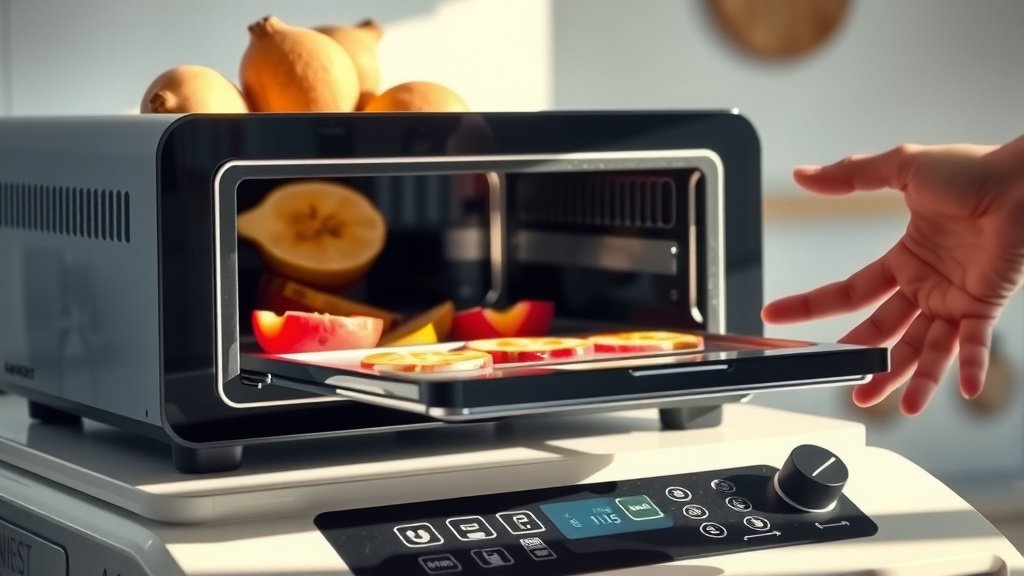
To dehydrate food in a countertop oven, you primarily use its lowest temperature setting, typically around 135-150°F (57-65°C), combined with proper ventilation.
This process removes moisture slowly, preserving foods like fruits, vegetables, and lean meats by inhibiting microbial growth.
- Keep your oven temperature low, usually between 135-150°F (57-65°C), to dry food without cooking it.
- Ensure excellent air circulation by keeping the oven door slightly ajar and rotating trays for even drying.
- Slice food thinly and uniformly to achieve the best and most consistent dehydration results.
- Monitor your food regularly, checking for crispiness or a leathery texture, depending on the item.
- Store your perfectly dehydrated foods in airtight containers to maintain freshness and extend their shelf life.
How To Dehydrate Food In A Countertop Oven?
Dehydrating food in a countertop oven involves using its lowest heat setting and keeping the door slightly ajar to allow moisture to escape, effectively drying your food and preserving it for later.
Why Consider Dehydrating Your Food?
Have you ever wished your fresh produce could last longer than a few days? Dehydrating is a fantastic way to preserve nature’s bounty, transforming perishable items into shelf-stable snacks or ingredients.
It’s a simple process that removes water from food, stopping spoilage and concentrating flavors.
Benefits You’ll Love
- Longer Shelf Life: Your favorite fruits and veggies can last for months or even years.
- Nutrient Retention: We found that low-temperature drying helps retain many essential vitamins and minerals.
- Space-Saving Storage: Dehydrated foods shrink significantly, taking up less pantry space.
- Portable, Healthy Snacks: Create custom, nutritious snacks perfect for on-the-go adventures.
Is Your Countertop Oven Up For the Task?
Not all ovens are created equal, right? While a dedicated dehydrator offers precise control, your countertop oven can absolutely get the job done if you know its capabilities.
The key factors are its ability to maintain low temperatures and provide adequate ventilation.
What Kind of Oven Works Best?
A convection oven is often ideal because its fan helps circulate air, speeding up drying and ensuring even results. If you have a conventional oven, you might just need to rotate trays more often.
We found that ovens with precise temperature dials and settings below 150°F (65°C) give you the most control.
Essential Prep for Dehydrating Success
Think of it like getting ready for a big trip – preparation is everything! Proper food preparation is crucial for safe and delicious dehydrated results.
This includes cleaning, slicing evenly, and sometimes pre-treating your food.
Your Dehydration Prep Checklist
- Clean Your Oven: Ensure no food debris will burn or create off-flavors.
- Gather Your Tools: Sharp knife, cutting board, baking sheets, and parchment paper are helpful.
- Wash and Dry Produce: Thoroughly clean fruits and vegetables, then pat them dry.
- Slice Uniformly: Aim for thin, even slices (1/8 to 1/4 inch) so everything dries at the same rate.
- Pre-treat if Needed: Some fruits benefit from a quick dip in lemon juice to prevent browning (Mayo Clinic).
Setting Up Your Oven for Dehydration
The goal is low and slow, not baking. You want to gently remove moisture, not cook your food. This means a low temperature, proper tray placement, and good airflow.
It might feel a bit different from your usual oven use, but it’s straightforward.
The Right Temperature Matters Most
Set your countertop oven to its lowest temperature, ideally between 135-150°F (57-65°C). This range is crucial because it’s hot enough to evaporate water but cool enough to avoid cooking the food.
Research often connects lower temperatures with better nutrient preservation and color retention (NIH).
Airflow is Your Best Friend
Just like hanging laundry outside, you need airflow to dry things effectively. Prop your oven door open slightly, about 2-4 inches, using a wooden spoon or heatproof object.
This allows humid air to escape and fresh, drier air to enter, which helps speed up the dehydration process.
Monitoring Your Food Through the Process
Patience is definitely a virtue here! Dehydration takes time, and consistent monitoring helps you achieve perfect results.
You’ll want to check on your food every few hours, especially at the beginning.
| Food Item | Recommended Temp | Approx. Dehydration Time | Desired Texture |
|---|---|---|---|
| Apples (sliced) | 135°F (57°C) | 6-12 hours | Leathery and pliable |
| Strawberries (sliced) | 135°F (57°C) | 8-14 hours | Brittle and crisp |
| Bell Peppers (sliced) | 135°F (57°C) | 4-10 hours | Crisp, almost shattering |
| Beef Jerky (thin strips) | 145°F (63°C) | 4-8 hours | Leathery, bends but doesn’t break |
How to Know When Your Food is Perfectly Dehydrated
This is where your senses come into play. Dehydrated food should feel dry and pliable, leathery, or even brittle, depending on the item.
There should be no visible moisture, and it shouldn’t feel sticky or spongy.
To test, let a piece cool completely, then try to bend it. For fruits, it should be leathery. For vegetables, it often snaps when fully dry. If you see any moisture beads, it needs more time.
Storing Your Dehydrated Goodies
You’ve done the hard work, now protect your harvest! Proper storage is key to maintaining the quality and shelf life of your dehydrated foods.
Always allow food to cool completely before packing it away.
Use airtight containers like glass jars, vacuum-sealed bags, or freezer bags. Store them in a cool, dark, dry place to prevent moisture reabsorption and maintain freshness.
Conditioning for Long-Term Storage
Many experts say that a quick conditioning step can prevent spoilage and ensure even dryness. After dehydrating, place cooled food loosely in a jar for a week, shaking it daily.
This distributes any residual moisture evenly. If you see condensation, return the food to the oven for more drying.
Safety Tips for Oven Dehydration
Safety first, always! While dehydrating is generally safe, a few practices ensure both food safety and oven safety.
You want to protect your food from spoilage and keep your kitchen safe.
Food Safety Essentials
Cleanliness is paramount when preparing food for dehydration. Many guidelines point to clean hands and surfaces as a good first step (CDC).
For meats like jerky, pre-heating to 160°F (71°C) before dehydration or post-heating can destroy harmful bacteria.
Conclusion
Dehydrating food in your countertop oven is a simple, effective, and incredibly rewarding way to preserve your favorite foods. It’s an accessible technique that extends shelf life, locks in nutrients, and creates delicious, healthy snacks.
By controlling temperature, ensuring good airflow, and knowing when your food is perfectly dry, you can enjoy the fruits (and veggies!) of your labor for months to come. So, why not give it a try and discover the joys of homemade dehydrated treats?
Can I dehydrate any food in my countertop oven?
Most fruits, vegetables, and lean meats are excellent candidates for oven dehydration. Foods with high fat content, like avocados or fatty meats, are not recommended because fats can go rancid even after drying.
What if my oven doesn’t go as low as 135°F?
If your oven’s lowest setting is higher, like 170°F (77°C), you can still dehydrate, but it will be closer to “oven drying” rather than true dehydration. You’ll need to watch your food very closely to prevent it from cooking instead of just drying, and adjust drying times significantly.
How long do dehydrated foods last?
Properly dehydrated and stored foods can last anywhere from six months to several years. Fruits and vegetables generally last longer than meats, but ideal storage conditions (cool, dark, airtight) are crucial for maximum shelf life.
Do I need a special rack for my oven?
While special fine-mesh dehydrator trays are great, you can typically use your oven’s standard racks. Line them with parchment paper or silicone baking mats to prevent smaller pieces from falling through. Ensure air can still circulate around and under the food.
Can I dehydrate herbs and spices in a countertop oven?
Yes, you can! Herbs and spices dehydrate much faster than fruits and vegetables, often in just a few hours. Use the lowest oven temperature possible and keep the door ajar. Check them frequently, as they can quickly become brittle and lose flavor if over-dried.
