
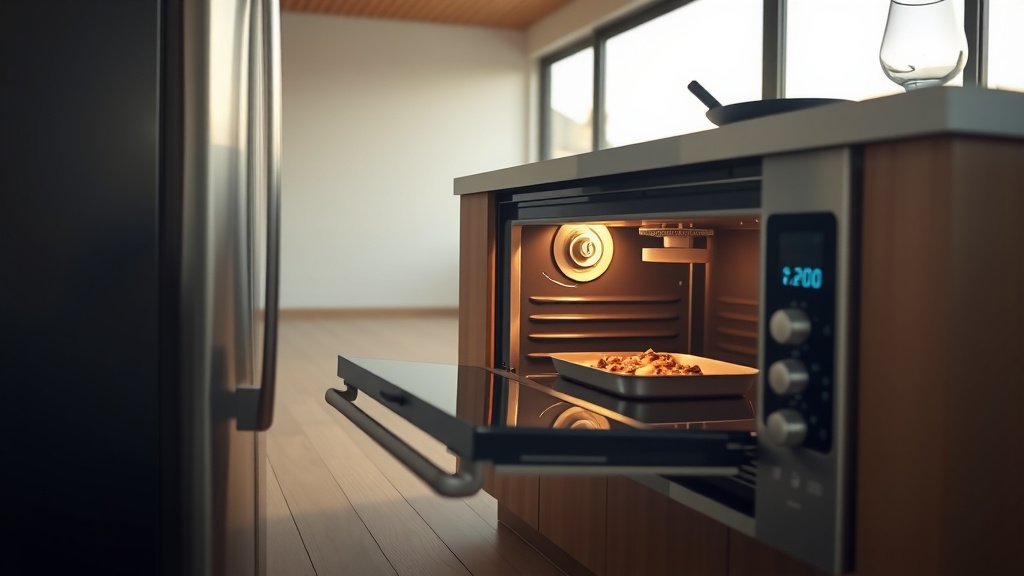
Reheating food in a countertop oven is straightforward. You typically preheat the oven to a moderate temperature, around 300-350°F (150-175°C), and place your food in an oven-safe dish.
Covering the food with foil helps retain moisture, and you cook it until it reaches an internal temperature of 165°F (74°C) for safety.
Here’s a quick summary of what you’ll discover:
- Your countertop oven excels at reheating, offering better results than a microwave for many foods.
- Always prioritize food safety, ensuring food reaches 165°F (74°C) internal temperature.
- Use moderate temperatures and consider covering food to prevent drying out.
- Specific foods, like pizza or fried items, benefit from targeted reheating strategies for optimal taste and texture.
- Knowing common mistakes helps you avoid soggy, dry, or unsafe reheated meals.
How To Reheat Food In A Countertop Oven?
You can effectively reheat food in a countertop oven by using a moderate temperature, typically between 300-350°F (150-175°C), and ensuring the food is heated through to a safe internal temperature.
Why Reheat Food in Your Countertop Oven?
Have you ever reheated pizza in the microwave only to find it soggy and disappointing? Many people have. Your countertop oven, whether it’s a toaster oven, a convection oven, or an air fryer oven, can be a real game-changer. It offers superior results for many leftovers compared to a microwave.
We found that countertop ovens provide even heating. This prevents hot spots and cold centers. Plus, the dry heat can restore crispiness to foods like fried chicken or spring rolls. It’s like giving your leftovers a second chance at deliciousness.
The Golden Rules for Reheating Any Food
Reheating isn’t just about taste; it’s also about safety. You want your food to be appetizing and harmless. There are a few core principles to keep in mind when using your countertop oven.
- Achieve 165°F (74°C): Always reheat food until it reaches an internal temperature of 165°F (74°C). This is crucial for eliminating harmful bacteria (USDA).
- Cover to Retain Moisture: For many dishes, covering with aluminum foil helps keep food from drying out.
- Don’t Overheat: While aiming for safety, don’t blast food at super high temperatures. This can dry it out or burn the outside before the inside is warm.
- Stir or Flip: If possible, stirring casseroles or flipping items like pizza ensures more even reheating.
These simple steps will help you achieve great results consistently.
Reheating Specific Food Types: A Quick Guide
Different foods call for different reheating approaches. Think of it like a chef customizing a dish; you adjust for the best outcome.
Pizza Perfection: Getting That Crisp Crust Back
Nobody wants a floppy, microwaved pizza slice, right? For pizza, you want to restore that delightful crispness. We found that a moderate heat works best. Place slices directly on the oven rack or on a baking sheet. Don’t overcrowd the oven. This allows air to circulate, making the crust crispy again. Some experts even suggest putting a little bit of water in a separate, oven-safe dish at the bottom to create steam, helping the cheese melt without drying out (America’s Test Kitchen).
Pasta Dishes: Avoiding Dryness
Pasta can dry out quickly. To reheat pasta dishes like lasagna or baked ziti, it’s often best to add a splash of water, broth, or sauce. Cover the dish with foil. This helps create steam and keeps the pasta moist. For individual portions, you might just need a tablespoon or two of liquid. You are essentially giving the pasta a little spa treatment to rehydrate it.
Fried Foods: Making Them Crispy Again!
Ah, the magic of crispy fried chicken or French fries! Reheating these in a microwave is a crime against flavor. Your countertop oven, especially if it has an air fry function, is perfect here. Place items in a single layer on a wire rack set over a baking sheet. This allows air to circulate all around them, recreating that crispy texture. No soggy bottoms here!
Casseroles and Baked Goods: Gentle Warmth
For dishes like casseroles, quiches, or muffins, gentle heat is key. You want to warm them through without overbaking or drying them out. Covering with foil is a good general rule, especially for casseroles. For muffins or pastries, a brief, uncovered warm-up often works well to refresh their texture.
Meats and Poultry: Keeping Them Juicy
Reheating meats can be tricky. Overdo it, and they become tough and dry. We found that covering meats with foil and reheating at a lower temperature helps retain moisture. Adding a little broth or gravy to the dish can also help. For larger cuts, slicing them before reheating means they warm up more evenly and quickly.
Temperature and Time: Your Reheating Cheat Sheet
Here’s a general guide to help you decide on the right temperature and time. Remember, these are starting points; your oven might vary!
| Food Type | Suggested Temperature | Estimated Time | Tips |
|---|---|---|---|
| Pizza | 350-375°F (175-190°C) | 8-12 minutes | Direct on rack for crispiness. |
| Pasta/Casseroles | 325-350°F (160-175°C) | 20-30 minutes | Cover with foil, add liquid. |
| Fried Foods | 375-400°F (190-200°C) | 5-10 minutes | Use a wire rack, single layer. |
| Meats | 300-325°F (150-160°C) | 15-25 minutes | Cover with foil, add broth if needed. |
| Baked Goods | 250-300°F (120-150°C) | 5-10 minutes | Often uncovered, brief warming. |
Tools of the Trade: What You’ll Need
You don’t need a fancy kitchen full of gadgets, but a few basics will make your reheating life easier. What’s in your kitchen already? You likely have most of these.
- Oven-Safe Dishes: Glass, ceramic, or metal baking dishes work well.
- Aluminum Foil: Your best friend for moisture retention.
- Tongs or Spatula: For easy flipping and handling.
- Wire Rack: Great for crispy foods, allowing air circulation.
- Meat Thermometer: Absolutely essential for confirming safe internal temperatures.
Common Reheating Mistakes to Avoid
Even with the best intentions, you can make reheating blunders. Let’s make sure you avoid them. Think of these as little potholes on the road to reheating success.
- Not Checking Temperature: Guessing if food is hot enough is risky. Always use a thermometer (USDA).
- Overcrowding the Oven: This leads to uneven heating and soggy results. Give your food space!
- Reheating Multiple Times: Many experts say it’s best to reheat food only once. Multiple reheating cycles can degrade food quality and increase bacterial risk.
- High Heat Without Covering: This is a recipe for dry, tough food. Moisture escapes too quickly.
- Not Preheating: Just like cooking, preheating your oven ensures consistent, even heating from the start.
When Is Food Safe to Eat Again?
Food safety is paramount. You can’t see or smell harmful bacteria. The only way to know for sure is to measure the internal temperature. Many guidelines point to 165°F (74°C) as the safe internal temperature for reheated foods (CDC). This applies to all leftovers. Use a food thermometer and insert it into the thickest part of the food.
Here’s a quick checklist to ensure your reheated food is safe:
- Has the food reached 165°F (74°C)?
- Is it steaming hot throughout?
- Was it stored properly in the refrigerator?
- Was it reheated within 3-4 days of initial cooking?
Conclusion
Your countertop oven is a versatile tool for reheating. It offers a clear advantage over microwaves for many dishes, delivering better texture and flavor. By understanding a few key principles – like temperature control, covering food, and always prioritizing food safety by reaching 165°F – you can consistently bring your leftovers back to life. With a little practice, you’ll become a reheating pro, enjoying delicious meals without waste. So, go ahead and give your favorite foods a delightful second act!
How do I stop food from drying out when reheating in a countertop oven?
To prevent food from drying out, always cover it with aluminum foil. For dishes like pasta or casseroles, adding a splash of liquid such as water, broth, or sauce before covering can also help retain moisture and improve texture.
Can I reheat frozen food directly in a countertop oven?
Yes, you can reheat most frozen foods directly in a countertop oven. However, it will take longer than reheating refrigerated food. Make sure to check the internal temperature with a food thermometer to ensure it reaches 165°F (74°C) before serving.
What’s the best way to reheat different types of bread or pastries?
For most bread and pastries, a moderate temperature of 250-300°F (120-150°C) for about 5-10 minutes works well. Covering might be needed for softer items like muffins to prevent excessive crusting, while a brief, uncovered reheat can restore crispiness to toast or croissants.
Is it safe to reheat food multiple times in a countertop oven?
Many experts advise against reheating food multiple times. It’s generally recommended to reheat food only once. Repeated heating and cooling cycles can degrade food quality and increase the risk of bacterial growth, even if the food reaches a safe temperature each time.
My countertop oven has a convection setting. Should I use it for reheating?
Yes, the convection setting can be excellent for reheating, especially for foods you want to be crispy like pizza or fried items. Convection circulates hot air, which can lead to faster and more even heating, and help restore a desirable texture. Adjust cooking times downwards if using convection.
