
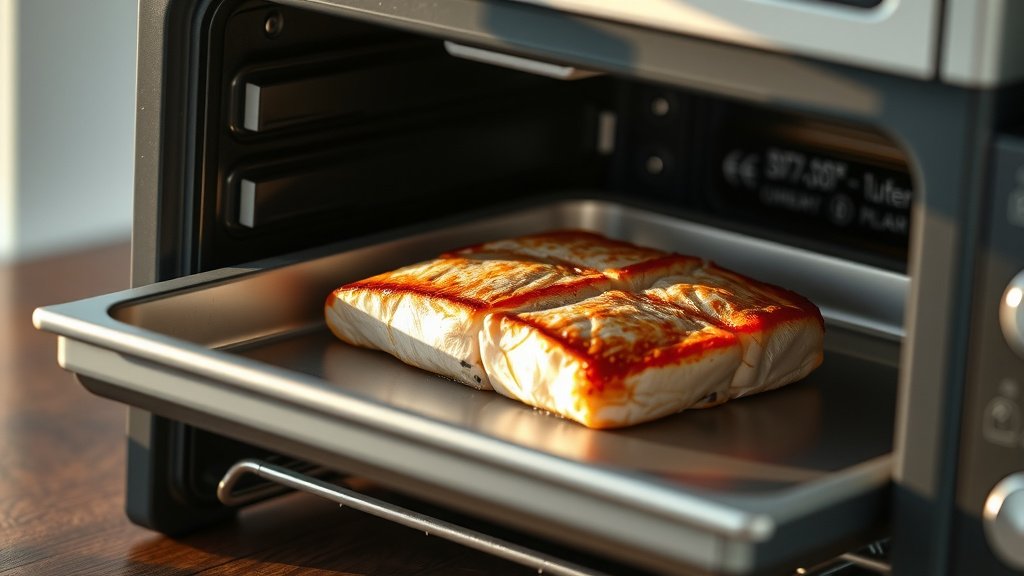
To cook fish in a toaster oven, preheat the appliance to 400°F (200°C), lightly oil your fish, and then bake for approximately 10-15 minutes until it flakes easily with a fork.
This simple method helps you achieve tender, moist fish with minimal effort, making your toaster oven a fantastic tool for healthy, quick meals.
- Preheat your toaster oven to 400°F for most fish varieties.
- Always lightly oil or season your fish for the best flavor and texture.
- Cook times typically range from 10 to 15 minutes, depending on thickness.
- Use a meat thermometer to ensure an internal temperature of 145°F (63°C) for safety.
- Enjoy a fast, healthy, and delicious fish meal right from your compact kitchen helper.
How To Cook Fish In A Toaster Oven?
You can effectively cook fish in a toaster oven by preheating it, seasoning your chosen fillet, and baking it until it reaches a safe internal temperature and flakes beautifully.
This technique offers a convenient way to prepare a healthy meal, especially when you are cooking smaller portions or want to save energy.
Why Choose Your Toaster Oven for Fish?
Perhaps you are wondering, “Why bother with a toaster oven when I have a full-sized one?” Well, for smaller meals, a toaster oven is a real energy saver. It heats up much faster, cutting down on preheating time and your electricity bill.
Plus, it frees up your main oven for other dishes, which is perfect when you are juggling multiple recipes. We found that many home cooks appreciate the convenience for quick dinners.
Picking the Best Fish for Your Toaster Oven
The type of fish you choose can make a big difference. Think about firm, flaky white fish like cod, tilapia, or halibut. Salmon is also a fantastic choice, offering rich flavor and healthy fats.
These varieties tend to hold up well to the toaster oven’s direct heat without drying out too quickly. Many experts say that thicker fillets are often more forgiving (American Heart Association).
Thin Fillets vs. Thicker Cuts
Thin fillets, like sole or flounder, cook very quickly. You will need to watch them closely to avoid overcooking. Thicker cuts, such as cod loins or salmon steaks, are more forgiving and retain moisture better, but they will need more time.
We found that for beginners, a fillet about an inch thick works well, offering a good balance of cook time and ease. You can always adjust the cook time based on the specific fish you are using.
Essential Prep Before You Cook Fish
Proper preparation is key to a successful fish dinner. This part is super simple, but it makes a huge impact on the final taste and texture. Don’t skip these few easy but vital steps.
A little bit of attention now saves you from dry or sticky fish later. Let us get your fish ready to meet the heat in your reliable toaster oven.
To Thaw or Not to Thaw?
Most fish recipes assume you are starting with thawed fish. For best results, it is generally recommended to fully thaw frozen fish in the refrigerator overnight or under cold running water. This helps ensure even cooking.
However, some frozen fish fillets are designed to be cooked from frozen, which is a great shortcut! Always check the package instructions if you plan to cook fish without thawing first, as this will affect cooking times significantly.
Seasoning Your Fish for Flavor
A simple seasoning can elevate your fish from good to amazing. Start with a light brush of olive oil or butter to help keep the fish moist and prevent sticking. Then, sprinkle with salt, pepper, and your favorite herbs. Lemon juice adds a bright, fresh taste.
Consider adding a pinch of garlic powder or paprika for an extra kick. Remember, you want to enhance the fish’s natural flavors, not overpower them, so keep the seasoning simple and balanced.
Setting Up Your Toaster Oven for Success
Think of your toaster oven as a mini version of your main oven. It needs to be properly set up to give you the best results. A little preparation here will lead to perfectly cooked fish every time.
Ensuring the right temperature and positioning of your baking tray are small steps that create a big difference. You are almost ready to start cooking that delicious fish dinner.
Ideal Temperature and Time Settings
For most fish fillets, we found that preheating your toaster oven to 400°F (200°C) is ideal. This temperature creates a nice crust while keeping the inside moist. Cooking time usually ranges from 10 to 15 minutes, depending on the thickness of your fish.
A good rule of thumb is to cook fish for about 10 minutes per inch of thickness. Always check for doneness by seeing if the fish flakes easily with a fork, or use a meat thermometer for accuracy (USDA recommends 145°F or 63°C internal temperature).
Step-by-Step Cooking Guide for Perfect Fish
- Preheat Your Toaster Oven: Set it to 400°F (200°C) and let it fully preheat.
- Prepare Your Baking Tray: Line a small baking sheet or the toaster oven tray with parchment paper or foil, then lightly oil it.
- Season Your Fish: Pat your fish fillets dry, brush with a little olive oil, and season with salt, pepper, and any other desired spices.
- Place Fish on Tray: Arrange the fish in a single layer on the prepared tray, making sure they do not overlap.
- Bake Until Done: Cook for 10-15 minutes, or until the fish flakes easily with a fork and reaches 145°F (63°C) internally.
- Rest Briefly: Remove from the oven and let it rest for a minute or two before serving.
Troubleshooting Common Fish Cooking Issues
Even with the best intentions, sometimes things do not go exactly as planned. Do not worry, these common issues have simple solutions. We have all been there, right?
Understanding what might be going wrong can help you adjust your technique for future, even more successful fish cooking adventures. Let us tackle these small hurdles together.
Why is My Fish Dry?
Dry fish is often a sign of overcooking. Toaster ovens can cook quickly, so it is easy to leave the fish in for too long. Next time, try reducing your cooking time by a minute or two, or check it earlier.
Also, ensure you are using a little oil or butter on the fish before cooking. This creates a barrier that helps lock in moisture, leading to a much more succulent and enjoyable meal.
What if My Fish Sticks?
Fish sticking to the pan is frustrating! This usually happens if the tray is not adequately greased or if you are using a pan that lacks a non-stick surface. Try lining your toaster oven tray with parchment paper or aluminum foil, then spray it with cooking spray.
Another trick is to ensure your fish is fully cooked before attempting to flip or remove it. Well-cooked fish naturally releases from the surface more easily, making for a cleaner presentation.
Serving Suggestions for Your Toaster Oven Fish
Once your perfectly cooked fish is ready, what should you serve it with? The beauty of toaster oven fish is its versatility. You can pair it with many simple, healthy sides.
Consider dishes that complement the delicate flavor of the fish without overpowering it. Here are a few ideas to get your culinary creativity flowing for a complete and balanced meal:
| Side Dish Idea | Why It Works |
|---|---|
| Steamed Asparagus | Light, fresh, and cooks quickly alongside the fish. |
| Quinoa Salad | Nutrient-rich, can be prepared ahead of time. |
| Roasted Vegetables | Broccoli, bell peppers, or zucchini roast well in the toaster oven. |
| Lemon Herb Rice | Adds a complementary zest and comforting texture. |
| Simple Green Salad | Refreshing contrast, easy to toss together. |
Quick Tips for Cleanup
You have just enjoyed a delicious, healthy meal. Now for the less exciting part: cleanup. But it does not have to be a chore! A few simple steps can make your toaster oven cleanup a breeze.
Thinking ahead can save you time and effort later. Here is a handy checklist to keep your toaster oven sparkling clean and ready for your next culinary adventure:
- Wipe down spills immediately after cooking.
- Use parchment paper or foil on your baking tray to catch drips.
- Remove the crumb tray and empty it regularly.
- Clean the interior with a damp cloth and mild soap when cooled.
- For stubborn spots, use a baking soda paste and let it sit.
- Ensure all parts are dry before using the oven again.
Conclusion
Cooking fish in a toaster oven is a wonderfully simple and efficient way to prepare a healthy meal. From choosing the right fillet to perfect seasoning and precise timing, you now have the knowledge to create tender, flaky fish every time.
Remember, practice makes perfect, and your toaster oven is a fantastic tool for mastering this skill. So, go ahead, give it a try, and enjoy the convenience and delicious results of toaster oven cooked fish.
Can I cook frozen fish fillets directly in a toaster oven?
Yes, you can cook some frozen fish fillets directly in a toaster oven, but you must check the package instructions first. These fillets usually require a longer cooking time and may need a slightly lower temperature to cook through evenly without drying out the outside.
How do I prevent fish from sticking to the toaster oven tray?
To prevent sticking, always line your toaster oven tray with parchment paper or aluminum foil, then lightly brush or spray it with oil. Ensuring the fish is fully cooked also helps, as it tends to release more easily from the cooking surface.
What is the best type of fish for a toaster oven?
Firm, flaky white fish like cod, tilapia, or halibut are excellent choices for a toaster oven. Salmon also works very well due to its natural oils, which help keep it moist. These types hold up well to the concentrated heat.
Do I need to flip the fish when cooking it in a toaster oven?
Generally, you do not need to flip thinner fish fillets when cooking them in a toaster oven, as the compact size provides even heat distribution. For thicker cuts, or if you prefer a slightly crispier top and bottom, you may gently flip it halfway through the cooking process.
How do I know when the fish is perfectly cooked in a toaster oven?
The fish is perfectly cooked when it flakes easily with a fork at its thickest part. For food safety, we found that using a meat thermometer to check for an internal temperature of 145°F (63°C) is the most reliable method (USDA guidelines).
