
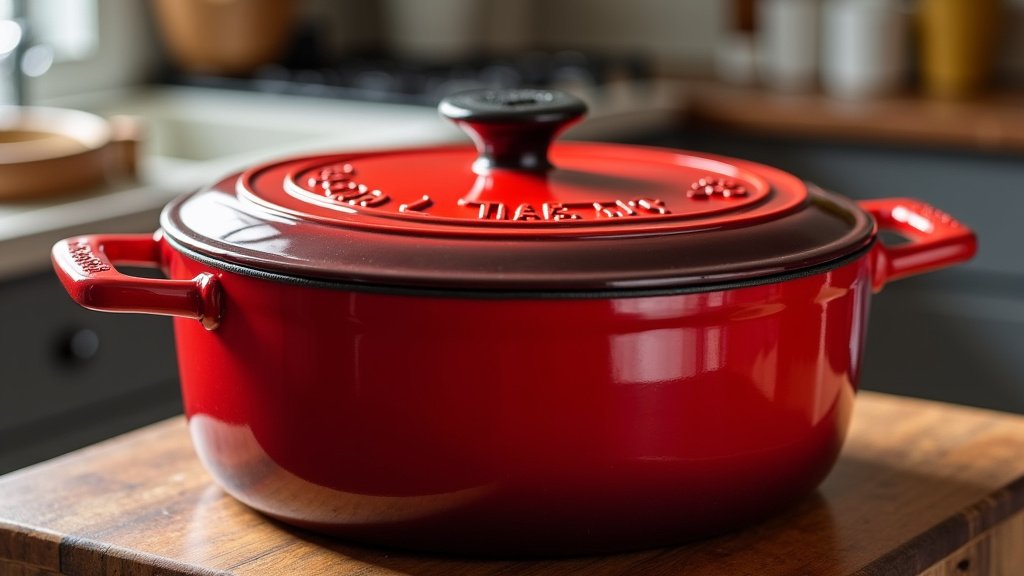
An enameled Dutch oven is a cast iron pot coated with a layer of glass. This enamel coating creates a non-reactive surface for cooking. It makes your Dutch oven much easier to clean and maintain.
This special coating keeps food from sticking and protects the iron. It also lets you cook acidic foods without a metallic taste. You get all the benefits of cast iron without the fuss of seasoning.
- Enameled Dutch ovens are cast iron pots with a glass coating.
- The coating stops rust and makes cleaning simple.
- You can cook many different foods in them.
- They hold heat well for even cooking.
Let’s dive deeper into what makes these kitchen workhorses so popular and how you can get the most out of yours.
Understanding Your Enameled Dutch Oven
An enameled Dutch oven is a heavy-duty pot designed for slow cooking. It combines the benefits of cast iron with a protective glass coating. This coating makes it versatile for many kitchen tasks.
You get even heating and moisture retention, which are hallmarks of cast iron. But you avoid the seasoning and delicate cleaning that traditional cast iron needs. It’s a true kitchen workhorse.
What Exactly Is That Enamel Coating?
The enamel on your Dutch oven isn’t just paint. It’s actually a form of glass fused to the cast iron at high temperatures. This process creates a smooth, durable surface.
Think of it like a very strong, non-porous glaze. This glaze is what gives your Dutch oven its color. It also provides many of its unique cooking benefits.
The Science Behind the Shine
How does this glass coating work? When cast iron is heated, the liquid glass (enamel) is applied. It then cools and hardens, creating a bond with the metal (Cleveland Clinic). This bond makes the enamel very tough and resistant to chipping.
This process also means the enamel is non-reactive. This is a big deal for cooking. It means you can cook acidic foods like tomato sauce or wine-based stews. You won’t get that metallic taste you sometimes find with bare cast iron.
Benefits Over Bare Cast Iron
You might be wondering, “Why not just use regular cast iron?” Good question! While bare cast iron is fantastic, enameled versions offer some distinct advantages:
- No seasoning required: You don’t need to oil and bake it regularly.
- Easier cleaning: Food sticks less, and cleanup is a breeze.
- Non-reactive surface: Cook any food without metallic flavors.
- Rust-proof: The enamel coating protects the iron from moisture.
- Appearance: They come in many beautiful colors for serving.
These benefits mean your enameled Dutch oven is ready to use right out of the box. No special prep needed.
Cooking Versatility: What Can You Make?
The short answer? Almost anything! Your enameled Dutch oven is incredibly versatile. It’s perfect for a wide range of cooking methods and recipes.
Many home cooks find it becomes their most-used pot. It can go from stovetop to oven with ease. You’ll love its even heat distribution.
Stovetop Superpower
On the stovetop, it’s excellent for braising meats. Think tender short ribs or flavorful pot roasts. The heavy lid locks in moisture and flavor.
It’s also great for making soups and stews. You can sauté vegetables directly in the pot. Then add liquids and simmer away. The even heat prevents hot spots and burning.
Oven-Ready Magic
Transferring your Dutch oven from stovetop to oven is a common practice. This is where it really shines for things like baked bread. Many recipes call for baking bread in a preheated Dutch oven to create a perfect crust (King Arthur Baking Company).
It’s also ideal for casseroles and slow-cooked dishes. The enclosed environment helps keep your food moist and prevents drying out. We found this makes for incredibly tender results.
A Table of Culinary Uses
| Cooking Method | Typical Foods | Why the Dutch Oven Excels |
|---|---|---|
| Braising | Roasts, short ribs, chicken thighs | Even, slow heat; locks in moisture for tenderness. |
| Soups & Stews | Beef stew, chili, chicken noodle soup | Retains heat; non-reactive for acidic ingredients. |
| Baking | No-knead bread, casseroles, baked pasta | Excellent heat retention and oven-safe properties. |
| Frying | Deep-fried chicken, doughnuts | Maintains oil temperature well due to mass. |
| Simmering | Sauces, beans, pulled pork | Gentle, consistent heat prevents scorching. |
As you can see, your enameled Dutch oven can handle a lot. It truly is a do-it-all piece of cookware.
Choosing the Right Size and Shape
Dutch ovens come in various sizes and shapes. How do you pick the best one for your kitchen? Think about your cooking habits and household size.
A good starting point for most families is a 5-7 quart round oven. It’s versatile enough for many recipes. But you might need larger or smaller depending on your needs.
Understanding Quarts and Servings
- 2-3 Quarts: Great for 1-2 people, side dishes, or small batches.
- 5-7 Quarts: Ideal for families of 3-5, most main dishes, and standard bread recipes. This is often recommended as a first Dutch oven.
- 7-9+ Quarts: Best for large families, entertaining, or making big batches for meal prep.
Consider what you cook most often. If you bake a lot of bread, check the volume required for your favorite recipes.
Round vs. Oval: What’s the Difference?
Most Dutch ovens are round. This shape promotes even heating. It also fits easily on most stovetop burners.
Oval Dutch ovens are perfect for cooking longer cuts of meat. Think whole chickens or long roasts. They might not fit as well on standard burners, however. Consider if you’ll be cooking those specific items often.
Caring for Your Enameled Dutch Oven
Taking care of your enameled Dutch oven is fairly simple. Its robust construction means it can last for generations. A few simple steps will keep it looking and performing its best.
We found that proper care helps preserve the enamel. This prevents sticking and ensures your food cooks perfectly every time.
Cleaning Made Easy
After cooking, let your Dutch oven cool down completely. Sudden temperature changes can damage the enamel. Wash it with warm, soapy water and a non-abrasive sponge.
For stubborn stuck-on food, fill it with water and a tablespoon of baking soda. Simmer for 10-15 minutes. This usually loosens everything up. Then wash as usual. Always dry it thoroughly to prevent any potential rust on exposed iron, like the rim.
Avoid These Common Mistakes
To ensure your enameled Dutch oven lasts, here are some things to avoid:
- Don’t use metal utensils: They can scratch the enamel. Stick to wood, silicone, or plastic.
- Avoid high heat with an empty pot: Always add oil or food before heating. Extreme dry heat can damage the enamel.
- No harsh scrubbers: Skip steel wool or abrasive cleaners. They can etch the surface.
- Don’t drop it: It’s heavy and the enamel can chip if dropped.
- Avoid sudden temperature changes: Don’t put a hot pot into cold water, or a cold pot into a very hot oven.
Following these tips will keep your Dutch oven in top condition. You’ll enjoy cooking with it for many years.
Is an Enameled Dutch Oven Right for You?
You might still be asking if this type of cookware is a good fit. We found that for most home cooks, the answer is a resounding yes! They offer a great balance of performance and ease of use.
If you love slow-cooked meals, baking, or simply having a versatile pot, it’s a fantastic investment. The upfront cost might be higher than other pots. But their durability means they can be a cherished heirloom.
Checklist for Consideration
To help you decide, ask yourself these questions:
- Do I enjoy cooking stews, soups, and braises?
- Am I looking for cookware that goes from stovetop to oven?
- Do I want the benefits of cast iron without the maintenance?
- Is easy cleanup important to me?
- Do I appreciate durable cookware that lasts for years?
If you answered yes to most of these, an enameled Dutch oven could be your next favorite kitchen tool.
Conclusion
Your enameled Dutch oven is a fantastic kitchen tool. It brings together the durability of cast iron with the ease of a non-reactive cooking surface. You get versatility for everything from slow-cooked stews to freshly baked bread. Proper care ensures it will be a cornerstone of your kitchen for many years. We found it’s truly an investment that pays off in countless delicious meals.
Ready to try one out? Choose a size that fits your cooking needs and start exploring all the amazing dishes you can create!
Frequently Asked Questions
Is an enameled Dutch oven dishwasher safe?
Most manufacturers recommend hand washing your enameled Dutch oven. While some might technically be dishwasher safe, the harsh detergents can dull the enamel finish over time. Hand washing helps preserve its appearance and longevity.
Can I use metal utensils in an enameled Dutch oven?
No, you should avoid using metal utensils. They can scratch or chip the enamel coating, which can damage the non-stick surface. Always opt for wood, silicone, or heat-safe plastic tools to protect your pot.
Why does food sometimes stick to my enameled Dutch oven?
Even though it’s “non-stick,” food can still stick if the pot isn’t heated properly or if you’re cooking with too little fat. Ensure your Dutch oven is adequately preheated and use enough oil or butter for cooking. Letting food sit too long after cooking can also cause sticking.
What’s the ideal temperature for cooking in an enameled Dutch oven?
Enameled Dutch ovens are excellent for medium to medium-low heat cooking. While they can withstand high temperatures, using excessively high heat, especially when empty, can damage the enamel. Most recipes call for moderate heat settings, allowing for even cooking and moisture retention.
How do I remove burnt-on food from my enameled Dutch oven?
For stubborn burnt-on food, fill the pot with water and add a tablespoon of baking soda. Bring it to a gentle simmer for 10-15 minutes, then let it cool. The baking soda helps loosen the stuck-on bits, making them easier to wipe away with a non-abrasive sponge.
