
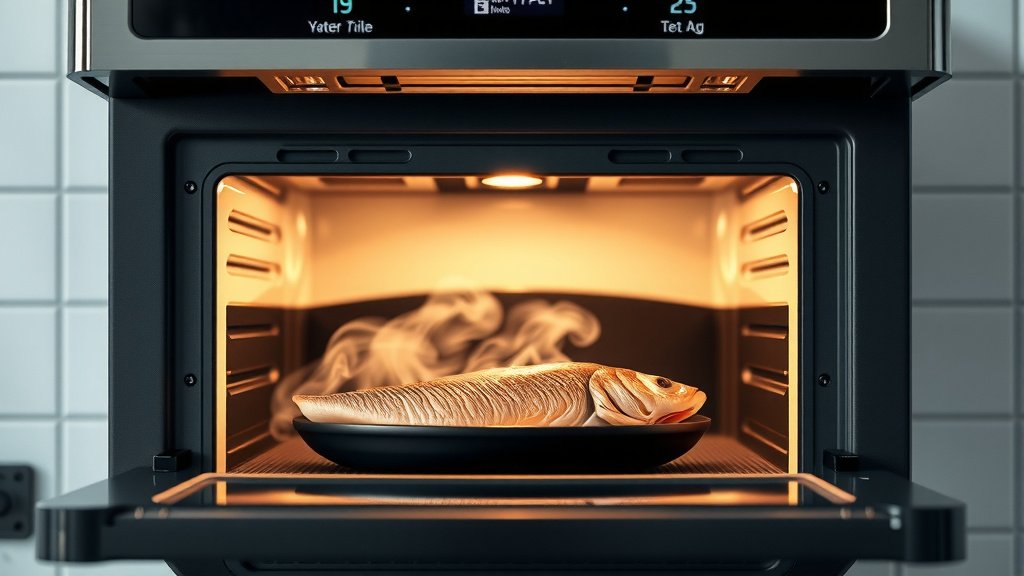
Yes, you absolutely can cook fish in a steam oven, and it’s one of the best ways to prepare it.
Steam cooking keeps your fish incredibly moist, flaky, and full of its natural flavor, making it a favorite for many home chefs.
- Steam ovens are perfect for cooking fish, delivering consistently moist, flaky results every time.
- The gentle steam preserves vital nutrients and the fish’s natural taste without drying it out.
- It’s a healthy, fat-free cooking method that often speeds up your meal preparation.
- Almost all fish types, from delicate sole to firm salmon, thrive in a steam oven.
- You will achieve delicious, restaurant-quality fish with minimal effort and cleanup.
Can You Cook Fish In A Steam Oven?
Absolutely, cooking fish in a steam oven is not only possible but often the preferred method for many.
You are unlocking a secret to perfectly cooked fish that stays tender, juicy, and packed with flavor.
Why Steam is King for Fish
When you use a steam oven, you are introducing moisture directly into the cooking process.
This prevents the fish from drying out, which is a common problem with traditional baking or pan-frying methods.
Imagine biting into a piece of fish that just melts in your mouth; that’s the steam oven difference you’ll experience.
The Health Benefits You’ll Love
Cooking with steam means you don’t need added oils or fats, making your fish dishes incredibly healthy.
Many experts say that steaming helps retain more of the fish’s natural vitamins and minerals (Mayo Clinic).
This method keeps your meal light, nutritious, and still incredibly satisfying, supporting a healthy eating lifestyle.
What Fish Works Best?
You’ll find that nearly any type of fish performs beautifully in a steam oven.
From delicate white fish to oily, flavorful fillets, the steam treats them all with care.
It’s all about matching the cooking time to the fish’s thickness, not its type.
Delicate Fillets
Think sole, tilapia, cod, or snapper. These thin cuts cook quickly and stay incredibly tender.
Steam helps them hold their shape and prevents them from falling apart, ensuring a beautiful presentation.
Steaks and Thicker Cuts
Salmon, swordfish, and tuna steaks are perfect candidates for your steam oven.
The steam cooks them evenly through to the center without overcooking the edges, delivering succulent results.
Whole Fish
Ever wanted to steam a whole fish? Your steam oven makes it surprisingly simple.
The entire fish cooks uniformly, resulting in moist flesh and skin that easily separates from the bone (NIH).
Setting Your Steam Oven for Perfect Fish
Getting the settings right is key to achieving that perfect steam-cooked fish.
Don’t worry, it’s simpler than you might think and quickly becomes second nature.
Temperature Tips
Most fish cooks well at temperatures between 180°F (82°C) and 212°F (100°C) in a full steam setting.
For a flakier texture, some chefs prefer slightly lower temperatures for a bit longer, allowing gentle heat penetration.
Timing is Everything
Cooking time depends on the thickness of your fish, not its weight.
A good rule of thumb is about 10 minutes per inch of thickness for fillets or steaks (Cleveland Clinic).
Always check for doneness; the fish should flake easily with a fork.
Simple Steps to Steam Your Fish
Ready to try it yourself? Here’s a straightforward guide to steaming your next fish meal.
You’ll be surprised how quickly you become a master of steam-cooked seafood.
Prepping Your Catch
Start by rinsing your fish under cold water and patting it completely dry with paper towels.
This simple step helps seasonings adhere better and prevents a watery texture.
Seasoning for Success
Keep your seasonings light to let the fish’s natural flavor shine.
A sprinkle of salt, black pepper, a squeeze of lemon, and fresh herbs like dill or parsley are often all you need.
Place your seasoned fish on a perforated steam tray for even cooking exposure.
Beyond Just Steaming: Combi-Steam Options
Many modern steam ovens offer combi-steam functions, blending steam with dry heat.
This feature allows you to achieve a crispy skin while keeping the inside moist.
Consider using combi-steam for a slightly different texture, perhaps for fish where you want a crisp exterior.
| Cooking Method | Primary Benefit | Texture Outcome |
|---|---|---|
| Pure Steam | Maximum moisture retention, nutrient preservation. | Incredibly flaky, tender, and moist throughout. |
| Combi-Steam (Low Moisture) | Moisture with a slight crisp, faster cooking. | Moist interior with a delicate, slightly firmer exterior. |
| Combi-Steam (High Moisture) | Faster cooking, tender results, minor browning. | Very tender, moist, and a hint of color on the surface. |
Common Mistakes to Avoid
To ensure your steamed fish is always perfect, watch out for a few common pitfalls.
You’ll quickly master the technique and enjoy consistently delicious meals.
- Overcrowding the tray: Give your fish space for even steam circulation.
- Overcooking: Use a thermometer or fork test to avoid dry fish.
- Not seasoning: Even light seasoning enhances the natural taste.
- Forgetting to preheat: Ensure the oven is ready before adding fish.
- Using too much liquid: Stick to recommended water levels for your oven.
Cleaning Up After Steaming
One of the quiet joys of steam cooking fish is the minimal cleanup.
Usually, a quick wipe down of the oven interior and a wash of the steam tray is all it takes.
You’ll appreciate this simplicity after enjoying your gourmet-level fish.
Conclusion
Cooking fish in a steam oven is a fantastic method that guarantees moist, flavorful, and healthy results every time.
You’ll appreciate the ease, the nutritional benefits, and the consistently delicious outcome.
So go ahead, give your steam oven a try for your next fish dish; you might just discover your new favorite way to cook.
Can I steam frozen fish directly in the oven?
Yes, you can often steam frozen fish directly in a steam oven, though it will take longer to cook through. We found that adding about 50% more cooking time is a good starting point compared to fresh fish.
Do I need to add water to the steam oven when cooking fish?
Most steam ovens have a built-in water reservoir that you need to fill. The oven then generates the steam automatically, so you don’t add water directly to the cooking cavity with the fish.
What is the ideal internal temperature for cooked fish?
For most types of fish, the ideal internal temperature when fully cooked is 145°F (63°C). You can check this with a food thermometer inserted into the thickest part of the fish (USDA guidelines).
Can I use parchment paper when steaming fish?
Using parchment paper is generally fine and can help with cleanup. However, ensure it doesn’t block the steam vents if you’re using a perforated tray, as this could impede proper steam circulation around the fish.
How does steam cooking compare to baking fish in terms of texture?
Steam cooking typically produces a much moister, more tender, and flakier texture compared to baking. Baking can sometimes dry out the fish if not carefully monitored, whereas steam cooking infuses moisture.
