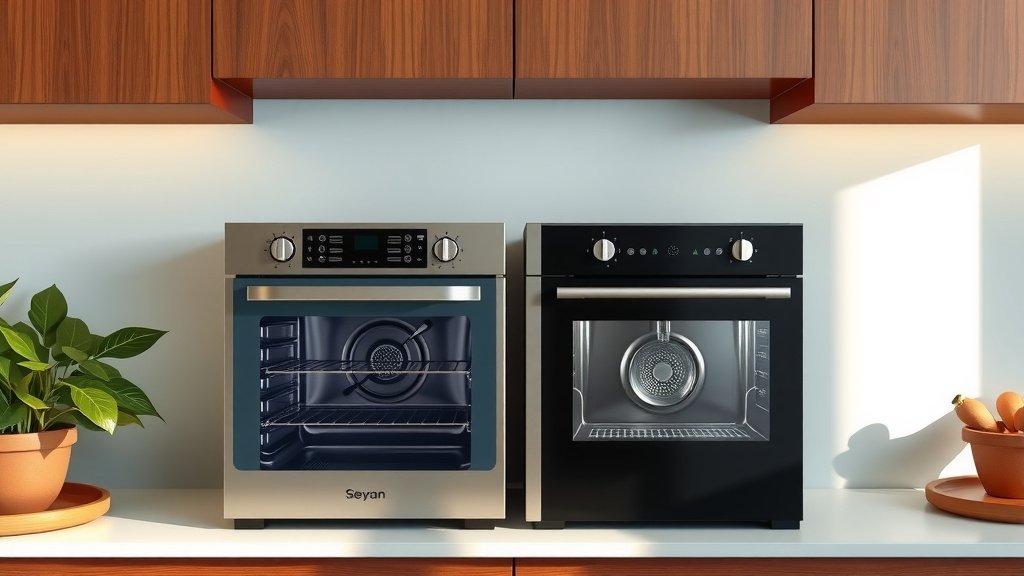
A steam oven cooks food using hot vapor, preserving moisture and nutrients, while a convection oven uses a fan to circulate dry hot air, creating crispy, evenly browned results.
The primary difference lies in their cooking methods: steam ovens prioritize gentle, moist heat, perfect for delicate foods, whereas convection ovens excel at rapid, dry-heat cooking for roasting and baking.
- Steam ovens cook with pure water vapor, keeping foods moist and nutrient-rich.
- Convection ovens use a fan to circulate dry heat, leading to faster cooking and crispier textures.
- Steam is great for vegetables, fish, and reheating, while convection excels at roasting meats and baking.
- Your cooking style and desired food results will largely determine which oven suits you best.
What Is The Difference Steam Oven Vs Convection?
When you are looking at kitchen appliances, you might wonder about the big differences. The core distinction between a steam oven and a convection oven comes down to how they use heat to cook your food.
Understanding Convection Ovens
Let’s start with convection ovens. Many people already have some experience with them, or at least a traditional oven that might include a convection setting. They are very popular for a good reason.
How Convection Works
A convection oven uses a fan to move hot air around the cooking chamber. This fan ensures that the hot air reaches every part of your food quickly and evenly. It is like having a gentle breeze of heat constantly touching your meal.
This circulation helps to cook food faster than a conventional oven. You might even notice that the oven temperature settings are often lower when using convection, which saves energy (Department of Energy).
Benefits of Convection
One major benefit is how evenly food cooks. No more burnt edges and undercooked centers! We found that convection cooking also helps foods brown and crisp up beautifully.
Think about a golden-brown roasted chicken or perfectly crisp cookies. That is the magic of convection working its wonders in your kitchen.
Best Uses for Convection
So, what should you cook in a convection oven? Many experts say it is ideal for roasting meats like poultry and beef, giving them a lovely crust. It also works wonders for baking cookies, pastries, and pizzas.
If you want to bake multiple trays of food at once, convection helps ensure they all cook at a similar rate. This makes holiday meal prep a little less stressful, doesn’t it?
Understanding Steam Ovens
Now, let us turn our attention to steam ovens. These appliances are growing in popularity, especially for those who care about healthy cooking and moisture retention.
How Steam Cooking Works
A steam oven injects pure water vapor into the cooking cavity. This creates a moist, hot environment that cooks food gently. It is similar to steaming food on a stovetop but inside an enclosed oven space.
The steam surrounds your food, transferring heat without drying it out. This method is incredibly kind to delicate ingredients.
Benefits of Steam
The biggest benefit of steam ovens is their ability to lock in moisture and nutrients. When you cook with steam, your vegetables retain more of their vibrant colors and vitamins (USDA).
We found that food cooked in a steam oven often tastes fresher and more natural. It is also excellent for reheating leftovers, bringing them back to life without drying them out like a microwave can.
Best Uses for Steam
Steam ovens truly shine when cooking delicate items. Think about perfectly tender fish, fluffy rice, or crisp-tender vegetables. They are also fantastic for baking bread, giving it a beautiful crust and soft interior.
Some people even use them for gentle poaching or blanching. If you enjoy healthful cooking and appreciate retaining natural flavors, a steam oven might be your new best friend.
Key Differences at a Glance
To help you see the core differences side-by-side, here is a quick comparison table. It might help clarify which features matter most for your cooking needs.
| Feature | Convection Oven | Steam Oven |
|---|---|---|
| Cooking Method | Circulated dry hot air | Pure hot water vapor |
| Primary Result | Browning, crisping, faster cooking | Moisture retention, nutrient preservation |
| Ideal Foods | Roasts, baked goods, crispy items | Vegetables, fish, bread, delicate items |
| Texture Focus | Crunchy exterior, tender interior | Tender, moist throughout |
| Reheating | Can dry out foods | Revitalizes food, adds moisture |
Cooking Results: What to Expect
The final texture and taste of your food will vary quite a bit between these two oven types. This is where your personal preferences really come into play.
Browning and Crisping
If you love a beautiful, golden-brown crust on your roasts or crispy edges on your cookies, a convection oven is the clear winner. The dry, circulating heat actively promotes the Maillard reaction, which creates those desirable browning effects.
Moisture and Tenderness
On the other hand, if you prioritize moist, tender results, especially for items like fish, chicken breasts, or vegetables, the steam oven truly excels. It prevents food from drying out, keeping it juicy and flavorful from the inside out.
Beyond the Basics: Hybrid Ovens
What if you want the best of both worlds? Many manufacturers now offer combination steam and convection ovens, often called combi-steam ovens. These appliances let you switch between steam, convection, or even use both modes simultaneously.
A combi-steam oven can roast a chicken with a crispy skin while keeping the meat incredibly moist. They are a versatile option, though often come with a higher price tag. They are excellent for those who cook a wide variety of dishes.
Which Oven is Right for Your Kitchen?
Choosing between a steam oven, convection oven, or a combination model depends on your cooking habits and culinary goals. Think about what you cook most often and what results you crave.
Consider these points to help you decide:
- Do you frequently roast meats and vegetables for a crispy finish?
- Is baking bread or achieving a perfect pie crust a top priority for you?
- Are you focused on nutrient retention and keeping foods wonderfully moist?
- Do you often reheat leftovers and dislike them drying out?
- Do you have the budget and space for a more versatile, often larger, combi-steam unit?
Installation and Maintenance Considerations
Both oven types require standard electrical connections. Steam ovens, however, will also need a water source, either a direct plumbed connection or a refillable water reservoir. This can affect installation choices.
Cleaning a steam oven typically involves descaling to remove mineral buildup, similar to a coffee machine. Convection ovens usually have self-cleaning features, though the fan area needs occasional attention. Think about your willingness for different types of upkeep.
Conclusion
The choice between a steam oven and a convection oven boils down to your cooking priorities. A convection oven is your go-to for speed, browning, and crisp textures, perfect for roasting and baking. A steam oven, conversely, shines with its ability to keep food moist, nutrient-rich, and incredibly tender, ideal for vegetables, fish, and delicate dishes.
For ultimate versatility, a combi-steam oven can offer the advantages of both. Whichever you choose, understanding their unique strengths will help you create amazing meals tailored to your taste and health goals. Happy cooking!
Is a steam oven healthier than a convection oven?
Many experts agree that steam ovens can be healthier because they cook food gently using vapor, which helps preserve more vitamins and minerals compared to dry heat cooking. It also reduces the need for added oils or fats.
Can you bake a cake in a steam oven?
Yes, you can absolutely bake cakes in a steam oven, especially if it is a combi-steam model. The steam can create a beautifully moist cake with a tender crumb, and if combined with convection, you can still achieve a lovely golden-brown top.
Do steam ovens cook faster than convection ovens?
Not necessarily. While steam cooking is efficient, convection ovens often cook foods faster due to the intense circulation of dry, hot air. However, a combi-steam oven using both modes can sometimes cook certain foods very quickly and efficiently.
What are the downsides of a steam oven?
Some potential downsides of steam ovens include their typically higher cost, the need for a water supply (either plumbed or a refillable tank), and the requirement for regular descaling to maintain performance and hygiene. They also do not brown food as effectively as convection.
Can I use my regular oven as a convection oven?
If your regular oven has a dedicated “convection” setting or button, then yes, you can use it as a convection oven. This setting activates a fan that circulates hot air, making your oven function like a true convection unit. If it does not have this specific setting, it is a conventional oven without forced air circulation.