
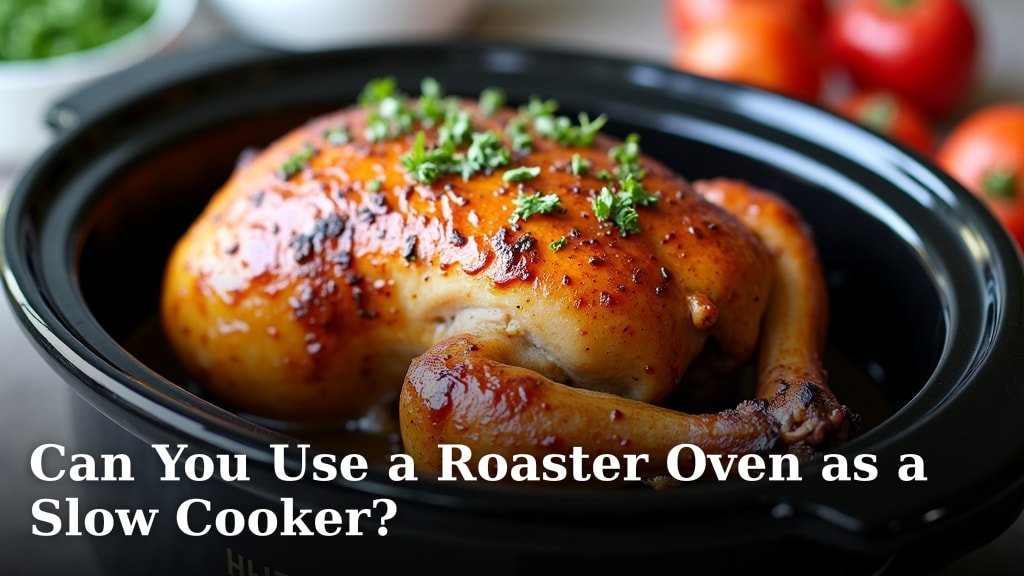
Yes, you can often use a roaster oven as a slow cooker, but with some important differences to keep in mind. Roaster ovens generally cook at higher temperatures than traditional slow cookers. This means you’ll likely need to use a lower setting and adjust cooking times to avoid overcooking your food. Think of it as a close cousin, not an identical twin.
While both appliances are designed for moist heat cooking, the way they achieve it differs. A slow cooker uses a ceramic pot and a tightly fitting lid to maintain a consistent, low temperature. A roaster oven uses a metal pan and a glass lid, allowing for more even heat distribution, but at potentially higher intensities. You’ll want to be mindful of this heat difference to get the best results from your dishes.
- Roaster ovens can work as slow cookers.
- Adjust your settings for lower temperatures.
- Expect shorter cooking times.
- Monitor your food closely.
- They offer more even heating.
Let’s dive into how you can make this kitchen swap work for you, ensuring your meals come out perfectly delicious every time.
Using Your Roaster Oven for Slow Cooking: What You Need to Know
You’re probably wondering if your trusty roaster oven can step in when your slow cooker is otherwise engaged. The short answer is yes, but it’s not always a direct swap. Think of it like using a different tool for the same job – it can work, but you need to understand how it works differently to get the best results.
Roaster ovens are fantastic for a lot of cooking tasks. They’re great for roasting, baking, and even braising. But when it comes to the gentle, long cooking typical of slow cookers, you’ll need to make a few adjustments. The main difference lies in how they generate and control heat. Let’s break down how you can make this kitchen appliance swap work for your next slow-cooked meal.
Understanding the Heat Differences
The biggest factor to consider is temperature. Roaster ovens tend to run hotter than traditional slow cookers. This is often because they are designed for a wider range of cooking, including methods that require higher temperatures like roasting.
Roaster Oven vs. Slow Cooker Heat Output
A typical slow cooker usually operates on two or three settings: Low, High, and sometimes Warm. The “Low” setting generally hovers around 200°F (93°C), and “High” is often around 300°F (149°C). These temperatures are maintained fairly consistently within the ceramic insert.
On the other hand, roaster ovens have more variability. Their thermostats might not be as precise for very low temperatures. While they can often be set to “Low,” this setting might still be equivalent to a slow cooker’s “High” or even a bit warmer. Some research suggests that a roaster oven’s “low” setting can reach temperatures closer to 250-300°F (121-149°C).
This difference means you have to be more attentive. You can’t just set it and forget it in the same way you might with a dedicated slow cooker. You’ll want to be sure your food isn’t overcooking.
Even Heating Advantages
One area where roaster ovens can shine is in their heating distribution. Because they often use a metal pan surrounded by heating elements, the heat can spread more evenly than in some ceramic slow cooker inserts. This can lead to fewer hot spots and more consistent cooking throughout your dish.
This evenness is a bonus for roasts or larger cuts of meat that can sometimes cook unevenly in a standard slow cooker. You might find your chicken or pot roast is more tender from edge to center.
Adjusting Your Settings for Roaster Ovens
Since roaster ovens generally cook hotter, your primary adjustment will be selecting the lowest possible temperature setting. Most roaster ovens have a “Low,” “Medium,” and “High” setting, similar to a conventional oven. You’ll want to stick with the “Low” setting.
Lowering the Temperature Setting
If your roaster oven has a temperature dial (e.g., 200°F, 250°F, 300°F), aim for the lowest setting available. If it only has numbered settings like 1, 2, 3, or Low, Medium, High, always choose “Low.” This is your best bet for mimicking the gentle heat of a slow cooker.
Consider what you’re cooking. If you’re making something very delicate, like a broth or a dish with tender vegetables, the higher heat might break them down too quickly. For heartier dishes like stews or pulled pork, the slightly higher heat might just speed things up a bit.
Modifying Cooking Times
Because the heat is often more intense, your food will likely cook faster in a roaster oven. You’ll need to shorten the cooking times you’d normally use for a slow cooker. How much shorter depends on your specific roaster oven and the recipe.
As a general rule of thumb, we found that you might need to reduce slow cooker times by 25% to 50%. For example, a recipe that calls for 8 hours on “Low” in a slow cooker might be done in 4 to 6 hours in a roaster oven on its lowest setting. Always start checking for doneness earlier than the original recipe suggests.
Best Practices for Roaster Oven Slow Cooking
To ensure your dishes turn out perfectly, it’s essential to follow a few key practices. These steps will help you manage the differences in heat and achieve delicious results.
Using the Right Pan and Lid
Most roaster ovens come with a metal roasting pan. This is what you’ll use for your slow-cooked meals. Unlike a slow cooker’s ceramic insert, this metal pan heats up quickly and distributes heat well. Make sure the lid fits snugly. A tight-fitting lid is crucial for trapping moisture and heat, which is essential for slow cooking.
If your roaster oven lid is glass, it allows you to peek without lifting the lid, which is a great advantage. Peeking too often releases heat and steam, extending your cooking time. Try to use the visibility of the lid to your advantage.
Monitoring Your Food
This is perhaps the most critical step. Since roaster ovens can cook faster and hotter, you absolutely must monitor your food. Use a food thermometer to check the internal temperature of meats and poultry. This is the most reliable way to know when your food is safely cooked and tender.
We recommend checking your food about halfway through the estimated cooking time. Look for signs of tenderness and check temperatures. If things seem to be cooking too quickly or drying out, you can always reduce the heat further if your roaster oven allows, or cover the food loosely with foil. If things seem to be cooking too quickly or drying out, you can add a little liquid.
When a Roaster Oven Might Be Better
There are certain dishes or situations where a roaster oven might even be a preferred alternative to a slow cooker. Its ability to provide more even heating and potentially higher temperatures can be beneficial.
Larger Cuts of Meat
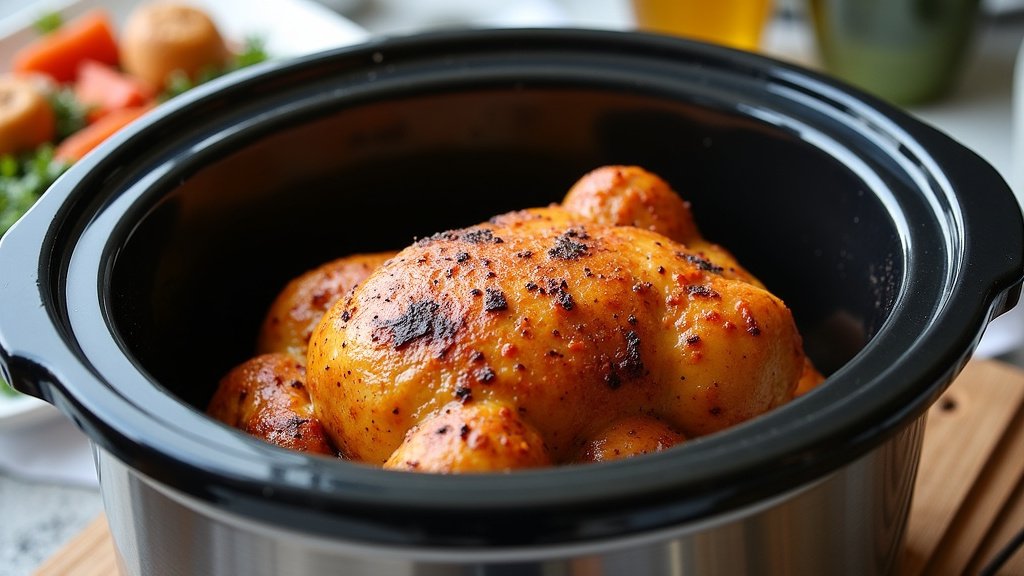
For bigger roasts or whole chickens, the ample space in a roaster oven can be a huge plus. The even heat distribution can help ensure these larger items cook uniformly, preventing dry edges and undercooked centers. Many home cooks have found success roasting larger items this way.
Crispier Textures
While slow cookers are all about moist cooking, sometimes you want a little bit of texture. If your roaster oven has a convection setting or you can leave the lid slightly ajar towards the end of cooking, you might achieve a slightly crispier exterior on certain dishes, like roasted vegetables within a stew.
This isn’t something you can typically do in a slow cooker. The steam is trapped, and the ceramic pot doesn’t allow for browning. A roaster oven gives you that extra flexibility.
When to Stick with Your Slow Cooker
Despite its versatility, a roaster oven isn’t always the ideal substitute for a slow cooker. Certain recipes and preferences are best met by a dedicated slow cooker.
Precision and Simplicity
If your recipe is very sensitive to temperature, or you truly want to “set it and forget it” for many hours without any worry, a traditional slow cooker is likely your best bet. Their consistent, lower temperatures are calibrated for this type of cooking.
The simplicity of a slow cooker is hard to beat for busy days. You can load it up in the morning and not think about it until dinner. The reliability of these appliances is what makes them so popular for that exact reason.
Specific “Set-and-Forget” Recipes
Some recipes, especially those relying on extremely long, low-and-slow cooking (think overnight braises or very tender pulled meats), are optimized for the precise low temperatures of a slow cooker. Pushing these in a roaster oven without careful monitoring could lead to overcooked or dry results.
Making the Swap: Your Quick Checklist
Ready to try using your roaster oven for a slow-cooked meal? Here’s a quick checklist to help you out:
- Choose the Lowest Setting: Always select the “Low” or lowest temperature option on your roaster oven.
- Reduce Cooking Time: Start checking your food about 25-50% earlier than the original slow cooker recipe suggests.
- Use a Thermometer: Verify food safety and doneness with a reliable food thermometer.
- Monitor Moisture: Keep an eye out for drying. Add a little liquid if needed.
- Tight Lid is Key: Ensure your roaster oven lid fits snugly to trap steam and heat.
- Adjust Based on Results: Note how your roaster oven performed for future cooking.
| Appliance | Typical Heat (Low Setting) | Heating Method | Lid Type | Best For |
|---|---|---|---|---|
| Slow Cooker | ~200°F (93°C) | Ceramic insert, bottom/side elements | Tight-fitting, often ceramic or glass | “Set-it-and-forget-it” recipes, consistent low heat |
| Roaster Oven | ~250-300°F (121-149°C) | Metal pan, surrounding elements | Glass or metal, often a snug fit | Roasting, larger items, potentially faster “slow” cooking |
Conclusion
You can certainly use your roaster oven as a slow cooker with a little know-how. Remember, the key is managing its higher heat output. Always opt for the lowest setting and be prepared to reduce your cooking times. Your roaster oven’s even heating can be a real advantage, especially for larger cuts of meat. With careful monitoring and a trusty food thermometer, you’ll achieve delicious results. So, next time your slow cooker is occupied, give your roaster oven a try!
Frequently Asked Questions
Will my food cook too fast in a roaster oven?
Your food might cook faster because roaster ovens often run hotter than traditional slow cookers. This is why it’s essential to use the lowest temperature setting and start checking for doneness earlier than a slow cooker recipe suggests. Monitoring is your best defense against overcooking.
Can I still get that “set it and forget it” convenience?
While you can achieve a similar convenience, it requires more attention than a dedicated slow cooker. You’ll need to monitor your food more closely, especially during the initial attempts. The “set it and forget it” aspect is less reliable due to potential temperature variations in roaster ovens.
What if my roaster oven doesn’t have a “Low” setting?
If your roaster oven lacks a specific “Low” setting and only has numbered options, choose the lowest number available. Some models might have temperature dials instead; aim for the lowest degree mark, usually around 200-225°F (93-107°C). Always consult your roaster oven’s manual for guidance.
How do I ensure moisture in my roaster oven slow cooking?
A tight-fitting lid is critical for trapping steam and moisture, just like in a slow cooker. Ensure your roaster oven lid seals well. If you notice your food drying out, add a small amount of liquid, such as broth or water, to the pan. Avoid lifting the lid too often.
Can I use oven bags in a roaster oven for slow cooking?
It’s generally not recommended to use oven bags in a roaster oven when trying to replicate slow cooker methods. Oven bags are designed for conventional oven temperatures and can melt or release fumes at the potentially higher and more varied temperatures found in roaster ovens. Stick to cooking directly in the roaster oven’s pan.
