
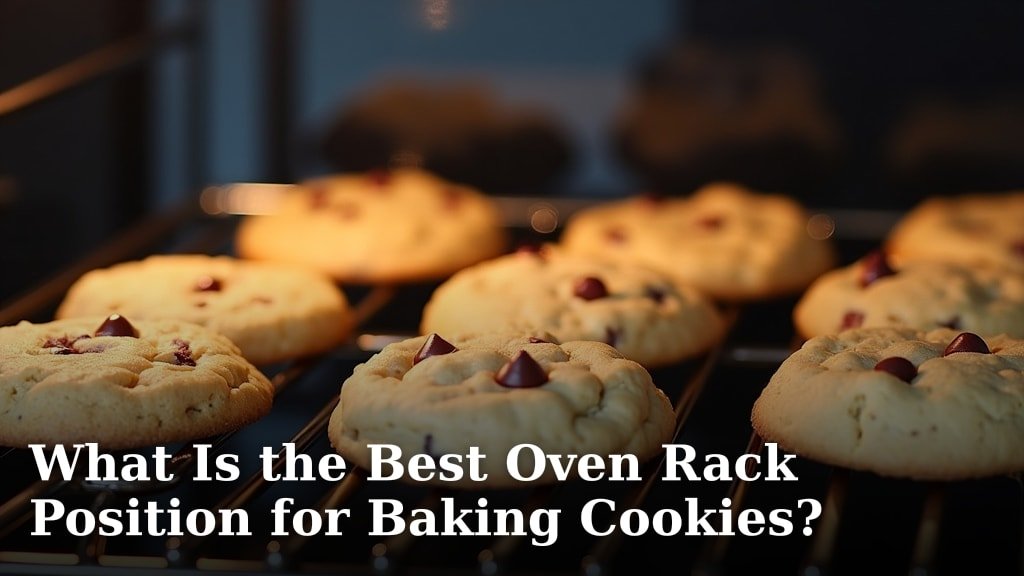
For the best oven rack position for baking cookies, most recipes and baking experts recommend the middle oven rack. This placement provides the most even heat distribution, helping your cookies bake uniformly without burning the bottoms or tops. We’ve found this is key for consistently delicious results. If your cookie bottoms are burning, our guide to avoid burnt bottoms in electric ovens can help.
While the middle rack is usually ideal, your oven’s heating can vary. Sometimes, placing cookies on the lower-middle rack can help if your oven tends to brown cookies too quickly on top. Understanding your specific oven is part of the baking magic; it’s where science meets deliciousness!
- Middle rack is usually best for even baking.
- It ensures consistent heat from top and bottom.
- Lower-middle rack can be a good option too.
- This helps prevent burnt bottoms or undercooked tops.
Let’s walk through exactly why rack placement matters and how to get those perfect cookies every time.
Finding the Sweet Spot: Oven Rack Placement for Perfect Cookies
Where you place your cookie sheets in the oven can make a surprising difference. It’s not just a suggestion; it’s a key factor in getting those perfectly baked treats. We’re talking about cookies that are golden brown all around, chewy in the center, and never burnt on the bottom. Understanding your oven’s heat is like having a secret superpower for baking.
Most of the time, the answer is simple. Many baking pros and recipe developers point to one spot as the champion. Let’s talk about why that spot works so well and what to do when it doesn’t.
The Science Behind the Bake: How Heat Works in Your Oven
Your oven is essentially a box that heats up. The heating elements are usually at the top and bottom. This heat needs to circulate to cook your food evenly. Think of it like a convection current in the air, but with heat.
When you open the oven door, you’re letting out that precious hot air. Every time you open it, the temperature drops. This is why it’s best to resist peeking too often. Your cookies need consistent heat to bake properly. Consistent heat means consistent results.
Heat Distribution Patterns
Ovens aren’t always perfectly uniform. The area closest to the heating elements gets the most intense heat. For most standard ovens, the top rack gets direct heat from the broiler element and the top of the main element. The bottom rack gets direct heat from the bottom element.
The middle of the oven tends to have the most balanced heat. Heat rises, and convection currents help move it around. This creates a more neutral zone. It’s not too close to the intense top heat or the direct bottom heat. This is why it’s often the best place.
Understanding Your Oven’s Hot Spots
Every oven is a little different. Some ovens have hot spots. These are areas that get hotter than others. You might notice this if one side of your cookies always bakes faster or browns more than the other.
The best way to find these spots is through a little experiment. We found that using oven thermometers can be helpful. You can place a few thermometers on different racks. Then, preheat your oven and see what the readings are. This helps you understand your oven’s unique personality.
Middle Rack: The All-Around Champion
For the vast majority of cookie recipes, the middle oven rack is your best friend. Why? Because it offers the most balanced heat. It’s the Goldilocks zone: not too hot, not too cold.
When your cookies are on the middle rack, they get heat from both the top and bottom elements. This heat circulates gently. It cooks the cookies evenly from all sides. This leads to a lovely, uniform texture and color.
Why the Middle Rack Prevents Burning
Baking too close to the top element can burn the tops of your cookies before the insides cook. This is especially true if you’re using a convection oven, as the fan speeds up the heating process. Nobody wants a burnt top and a gooey center! If you’re using a convection oven, our guide explains how to adjust recipes for this type of heat.
Conversely, baking too close to the bottom element can scorch the bottoms of your cookies. You’ll end up with hard, dark bottoms. This happens before the rest of the cookie is even close to being done. The middle rack helps avoid these extremes.
Achieving Even Browning and Texture
The middle rack allows for ideal air circulation. This is important for even baking. Cookies on this rack tend to spread evenly. They bake up with a consistent texture. You’ll get that perfect balance of crisp edges and chewy centers.
We found that recipes often assume you’re using the middle rack. Baking instructions are usually written with this placement in mind. So, unless a recipe specifically says otherwise, default to the middle.
When to Consider Other Rack Positions
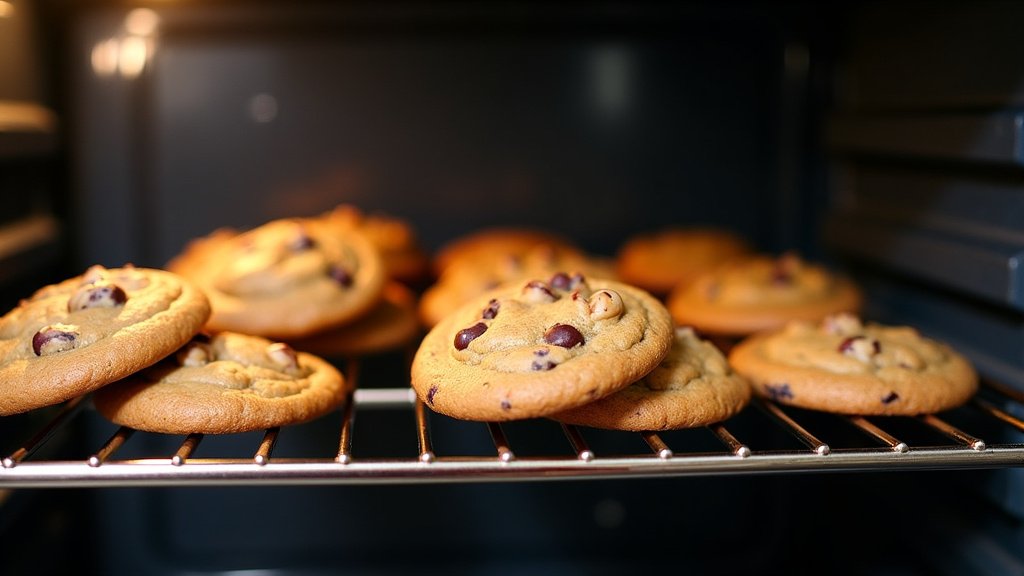
While the middle rack is usually the star player, there are times when you might want to move it up or down. Your specific oven’s heating quirks or the type of cookie you’re making can influence this decision.
The Lower-Middle Rack: For Crispier Bottoms or Top-Heavy Ovens
If your oven tends to bake hotter on top, or if your cookies are browning too quickly on top, try the lower-middle rack. This position is still relatively central but slightly closer to the bottom heating element.
This can help ensure the bottoms cook through properly. It can also help balance out a particularly hot top element. We found that some recipes, like those with dark chocolate chips that absorb more heat, can benefit from this slight adjustment.
Testing the Lower-Middle Rack
To test this, place your cookie sheet on the rack just above the lowest possible position. Make sure it’s still not touching the bottom of the oven. This gives you a bit more bottom heat. Keep an eye on your cookies. They might bake a little faster.
This is a great option for cookies that need a slightly crispier bottom. Think of those classic chocolate chip cookies that should have a firm foundation. You’re aiming for that perfect contrast in texture.
The Upper-Middle Rack: For Very Delicate Cookies
For some very delicate cookies, like meringue cookies or those that spread a lot and are prone to getting too dark on the bottom, the upper-middle rack might be
Conclusion
You’ve learned that the middle oven rack is your go-to for baking perfect cookies. It provides the most balanced heat, ensuring your cookies bake evenly and avoid burning on the top or bottom. We’ve also seen that understanding your oven’s unique hot spots is key. Don’t be afraid to experiment with the lower-middle rack if your oven tends to brown tops too quickly.
Your next step is simple: next time you bake, place your cookie sheets on the middle rack and observe the results. If needed, adjust to the lower-middle rack for your next batch. Happy baking!
Frequently Asked Questions
What if my cookies are burning on the bottom?
If your cookie bottoms are burning, try moving your oven rack to the lower-middle position. This moves the cookies slightly further from the direct heat of the bottom element. We found this simple shift often solves the problem.
How do I know if my oven has hot spots?
You can test for hot spots by placing several oven thermometers on different racks. Preheat your oven and check the temperature readings on each thermometer. This will show you if certain areas are consistently hotter than others.
Can I bake cookies on the top rack?
It’s generally not recommended to bake cookies on the top rack. This position is too close to the top heating element and can cause the tops of your cookies to burn before the centers are cooked. We’ve found it rarely yields even results.
What’s the difference between baking on the middle and lower-middle rack?
The middle rack offers the most neutral heat for even baking. The lower-middle rack is slightly closer to the bottom heating element, which can help ensure crispier bottoms or compensate for an oven that heats too intensely on top.
Does convection baking change the best rack position?
Yes, convection ovens circulate hot air with a fan, which can speed up baking
