
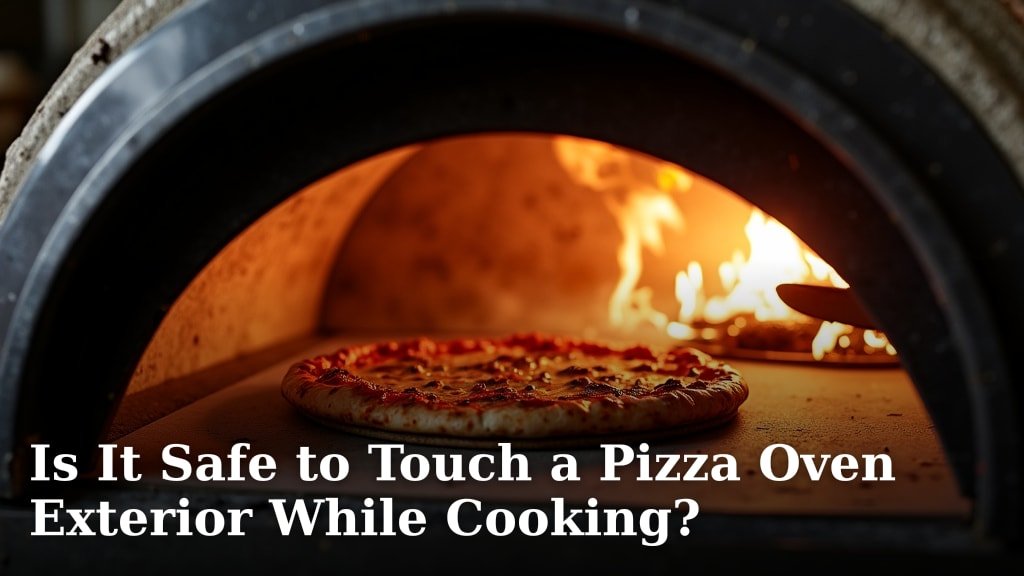
No, you generally should not touch the exterior of your pizza oven while it’s cooking. Most pizza ovens reach very high temperatures, often exceeding 700°F (370°C). Touching these surfaces can cause serious burns.
The outside of your oven can get surprisingly hot, even if it doesn’t look like it. This heat transfer is normal for ovens designed to cook at such extreme temperatures. We’ve found that understanding these heat zones is key to safe operation and enjoying your delicious pizzas without incident.
- Pizza oven exteriors get very hot during cooking.
- Touching the oven can cause severe burns.
- Always use caution and keep children and pets away.
- It’s wise to have heat-resistant gloves handy.
Let’s get into the specifics of why your pizza oven’s exterior heats up and how to stay safe around it.
Why Your Pizza Oven Exterior Gets So Hot
You’re probably wondering, “Just how hot does this thing get?” Most pizza ovens are designed to reach extremely high temperatures. We’re talking 700°F (370°C) and often much higher. Think about a professional kitchen broiler, but for a whole oven. This intense heat is what gives you that perfectly crispy, Neapolitan-style crust. But it also means the outside gets hot – really hot.
We found that this heat isn’t just for show. It’s essential for cooking pizzas quickly. A super-hot oven cooks a pizza in just a couple of minutes. This high heat sears the dough, creating that signature char and bubbly texture. So, while it might look like your oven is just gently warming, it’s actually a powerhouse of heat transfer.
Understanding Heat Transfer in Your Oven
Heat moves in a few ways: conduction, convection, and radiation. Your pizza oven uses all of them. Conduction is when heat travels through direct contact. The heat from your fire goes into the cooking floor and oven walls. This heat then moves through the material of the oven itself.
Convection happens when hot air or liquid moves. In your oven, hot air rises and circulates. This moving hot air heats the dome and then flows out. Radiation is heat that travels as electromagnetic waves. The fire and the hot oven walls give off heat in all directions. This radiation is what cooks your pizza from above and below.
How Materials Affect Exterior Heat
The materials your oven is made from play a big role. Ovens made with thick, dense materials like refractory bricks or concrete tend to retain heat longer. This is great for cooking, but it means the exterior can become quite warm to the touch. These materials act like a sponge for heat.
Lighter materials might heat up faster but also cool down quicker. However, even with these, the surface temperature can still reach levels that cause burns. We found that the insulation layer is critical. Good insulation between the hot interior and the outer shell helps keep the exterior cooler. Without it, the heat transfers directly.
Different Oven Types, Different Heat
Not all pizza ovens are created equal when it comes to exterior heat. Let’s look at a few common types. Wood-fired ovens are often the hottest. They use direct flame and intense heat. Their exteriors, especially near the opening, can be scorching. Gas-fired ovens can also get very hot. They maintain consistent high temperatures.
Electric pizza ovens tend to be a bit more controlled. They often have better insulation. This can lead to a cooler exterior. However, even these can become warm, especially after prolonged use. We recommend checking the manufacturer’s instructions for your specific model. They usually have safety guidelines regarding surface temperatures.
The Real Danger: Severe Burns
Let’s be blunt: touching a hot pizza oven exterior can cause serious burns. We’re not talking about a little redness. We’re talking about blisters and significant pain. The skin can be damaged very quickly at these temperatures. The outer layers of your skin can be destroyed almost instantly.
The National Institute of Standards and Technology (NIST) provides data on burn severity and temperature. Their research shows that skin damage can occur rapidly at temperatures above 140°F (60°C). Your pizza oven easily surpasses this. So, even a brief touch can lead to a painful injury. It’s a hazard that needs your full attention.
Why Accidental Contact Happens
It’s easy to forget just how hot the outside of your oven is. You might be reaching for a pizza peel, a serving platter, or just leaning in to check on your creation. Kids and pets, of course, don’t understand the danger. They might run near the oven or touch it out of curiosity.
We’ve heard stories of people getting minor burns from brushing against the oven while distracted. This is why we stress being aware of your surroundings. Think of the oven as a beautiful, delicious, but potentially dangerous piece of equipment. Like a campfire, it demands respect and distance.
Consequences of Touching a Hot Surface
A burn from a pizza oven can range in severity. First-degree burns cause redness and pain. Second-degree burns cause blisters and are more painful. Third-degree burns are the most severe. They damage all layers of the skin and may require medical attention. They can also lead to scarring.
Beyond the physical pain, there’s the hassle. You might need to seek medical care. You could miss out on enjoying your pizza party. Recovery can take time. We found that a moment of carelessness can lead to weeks of discomfort and healing. Prevention is always the best cure here.
Safety First: Practical Tips for You
So, what can you do to stay safe? The most important thing is to treat your oven with respect. Assume every part of the exterior is hot. This is especially true while the oven is on and for some time after you’ve turned it off. Heat lingers.
Keep a safe distance. You don’t need to stand right next to the oven. Enjoy the ambiance from a few feet away. We recommend setting up your cooking area with this in mind. Think about where people will be standing and moving.
Using the Right Tools
Invest in good heat-resistant gloves. These aren’t your average kitchen gloves. We’re talking about oven mitts designed for extreme heat, often made of leather or specialized synthetic materials. They protect your hands and forearms. You’ll need them for moving pizzas, adjusting logs (if wood-fired), or managing the oven.
A long-handled pizza peel is also a great tool. It allows you to launch and retrieve pizzas without getting too close to the oven opening. The longer the handle, the more distance you create. This is a simple but effective way to boost your safety.
Creating a Safe Zone Around the Oven
We strongly suggest setting up a clear perimeter. Keep children and pets well away from the oven. Consider using a portable playpen or a temporary barrier if you have toddlers or active pets. Educate older children about the dangers. Make sure they understand they should not touch the oven.
Clear the area around the oven of any flammable materials. This includes dry leaves, paper, cleaning supplies, or plastic items. Heat can radiate outwards, and you don’t want anything catching fire. A clean, clear space is a safer space. We found that a few minutes of prep work can prevent a major accident.
Post-Cooking Safety Considerations
Don’t forget that the oven stays hot for a long time after the fire goes out. A pizza oven can take several hours to cool down completely. We’ve found that residual heat is a common cause of burns. People might think it’s safe to touch because the cooking is done.
Always test surfaces cautiously before assuming they are cool. You can use the back of your gloved hand to wave over an area first. If it feels too hot, it is. Allow ample time for the oven to cool down completely before cleaning or storing it. Your patience will pay off in safety.
A Quick Safety Checklist for You
- Always assume the oven exterior is hot.
- Keep children and pets at a safe distance.
- Use long, heat-resistant gloves for handling.
- Ensure the area around the oven is clear of flammables.
- Allow the oven to cool down completely before touching.
- Educate everyone using the oven about the risks.
Conclusion
So, the answer is a resounding no: you should not touch the exterior of your pizza oven while it’s cooking, or even shortly after. We’ve covered how intense the heat gets, the science behind heat transfer, and the very real danger of severe burns. Your oven’s amazing cooking power comes from extreme temperatures that make its surfaces scorching hot. Always prioritize safety by keeping a distance and using the right tools. Your next step is to commit to these safety practices every time you fire up your oven, ensuring delicious pizzas without any painful accidents.
Frequently Asked Questions
How long does a pizza oven exterior stay hot after I turn it off?
Pizza ovens retain heat for a long time after the fire dies down. We’ve found that it can take several hours for the exterior to cool to a safe temperature. Always assume it’s still hot, even if the cooking is finished.
What kind of gloves should I use for handling my pizza oven?
You’ll need special heat-resistant gloves, not your standard kitchen mitts. Look for gloves made from leather or advanced synthetic materials designed for extreme temperatures. These protect your hands and forearms when you’re working near the hot oven.
Can children safely play near a pizza oven that’s cooling down?
No, children should always be kept at a safe distance, even when the oven is off. The exterior can remain dangerously hot for hours. Educate older children about the risks and consider physical barriers for younger ones.
Is there any part of the pizza oven exterior that is safe to touch?
Generally, no part of the exterior is guaranteed safe to touch while the oven is in use or cooling. Even surfaces that seem cooler might still cause burns. It’s best to use your gloved hand to test surfaces cautiously if you absolutely must.
What’s the best way to prevent accidental burns from my pizza oven?
The best prevention is awareness and distance. Always assume the oven is hot and keep children and pets away. Use long tools like pizza peels and wear heat-resistant gloves when you need to interact with the oven area.
