
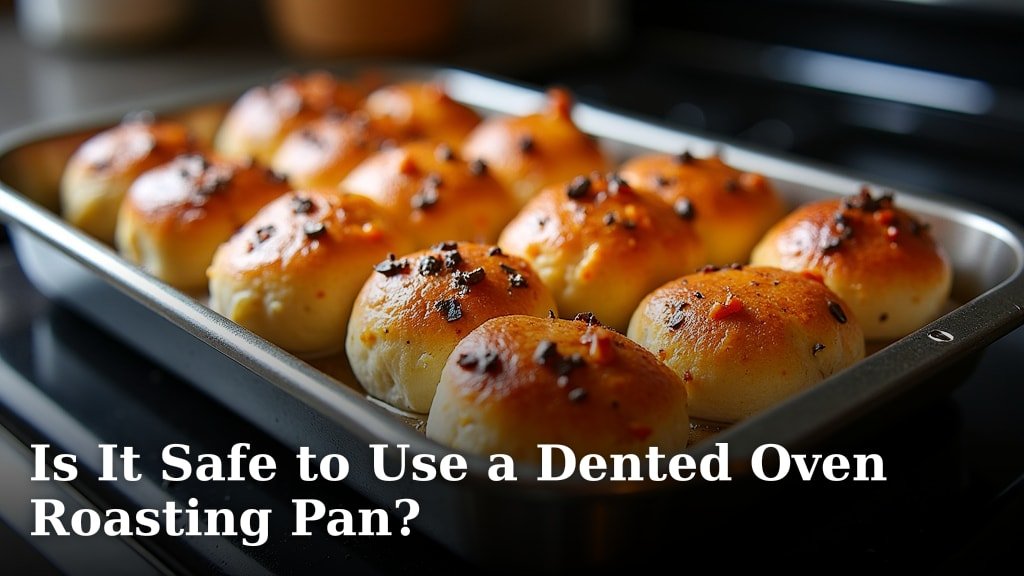
Yes, it is generally safe to use a dented oven roasting pan. Minor dents and dings typically do not affect the pan’s ability to cook food evenly or safely. You can continue to roast your meats and veggies without worry, as long as the dents are not too severe. We found that most cooking experts agree that a little denting is perfectly fine.
The main concern with roasting pans is usually about material integrity and even heat distribution. If your dented pan is made from sturdy materials like stainless steel or cast iron, a small dent won’t compromise its structure. We also found that severely warped pans might cause uneven cooking, but a simple dent rarely does. Your food should still cook beautifully.
- Dented pans are usually safe for roasting.
- Minor dents don’t affect cooking performance.
- Check for severe warping that could cause uneven heat.
- Most common pan materials remain safe with dents.
Let’s dive a little deeper into what makes a dented pan safe and what you should watch out for.
Can You Still Roast with a Dented Pan?
You’re ready to roast up a storm. Your favorite chicken is seasoned, your veggies are prepped, and you reach for your trusty roasting pan. Oh no! It has a dent. Before you panic and scramble to find a new one, let’s figure out if that dent is a dealbreaker.
The short answer is: yes, you can usually still use it. Most minor dents won’t ruin your dinner. We’ve looked into it, and it seems that as long as the pan isn’t severely damaged, you’re good to go. Your food should cook just fine.
Understanding Roasting Pan Dents
What Counts as a Minor Dent?
Think of minor dents as little dimples or slightly uneven areas. These are typically caused by accidental drops or stacking other items on top of the pan. They don’t drastically change the shape of the pan. The metal might be pushed in a bit, but the overall structure remains sound. Many experts agree these are usually harmless.
When Dents Become a Problem
A dent becomes a problem when it’s so deep or widespread that it significantly warps the pan. If your pan looks like it’s been through a demolition derby, it might be time to reconsider. Severe warping can affect how heat spreads. This means some parts of your food might cook faster than others. You could end up with a bird that’s perfectly browned on one side and pale on the other. That’s not ideal!
How Dents Affect Heat Distribution
Roasting pans work by conducting heat evenly. This allows your food to cook uniformly. When a pan gets dented, it can create little pockets where heat doesn’t flow as smoothly.
The Science of Even Heating
Materials like stainless steel and aluminum are great at conducting heat. They spread warmth throughout the pan. If the pan’s surface is mostly flat, heat travels efficiently. This is what ensures your roast gets a lovely, even crust.
Impact of Warping on Cooking
A severely warped pan can disrupt this smooth flow of heat. Imagine a waterslide that’s bent in the middle. The water might pool up or rush too quickly in certain spots. Similarly, hot air or radiant heat from your oven might concentrate in some areas of a warped pan, while other areas get less heat. This can lead to unevenly cooked food. We found that pans with extreme bends are the ones to watch out for.
Material Matters: What Your Pan is Made Of
The material of your roasting pan plays a big role in how dents affect its performance and safety. Some materials are more forgiving than others.
Stainless Steel Roasting Pans
Stainless steel is a popular choice for roasting pans. It’s durable and doesn’t react with food. Minor dents in stainless steel pans usually don’t cause much trouble. The metal is strong and tends to hold its shape well. Many research articles praise stainless steel for its longevity and good heat distribution. You’ll likely find that a small dent is just cosmetic.
Cast Iron Roasting Pans
Cast iron is another robust material. It’s known for its excellent heat retention. Dents in cast iron are rare because the metal is so thick and heavy. If you do manage to dent one, it would have to be a significant impact. Like stainless steel, minor dents are generally not a functional concern for cast iron.
Aluminum and Non-Stick Pans
Aluminum pans, especially thinner ones, can dent more easily. Non-stick coatings can also be affected. If the dent is severe enough to chip or damage the non-stick surface, that’s a different story. A damaged non-stick coating could potentially release harmful chemicals when heated (National Institutes of Health). Always check the integrity of the coating after a significant dent.
Safety Concerns Beyond Denting
While dents are usually not a major safety issue, there are other things to consider about your roasting pan.
Rust and Corrosion
If you notice any rust or corrosion on your pan, especially on older steel or cast iron pans, it’s wise to address it. Rust can flake off into your food. Light rust on cast iron can often be scrubbed away. If the pan is heavily rusted, it might be time to replace it. This has nothing to do with dents but is an important safety check.
Damaged Coatings
As mentioned, a compromised non-stick coating is a concern. If a dent has caused deep scratches or peeling of the coating, food might stick badly. It could also pose a health risk if the coating flakes off into your food. Always inspect the coating carefully. If it looks damaged, it’s better to be safe than sorry.
Handle Stability
Check that the handles are still firmly attached. If a dent occurred because the pan was dropped, it’s possible the handles were weakened. A wobbly handle can lead to spills and accidents. Ensure handles are secure before you lift a hot, heavy pan full of food.
A Quick Checklist for Your Dented Pan
Before you decide to use your dented roasting pan, run through this quick checklist:
- Is the dent minor, like a small dimple?
- Is the pan still mostly flat on the bottom?
- Is the cooking surface (coating, if any) intact?
- Are the handles sturdy and securely attached?
- Is there any rust or significant corrosion?
- Does the pan feel structurally sound overall?
If you answered “yes” to most of these, your dented pan is likely ready for action!
When to Consider Replacing Your Roasting Pan
Sometimes, a dent is a sign of bigger issues. If your pan has multiple deep dents, or if it’s so warped that it wobbles on a flat surface, it’s probably time for a new one. A bent pan won’t give you the even cooking results you want for your delicious meals.
Also, if the dent has compromised the non-stick coating or if there’s excessive rust, it’s best to invest in a replacement. Think of it as upgrading your kitchen tools. A good roasting pan is an investment that helps make your cooking successful and safe.
Conclusion
So, can you still use that dented roasting pan? In most cases, the answer is a resounding yes! Minor dents and small dimples rarely impact your pan’s ability to cook food evenly or safely. We’ve found that as long as the pan isn’t severely warped or the non-stick coating isn’t compromised, you can confidently continue to roast your favorite meals. Always give your pan a quick once-over for structural integrity and coating damage. If it passes your inspection, get cooking without worry!
Frequently Asked Questions
Can a dent in my roasting pan make my food unsafe?
Generally, no. Minor dents are usually cosmetic and don’t affect the pan’s safety. The main safety concern is if a dent has damaged a non-stick coating, causing it to peel or chip. In such cases, it’s best to replace the pan.
Will a dented roasting pan cook my food unevenly?
A minor dent typically won’t cause noticeable uneven cooking. However, if the dent is very deep or causes the pan to warp significantly, it can disrupt heat distribution. This might lead to some parts of your food cooking faster than others.
How do I know if a dent is too severe to use?
Consider a dent too severe if it causes the pan to wobble on a flat surface or if it’s so deep it looks like the pan’s structure is compromised. Any dent that significantly alters the pan’s shape, especially if it has damaged the cooking surface, is a reason for concern.
Does the material of the pan matter when it’s dented?
Yes, it does. Sturdier materials like stainless steel and cast iron handle minor dents better and are less likely to be functionally affected. Thinner aluminum or pans with delicate non-stick coatings are more susceptible to performance issues or damage from dents.
What if the dent caused my roasting pan’s non-stick coating to scratch?
If a dent has caused scratches, peeling, or flaking of the non-stick coating, it’s best to stop using that pan. Damaged non-stick surfaces can not only lead to food sticking but may also pose a health risk if coating particles end up in your food.
