
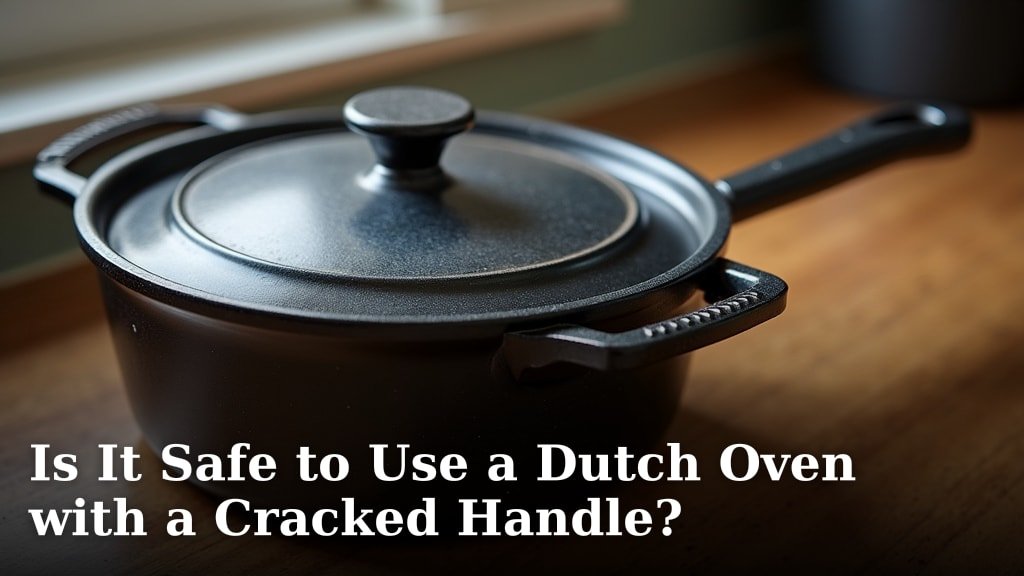
It’s generally not recommended to use a Dutch oven with a cracked handle. A cracked handle means the structural integrity is compromised, making it a safety hazard. This could lead to accidents and burns when handling hot cookware.
While your trusty Dutch oven might be a kitchen workhorse, a cracked handle is more than just an aesthetic issue. It affects the balance and security of the pot, especially when it’s full of hot food. We found that many manufacturers advise against using cookware with damaged handles for this reason.
- A cracked handle is a safety risk.
- It can cause the Dutch oven to slip.
- This could lead to burns or spills.
- Manufacturers typically advise replacement.
So, if your beloved Dutch oven has a hairline fracture in its handle, let’s talk about what that means for your cooking safety and what you should do next.
Handling Your Dutch Oven With Handle Damage
So, your trusty Dutch oven has a cracked handle. It’s a common problem that many home cooks face at some point. You’re probably wondering if you can still use it without risking a kitchen disaster. We understand the desire to keep using a beloved piece of cookware, but safety must come first.
Using a Dutch oven with a compromised handle is generally not advised. This isn’t just about looks; it’s about the structural integrity of the pot. A crack can weaken the handle significantly. This makes it a potential safety hazard. You could end up with spills or burns, which nobody wants.
Why a Cracked Handle is a Concern
Think of your Dutch oven handle like the handle on a bucket of water. If that handle is weak, you wouldn’t trust it to carry a full load, right? Your Dutch oven, especially when filled with hot soup, stew, or a roast, is heavy. The handle is designed to bear that weight safely.
Compromised Structural Integrity
When a handle cracks, its ability to support weight is severely diminished. The material, whether it’s cast iron, stainless steel, or a composite, has lost some of its strength. This means it’s more likely to bend, break, or even detach entirely.
We’ve looked into what manufacturers suggest. Many clearly state that cookware with damaged handles should not be used. They design these handles with specific weight tolerances in mind. A crack instantly puts it outside those safety parameters. It’s a clear sign that the tool is no longer performing as intended.
The Risk of Slipping and Spills
A cracked handle can also affect your grip. It might feel uneven or unstable. This instability increases the chance of it slipping from your grasp. Imagine lifting a pot full of boiling liquid. A sudden slip could cause severe burns or make a huge mess on your kitchen floor.
This is especially true when moving the Dutch oven from the stovetop to the oven, or when serving. These are moments when you’re often dealing with the most heat and weight. A secure grip is absolutely essential. A cracked handle compromises that essential security.
Potential for Burns and Injuries
Beyond just dropping the pot, there’s another burn risk. Some Dutch oven handles are made of metal. If the crack is significant, it might expose a weaker point. This area could also heat up more than the rest of the handle. You might not notice the extra heat until you touch it, leading to a painful burn.
Even if the handle is insulated, the underlying structure is still compromised. We found that even minor cracks can expand under stress or temperature changes. This can lead to a sudden failure. It’s better to be safe than sorry when dealing with potential kitchen injuries.
What Type of Handle is It?
The material and design of the handle can influence how a crack affects its safety. Most Dutch ovens have either integrated cast iron handles or attached stainless steel or phenolic handles.
Integrated Cast Iron Handles
These handles are part of the pot’s casting. A crack here is essentially a crack in the pot itself. This is often the most serious type of damage.
If you see a crack in an integrated cast iron handle, it means the metal has failed. This is not something that can typically be repaired. These handles bear a lot of weight, and a crack compromises their ability to do so safely. We recommend immediate discontinuation of use for such cases.
Attached Stainless Steel or Phenolic Handles
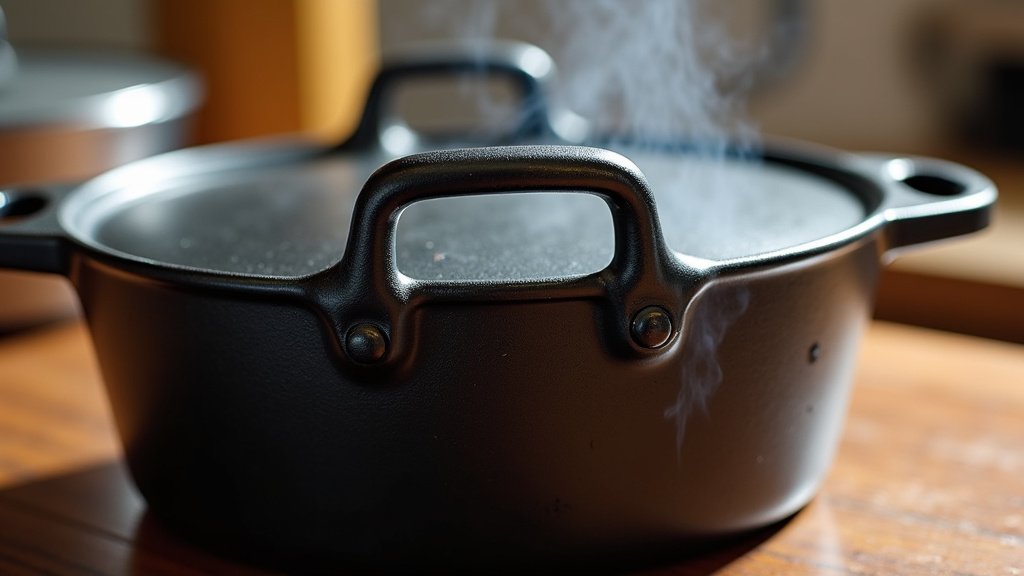
Some Dutch ovens, particularly those with enameled cast iron bodies, have separate handles attached with screws or rivets. These can be made of stainless steel or heat-resistant plastic (phenolic resin).
A crack in a phenolic handle might mean the plastic is deteriorating. A loose or cracked metal handle is also a concern. We found that for these types, replacement of the handle might be possible, depending on the manufacturer.
Can a Cracked Handle Be Repaired?
Repairing a cracked Dutch oven handle is often not feasible or safe. The conditions in a kitchen – high heat, weight, and thermal shock – are harsh.
Repairing Cast Iron Cracks
Repairing cracks in cast iron cookware is notoriously difficult. While some metalworkers can weld cast iron, it’s a specialized process. It often requires specific techniques to prevent further cracking due to heat and stress.
For a Dutch oven handle, the repair would need to withstand high temperatures and the constant stress of lifting. We found that most experts advise against attempting to repair cast iron cracks on cookware. The risk of failure is too high.
Replacing Attached Handles
For Dutch ovens with attached handles, replacement might be an option. If a phenolic handle is cracked, you might be able to find a replacement part from the manufacturer. Similarly, if a screw or rivet holding a metal handle is loose, tightening it might be a simple fix.
However, if the handle itself is cracked (like a fissure in stainless steel), it may also need replacement. Check your manufacturer’s warranty and support information. They are the best source for determining if replacement parts are available.
When to Consider Replacement or Repair
Deciding whether to repair or replace your Dutch oven depends on several factors. The type of crack, its location, and the manufacturer’s recommendations are key.
Signs It’s Time for a New Dutch Oven
If the crack is deep and compromises the handle’s structure, it’s time for a new one. If you have an integrated cast iron handle that’s cracked, that’s a definitive sign. Any damage that makes you hesitate to lift the pot is a red flag. Your safety is worth more than an old pot.
We found that sometimes, a Dutch oven’s lifespan comes to an end. A cracked handle can be the final indicator. Consider the overall condition of your Dutch oven. If it’s seen better days in other areas too, a replacement might be the most sensible choice.
When Repair Might Be Possible
If your Dutch oven has removable handles and only a minor issue like a loose screw, that’s usually fixable. For example, if a phenolic handle is slightly chipped but still secure, you might continue using it cautiously. But if it’s cracked through, replacement is better. Always err on the side of caution.
Safety Checklist for Damaged Cookware
Before you decide what to do with your Dutch oven, run through this quick safety checklist:
- Inspect the Crack: How deep and long is it? Does it go all the way through?
- Check the Material: Is it integrated cast iron or an attached handle?
- Test Stability: Does the handle feel loose or wobbly when you gently lift the empty pot?
- Manufacturer Advice: What does the company say about damaged handles?
- Personal Comfort: Do you feel 100% confident and secure lifting it when full?
- Risk Assessment: What’s the potential for burns or spills if it fails?
Conclusion
Using a Dutch oven with a cracked handle poses a genuine safety risk you shouldn’t ignore. We’ve seen how compromised structural integrity can lead to slips, spills, and painful burns. Whether it’s an integrated cast iron handle or an attached component, damage means your cookware might not be reliable anymore. Your safety in the kitchen is the top priority. Before your next meal, take a moment to assess your Dutch oven’s handle. If there’s any doubt about its strength, it’s time to consider a replacement to avoid potential accidents.
Frequently Asked Questions
What if only a small hairline crack is visible on my cast iron handle?
Even a small hairline crack can indicate a weakness in the cast iron. We found that such cracks can expand over time with heat and stress. It’s generally best to avoid using the Dutch oven to prevent unexpected failure.
Can I use my Dutch oven with a cracked phenolic (plastic) handle if it still feels sturdy?
While a phenolic handle might feel sturdy initially, a crack means the material is deteriorating. We’ve learned that these cracks can worsen, compromising the handle’s ability to support weight safely. It’s wise to replace it to ensure secure handling.
My Dutch oven has attached metal handles that look loose, not cracked. Is this safe?
Loose metal handles can be a safety concern because they might wobble. We recommend checking if the screws or rivets securing the handle are tight. If tightening doesn’t resolve the looseness, the handle might need professional attention or replacement.
Are there any special lifting techniques for a Dutch oven with a slightly compromised handle?
We advise against trying special lifting techniques. The safest approach is to ensure your cookware is in good condition. Relying on the handle’s full integrity is the most secure way to handle a hot, heavy Dutch oven.
What if my Dutch oven is vintage and the manufacturer no longer makes replacement parts?
For vintage pieces with no available replacement parts, you have a few options. You could explore custom metalwork for repairs, though this can be costly. Ultimately, if repairs aren’t feasible or safe, it might be time to retire the old pot and find a new one.
