
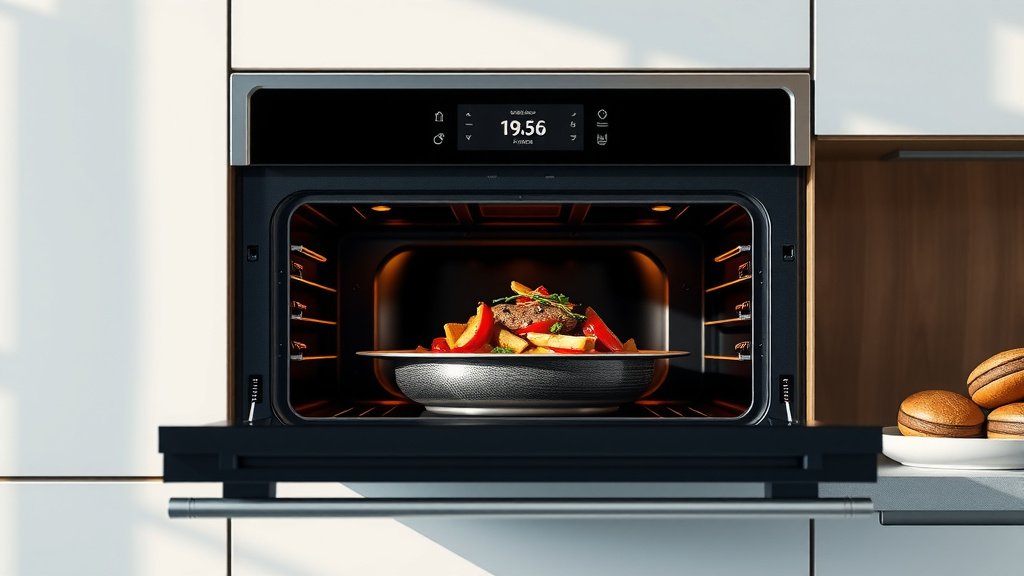
Smart ovens today cannot directly track the nutritional content of meals during cooking. They primarily offer enhanced cooking control, precise temperatures, and integration with recipe apps to help with estimated nutritional information.
While smart ovens excel at automation and convenience, their current technology does not include sensors capable of analyzing food chemistry in real-time to provide precise caloric or macronutrient breakdowns.
- Smart ovens do not have built-in sensors for real-time nutritional tracking.
- They can help you cook more consistently and follow recipes accurately.
- Nutritional data usually comes from recipe databases, not the oven itself.
- Future ovens might use advanced sensors, but this technology is still developing.
- For accurate nutrition, you still need to weigh ingredients and use food tracking apps.
Can Smart Oven Track Nutritional Content Of Meals?
No, smart ovens today do not have the technology to directly scan ingredients and calculate nutrition as you cook. They assist you in other smart ways, making meal preparation simpler and more consistent.
Understanding What Smart Ovens Do Best
Smart ovens truly shine in areas like remote control, preheating schedules, and guided cooking. You can often start your dinner from your phone on the way home. This brings a lot of convenience to your kitchen routine.
They connect to Wi-Fi, allowing you to use apps to control settings. Many offer specialized cooking modes, ensuring your food cooks perfectly. This precision makes a big difference in your results.
The Difference Between Cooking Smart and Tracking Nutrition
Think of it like this: your car’s GPS helps you navigate the roads. It doesn’t tell you the exact fuel efficiency of every single car on the highway. Similarly, a smart oven manages the cooking process, but not the food’s internal chemistry for nutrition data.
A smart oven ensures your chicken reaches the right internal temperature, for example. It cooks your lasagna evenly and alerts you when dinner is ready. These are about cooking mechanics, not dietary composition analysis.
Why Real-Time Nutritional Tracking is Complex
Measuring nutrition isn’t as simple as scanning a barcode. The exact nutrient content of ingredients can vary. Factors like soil quality, ripeness, and even the specific variety of a vegetable play a role. These variations are tough for any home appliance to detect.
Cooking methods also change nutrient profiles. Boiling can reduce some vitamins, while roasting can lock in others. An oven would need highly advanced, food-specific sensors to track these changes accurately. We are not there yet.
Current Limitations of Smart Oven Technology
Today’s smart ovens focus on temperature, time, and cooking modes. They use internal thermometers for doneness. They do not have spectrometers or chemical analysis tools built in. These types of sensors are expensive and complex for consumer ovens.
Even if they could scan ingredients, distinguishing between fat content in different cuts of meat is hard. How would it know if you added an extra spoon of olive oil? The technology needs more development for this level of detail.
How Smart Ovens Can Indirectly Help with Nutrition
While they don’t track directly, smart ovens can be helpful in other ways. Many integrate with recipe apps that list nutritional information for specific dishes. You input your ingredients, and the app gives you estimates. This can be a great starting point for meal planning.
They can also help you follow recipes more precisely. Accurate measurements and cooking times lead to more predictable results. This consistency helps if you are calculating nutrition manually based on a recipe, as your results will be more uniform.
The Role of Connected Apps and Databases
Many smart ovens link to larger digital recipe platforms. These platforms often provide nutritional estimates based on standard ingredients. So, you might select a recipe for “chicken stir-fry,” and the app tells you the estimated calories. Remember, these are estimates and depend on the accuracy of your inputs.
These apps typically rely on extensive databases of food items. They calculate nutrition based on the ingredients you enter. The oven itself is simply executing the cooking instructions, not validating the nutritional data.
Future Possibilities: What Could Be Next?
Researchers are exploring exciting new technologies. Imagine sensors that use light to analyze food composition. Some concepts involve tiny spectrometers or AI-powered imaging to detect macronutrients. These are still laboratory ideas, not ready for your kitchen yet.
We might see ovens that suggest ingredient swaps for healthier options in the future. Or maybe they will connect to scales that weigh your ingredients precisely. These advancements are many years away, but they show where the field is headed.
Potential Breakthroughs in Food Sensing
Some companies are working on devices that can scan food for basic nutritional values. These are typically handheld gadgets, not integrated into large appliances. The challenge is making them affordable, fast, and accurate enough for everyday cooking. The future could hold integrated food scanners.
Many experts believe that combining artificial intelligence with advanced sensor technology will eventually make this possible (NIH). This would let ovens “learn” about food and its changes during cooking. But the science behind this is still very new.
Practical Steps for Tracking Your Nutrition Today
For now, the best way to track your meal’s nutrition involves a few practical tools. A good food scale is essential for accurate portion control. Food tracking apps allow you to log ingredients and meals. This combination gives you the most reliable data.
Many dietitians recommend meal prepping and careful label reading (Mayo Clinic). By preparing meals in advance with known ingredients, you take control. This makes tracking calories and macronutrients much simpler.
- Use a kitchen food scale: Weighing ingredients gives precise data.
- Utilize food tracking apps: Log everything you eat for detailed records.
- Read nutrition labels: Understand the package information before cooking.
- Measure liquids accurately: Use measuring cups for oils, sauces, and drinks.
- Pre-plan your meals: Knowing what goes into your food helps with tracking.
Comparing Current and Future Oven Capabilities
Let’s look at how current smart ovens compare to what a hypothetical “nutritional oven” might offer.
| Feature | Current Smart Oven | Future Nutritional Oven (Concept) |
|---|---|---|
| Remote Control | Yes | Yes |
| Guided Cooking | Yes | Yes |
| Recipe Integration | Yes (with estimated data) | Yes (with precise data validation) |
| Temperature Control | Highly Accurate | Highly Accurate |
| Ingredient Scanning | No | Yes (for basic macronutrients) |
| Real-time Nutrient Tracking | No | Yes (as food cooks) |
| Dietary Feedback | Limited (app-based) | Direct (oven-based suggestions) |
| Allergen Detection | No | Potential |
Maximizing Your Smart Kitchen for Health Goals
Even without direct nutritional tracking, your smart kitchen can support your health. Use smart ovens to perfect healthy recipes, ensuring vegetables are not overcooked or proteins are not dried out. Consistent cooking quality helps make healthy eating enjoyable.
Pair your oven with other smart gadgets. A smart scale that syncs with your fitness app is a good example. Automated ingredient dispensers could one day help with portion control. The ecosystem of smart devices works best when they connect and share data.
Conclusion
While smart ovens offer incredible convenience and cooking precision, they cannot yet track the nutritional content of your meals in real-time. Their primary strength lies in automating and perfecting the cooking process itself. Nutritional data comes from connected apps and careful manual input.
The future may hold ovens with advanced sensors and AI that can analyze food chemistry. For now, focus on using your smart oven for consistent, well-cooked meals. Combine this with traditional tools like food scales and tracking apps to manage your dietary goals effectively. Your path to healthier eating is within reach with the right habits.
Can I trust the nutrition information provided by smart oven apps?
The nutrition information from smart oven apps is generally an estimate based on standard recipe databases. It relies on the accuracy of the ingredients you input. Always verify with actual food labels or a reliable food tracking app for more precise data.
Are there any kitchen gadgets that *can* track nutritional content?
Currently, there are no common kitchen appliances that track nutrition during cooking. However, some specialized handheld food scanners are being developed that can provide estimates for certain nutrients. These are not typically integrated into ovens yet.
Will smart ovens ever be able to tell me if my food is organic or non-GMO?
While future sensor technology might become very advanced, distinguishing between organic and non-GMO foods purely by scanning is an incredibly complex challenge. These labels relate to farming practices and genetic modifications, not easily detectable chemical compounds during cooking. This is highly unlikely in the near future.
How accurate are built-in scales in some smart kitchen appliances for nutrition?
Some smart kitchen appliances, like cutting boards or blending machines, have built-in scales. These scales can be quite accurate for weighing ingredients. When combined with a reliable food tracking app, they help you get precise portion sizes, which is key for accurate nutritional calculations.
Should I wait for a “nutritional smart oven” before buying a new oven?
There is no indication that a consumer-ready “nutritional smart oven” will be available anytime soon. The technology is still in early research phases. If you need a new oven, choose a smart oven for its cooking automation and convenience features. You can manage nutrition effectively with current tools like food scales and tracking apps.
