
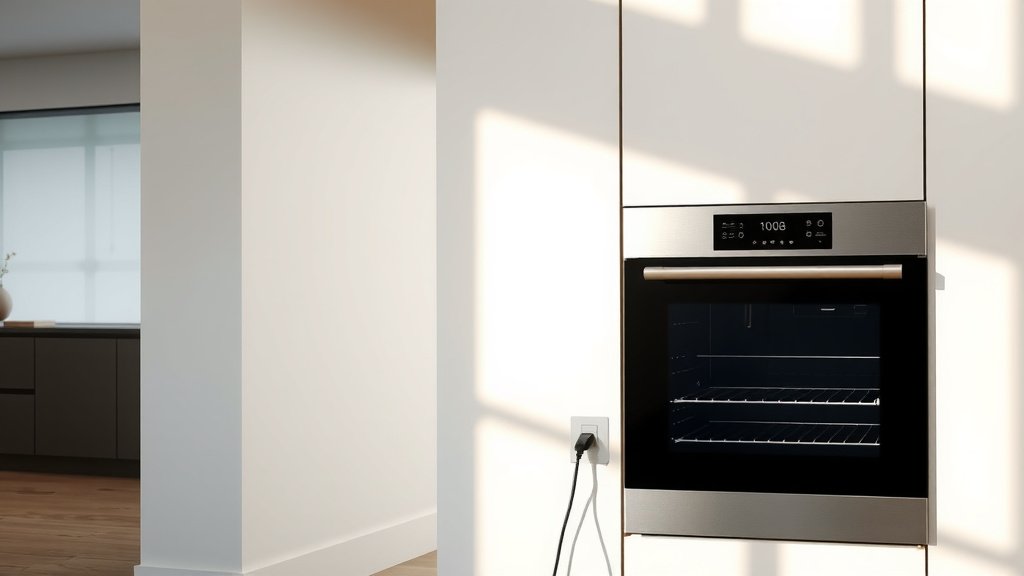
Yes, a smart oven can absolutely work without an internet connection for its core functions like baking, broiling, and roasting. You can use it manually just like any traditional oven.
However, all of its advanced “smart” features, such as remote control, voice commands, and recipe synchronization, will require an active Wi-Fi connection.
Here’s a quick summary of what you need to know about your smart oven and internet connectivity:
- Your smart oven will operate manually for cooking, even without Wi-Fi.
- Smart features like app control, remote preheating, and recipe integration need the internet.
- Many smart ovens default to manual control if the connection is lost.
- You won’t break your oven by disconnecting it from the internet.
- Consider if you truly need all the ‘smart’ perks before making a choice.
Does Smart Oven Work Without Internet Connection?
Absolutely, your smart oven can function perfectly well for basic cooking tasks even without an internet connection.
Think of it as having a regular oven with extra capabilities that only activate with Wi-Fi.
Understanding Your Smart Oven’s Dual Nature
Modern smart ovens are quite clever. They’re built with a dual personality, if you will.
On one hand, they’re traditional ovens with heating elements, timers, and temperature controls you can set directly on the appliance itself.
On the other, they have a “brain” that connects to your home Wi-Fi, enabling all those exciting smart features.
We found that most manufacturers design their smart appliances with this dual functionality in mind (Appliance Standards Awareness Project).
Basic Functions: No Wi-Fi Needed
Imagine you’re baking your favorite cookies. Can you still set the temperature, turn it on, and start baking? Yes, you certainly can!
Functions like setting the temperature, selecting a cooking mode (bake, broil, roast), using the timer, and turning the oven on or off are usually available directly on the oven’s control panel.
These actions rely on the oven’s internal hardware, not an internet signal.
When Your Smart Oven Needs the Internet
So, what exactly requires that precious Wi-Fi connection? It’s all about the ‘smart’ part of your oven.
These are the features that bring convenience and integration to your cooking routine.
- Remote Control: Want to preheat your oven on your way home from work? That needs the internet.
- Voice Commands: Asking Alexa or Google Assistant to start dinner? Wi-Fi is essential for this.
- Recipe Synchronization: Sending recipes directly from an app to your oven often requires a connection.
- Firmware Updates: Keeping your oven’s software up-to-date for new features or bug fixes happens over Wi-Fi.
- Notifications: Getting alerts on your phone when dinner is ready or if the door is ajar.
- Diagnostic Reporting: Some ovens can send troubleshooting data to support, which needs connectivity.
What Happens if Wi-Fi Drops?
Don’t panic if your internet goes out mid-bake! Your smart oven won’t stop working or ruin your meal.
Many experts say that if the Wi-Fi connection is lost, your oven will typically revert to its manual, physical controls.
Any cooking cycle already in progress will usually continue uninterrupted according to its last settings (Consumer Reports).
You might just lose the ability to check its status from your phone or adjust it remotely.
The Manual Override is Your Friend
Always remember that your smart oven usually has a sturdy set of manual controls.
These physical buttons and knobs are designed to work even when the smart features are dormant.
It’s like having a car with an automatic transmission that also lets you shift gears manually; you have options!
Comparing Oven Features: Wi-Fi On vs. Off
Let’s look at a quick comparison to make it super clear:
| Feature | Works Without Internet? | Works With Internet? |
|---|---|---|
| Bake / Roast / Broil | Yes | Yes |
| Manual Temperature Setting | Yes | Yes |
| Manual Timer | Yes | Yes |
| Remote Preheat | No | Yes |
| App Control & Monitoring | No | Yes |
| Voice Assistant Control | No | Yes |
| Recipe Downloads / Sync | No | Yes |
| Software Updates | No | Yes |
| Error Notifications (to app) | No | Yes |
Why Choose a Smart Oven if You Don’t Use Wi-Fi?
That’s a fair question! Perhaps you bought a smart oven without realizing the Wi-Fi integration, or maybe your internet is unreliable.
Even without constant connectivity, smart ovens often come with other modern amenities. These might include better insulation, more precise temperature control, or even self-cleaning features.
Sometimes, the smart features are a bonus, not the main reason for your purchase.
Is It Safe to Use Without Internet?
Absolutely, it’s completely safe. Disconnecting your smart oven from the internet does not pose any safety risks.
Its core safety mechanisms, like automatic shut-off and temperature regulation, are built into the oven’s hardware.
These functions operate independently of your Wi-Fi signal.
Making the Most of Your Smart Oven, Connected or Not
Whether your oven is online or offline, you can still enjoy delicious meals. It’s about knowing its capabilities.
If you’re experiencing connectivity issues, consider these simple checks:
- Check Your Router: Is your home Wi-Fi router working properly?
- Oven’s Network Settings: Have you correctly entered your Wi-Fi password on the oven?
- Signal Strength: Is your oven too far from the router for a strong signal?
- Power Cycle: Sometimes, simply unplugging the oven for a minute can help reset its network module.
- Manual Defaults: When in doubt, just use the physical controls like an old-school appliance.
Embracing Both Worlds
The beauty of a smart oven is its flexibility. You can enjoy the cutting-edge convenience of remote control and smart features when your internet is humming along.
And when it’s not, you still have a perfectly capable, reliable oven ready to cook your family’s favorite dishes.
It’s about having options, isn’t it?
Conclusion
To sum it up, your smart oven is designed with redundancy in mind. It works without an internet connection for all its fundamental cooking tasks, just like any conventional oven you’ve used before. The internet simply unlocks its advanced, convenience-focused “smart” capabilities. So, whether you’re wirelessly connected or keeping it simple, your smart oven is ready to cook.
Frequently Asked Questions About Smart Ovens and Internet
How do I connect my smart oven to Wi-Fi?
Typically, you’ll need to download the manufacturer’s specific app on your smartphone or tablet. The app will then guide you through a step-by-step process to connect your oven to your home Wi-Fi network, usually involving selecting your network and entering a password.
Can I control my smart oven with Bluetooth instead of Wi-Fi?
While some smart appliances use Bluetooth for initial setup or very short-range communication, most smart ovens rely on Wi-Fi for remote control and advanced features. Bluetooth has a much shorter range and cannot provide the same level of connectivity from outside your home.
What if my Wi-Fi network changes? Do I need to reconfigure my smart oven?
Yes, if you change your Wi-Fi network name (SSID), password, or get a new router, you will likely need to reconfigure your smart oven’s network settings. You would typically do this through the appliance’s control panel or the companion app, similar to the initial setup process.
Will a smart oven consume more electricity if it’s always connected to Wi-Fi?
The power draw from maintaining a Wi-Fi connection in a smart oven is generally very minimal, similar to other smart home devices. It’s unlikely to significantly impact your electricity bill. The bulk of energy consumption comes from the heating elements when the oven is actively cooking.
Are smart ovens less reliable than traditional ovens because of the technology?
Not necessarily. Most manufacturers ensure their smart ovens meet high reliability standards for their core cooking functions. While the “smart” features add complexity, they are usually separate from the basic operation. If a smart feature fails, the oven often continues to work manually, indicating a robust design (U.S. Department of Energy).
