
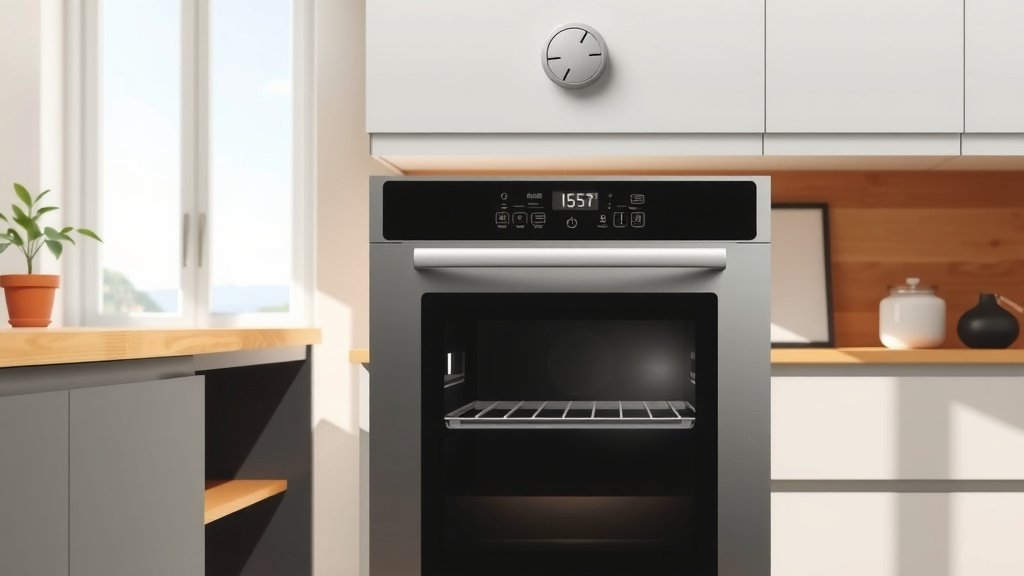
Yes, a smart oven can significantly reduce the risk of kitchen fires by incorporating advanced safety features like automatic shut-offs and remote monitoring.
While these innovations greatly enhance kitchen safety, they don’t eliminate every fire hazard, making careful user practices still important.
Here’s a quick look at what you’ll learn about smart ovens and fire prevention:
- Smart ovens use sensors and auto-shutoff to lower fire risk.
- Features like remote monitoring and preheating notifications provide extra security.
- They enhance safety but are not entirely fireproof; human awareness remains vital.
- Regular maintenance and safe cooking practices are still essential with any oven.
Can A Smart Oven Prevent Fires?
Smart ovens certainly can help prevent fires by providing a layer of protection with their innovative safety features.
These appliances offer peace of mind, though they aren’t a complete substitute for safe cooking habits.
How Smart Ovens Boost Kitchen Safety
You might wonder what makes these ovens special. Smart ovens come packed with technology designed to keep your home safer.
They often include features that traditional ovens lack, directly addressing common fire causes.
Automatic Shut-Off: A Lifesaver Feature
One of the top safety features is the automatic shut-off. Imagine forgetting the oven on after you leave the house!
Many smart ovens can detect when they’ve been running for an unusually long time or when no one is home and then turn themselves off (Consumer Reports).
Remote Monitoring and Control
Ever second-guess if you turned the oven off? Smart ovens connect to your phone.
This allows you to check the oven’s status and even turn it off from anywhere using an app.
Temperature Sensors and Overheat Protection
These ovens often have more precise temperature controls and sensors. They can detect if the internal temperature is rising too quickly or beyond safe limits.
If an oven starts to overheat, its safety systems can trigger a warning or even shut down the heating elements to prevent a fire.
Smart Oven Fire Prevention Features Overview
Let’s look at some key ways smart ovens stand out in fire safety:
- **Built-in Timers:** More advanced timers with reminders and auto-off functions.
- **Preheat Notifications:** Alerts you when the oven reaches temperature, reducing wait times.
- **Remote Diagnostics:** Can sometimes alert you to potential malfunctions before they become serious.
- **Door Sensors:** Some models can tell if the door is ajar, preventing heat loss and potential issues.
- **Integration with Smart Home Systems:** Can sometimes link to smoke detectors for immediate alerts.
The Limitations of Smart Oven Fire Prevention
While smart ovens are helpful, they aren’t magical. They cannot prevent every single type of kitchen fire.
It’s important to know their boundaries so you can maintain vigilant safety practices.
Human Error Still Plays a Role
Even with smart features, you are still the main chef. Leaving flammable items too close to the oven or not cleaning up spills can still cause issues.
A smart oven won’t stop you from placing a dish towel on a hot burner, for instance.
Specific Food Ignitions
Some foods can catch fire quickly due to their high fat content, like certain oils or extremely fatty meats.
If a grease fire starts, the oven’s internal sensors might not always be able to stop it immediately, especially if it happens fast.
Power Outages and Connectivity Issues
Smart features rely on electricity and often Wi-Fi. During a power outage, some smart functions might not operate as expected.
Connectivity problems can also mean you can’t monitor or control your oven remotely, limiting its safety benefits.
Smart Oven vs. Traditional Oven Safety
Are smart ovens truly safer? Many experts say yes, thanks to their extra layers of protection.
Here’s a quick comparison of their safety offerings:
| Feature | Smart Oven Safety | Traditional Oven Safety |
|---|---|---|
| **Automatic Shut-Off** | Commonly included, often with customizable timers. | Rarely found, relies on manual shut-off. |
| **Remote Monitoring** | Via smartphone app, check status and control. | Not possible, requires physical presence. |
| **Overheat Protection** | Advanced sensors for immediate response. | Basic thermostats, slower to react to extreme heat. |
| **Error Alerts** | Digital display and app notifications for faults. | Limited, often only basic indicator lights. |
Maximizing Your Kitchen Fire Safety
Regardless of your oven type, your actions are the best fire prevention tools. Think of your smart oven as a helper, not a replacement for good habits.
What can you do to be super safe?
Never Leave Cooking Unattended
This is rule number one! Research shows that unattended cooking is the leading cause of cooking fires (NFPA).
Stay in the kitchen when using high heat, especially if frying, grilling, or broiling.
Keep Your Oven Clean
Food spills and grease build-up are fire hazards. A clean oven is a safer oven.
Regularly wipe down the interior and clean oven racks to prevent smoke and potential fires.
Check Smoke Detectors Regularly
Your smoke detectors are your first line of defense. Test them monthly and replace batteries twice a year.
Ensure you have working smoke detectors both in and outside the kitchen area.
Have a Fire Extinguisher Ready
Know how to use a Class K or ABC fire extinguisher. Keep it easily accessible in your kitchen.
Just remember, use it only if the fire is small and controllable; otherwise, evacuate.
Smart Oven Maintenance for Continued Safety
Just like any appliance, your smart oven needs a little care to keep working safely.
Treating it well ensures its safety features stay effective.
Regular Cleaning is Essential
Follow your oven’s manual for cleaning instructions. Many smart ovens have self-cleaning cycles, which are helpful.
However, you still need to wipe down residues to avoid burning smells and potential fires during operation.
Software Updates and Connectivity
Keep your smart oven’s software updated. These updates often include important security patches and improved feature functionality.
Ensure your Wi-Fi connection is strong and stable so remote features always work when you need them.
Your Kitchen Safety Checklist
Here’s a quick reminder of things you can do right now for a safer kitchen:
- Stay in the kitchen when cooking, especially at high temperatures.
- Keep a lid nearby to smother small stovetop fires.
- Clear any flammable items from around your stove and oven.
- Test your smoke alarms every month without fail.
- Know where your fire extinguisher is and how to use it.
- Always clean up grease spills promptly and thoroughly.
Conclusion
Smart ovens do offer impressive features that can significantly reduce the chances of a kitchen fire, giving you an extra layer of protection and peace of mind.
However, no technology is foolproof. The most reliable fire prevention still comes from your attention, good cooking habits, and regular appliance maintenance.
By combining smart oven technology with your vigilance, you create the safest possible cooking environment for yourself and your family.
Frequently Asked Questions About Smart Ovens and Fire Safety
Do smart ovens notify you if there’s smoke or a potential fire?
Many smart ovens can send alerts to your smartphone if they detect unusual temperatures or if their internal sensors indicate a problem. However, they are not typically smoke detectors themselves. Some advanced smart home systems can link your oven to dedicated smoke alarms for integrated alerts.
Can a smart oven turn off automatically if food is burning?
Some smart ovens have advanced sensors that can detect prolonged cooking times or extremely high temperatures that might suggest food is burning. They can then trigger an automatic shut-off or send you a notification. This feature varies by model and brand, so checking your specific oven’s capabilities is wise.
Are smart ovens more fire-prone due to their electronics?
No, smart ovens are not inherently more fire-prone due to their electronics. They undergo rigorous safety testing, just like traditional appliances. In fact, their built-in safety features and diagnostic capabilities often make them safer than older models, especially when it comes to preventing fires caused by oversight.
What should I do if my smart oven shows an error code related to overheating?
If your smart oven displays an error code indicating overheating or a fault, turn it off immediately. Disconnect it from power if safe to do so. Refer to your owner’s manual for troubleshooting steps. If the issue persists, contact the manufacturer’s customer support or a qualified appliance technician to inspect it.
Do smart ovens require special fire safety procedures compared to regular ovens?
Smart ovens benefit from the same fundamental fire safety procedures as regular ovens: never leave cooking unattended, keep the oven clean, and have working smoke detectors. Additionally, for smart ovens, ensure your Wi-Fi connection is stable for remote features and keep its software updated to maintain optimal safety functions.
