
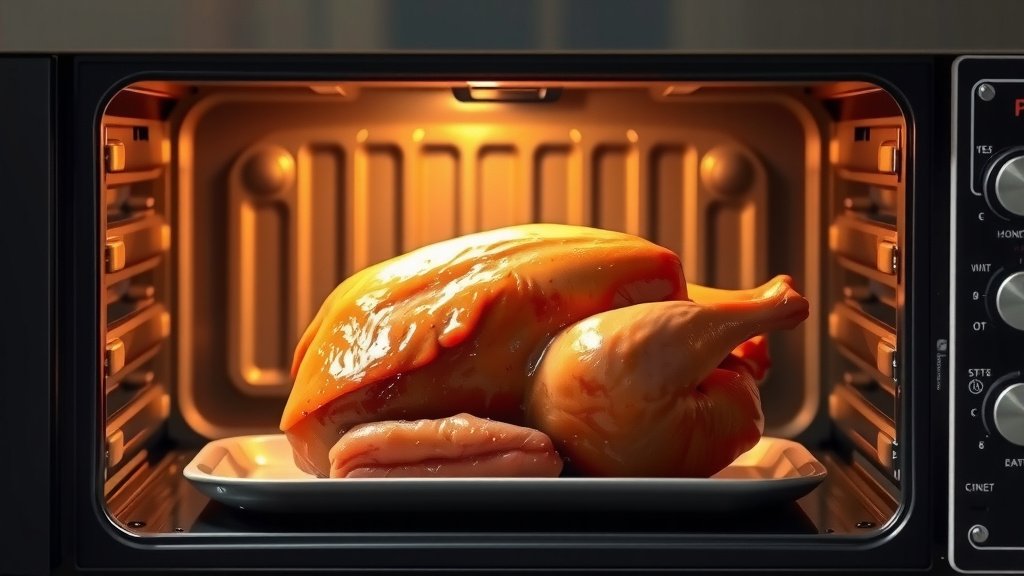
To get crispy skin on turkey in a wall oven, start with a thoroughly dry bird, patting the skin aggressively, and apply a good amount of fat like butter or oil before roasting.
Roast your turkey at a higher initial temperature, around 425-450°F, for the first 30-45 minutes to jumpstart skin crisping, then lower the heat for the remainder of the cooking time.
- Achieving crispy turkey skin in a wall oven starts with a super dry bird and ample fat.
- Begin roasting at a high temperature (425-450°F) for the first 30-45 minutes, then reduce it.
- Avoid basting and use a roasting rack for maximum air circulation around the turkey.
- Monitor your oven’s temperature consistency and consider convection for even browning.
- Always let your turkey rest after cooking to maintain juiciness and finish with beautiful, crisp skin.
How To Get Crispy Skin On Turkey In Wall Oven?
You can achieve wonderfully crispy turkey skin in your wall oven by focusing on dryness, fat, and proper temperature control.
It’s all about creating the right environment for that golden, crackly texture everyone loves on their holiday bird.
Why Crispy Skin Matters So Much
Isn’t that sound just wonderful? The crackle of perfectly rendered turkey skin is a sign of a well-cooked bird.
It adds a delightful texture contrast and an incredible richness that many of us look forward to all year (Many chefs agree).
Prepping Your Turkey for Success
Getting that crispy skin starts long before your turkey even sees the oven. Think of it as laying the groundwork for a masterpiece.
A little upfront effort makes a big difference in the outcome, trust us on this one.
The Power of Dryness
Moisture is the enemy of crispiness. We found that the absolute best way to ensure crispy skin is to get the turkey as dry as possible.
Pat the skin aggressively with paper towels, almost like you’re giving it a massage, until it feels completely dry to the touch (Many experts say).
Some people even let their turkey air-dry uncovered in the refrigerator overnight. This method helps to remove surface moisture very effectively.
Brining and Seasoning
Whether you dry brine or wet brine, ensure the skin is thoroughly dried afterward. Brining helps with moisture inside, but the surface needs attention.
Seasoning directly onto the dry skin, perhaps with salt, pepper, and herbs, also helps draw out any remaining surface moisture.
Key Techniques for a Wall Oven
Your wall oven is a powerful tool, and understanding how to use it for turkey is key. It’s not just about setting a temperature and walking away.
We found that specific steps can truly transform your turkey’s skin from pale to perfectly golden and crisp.
Starting Hot, Finishing Low
This is a game-changer for crispy skin. Begin by roasting your turkey at a high temperature, around 425-450°F, for about 30-45 minutes.
This initial blast of heat helps to sear the skin quickly, setting it up for that desirable crunch, as research often points out (USDA).
After this initial period, reduce the oven temperature to a more moderate 325-350°F to ensure the turkey cooks evenly through without burning the skin.
The Role of Fat
Fat is your friend when it comes to crisping skin. Rubbing the turkey generously with softened butter or oil before roasting is vital.
This not only adds flavor but also helps the skin to render and brown beautifully, giving it that irresistible texture.
Some even like to put pats of butter under the skin, directly on the breast meat, for added moisture and flavor.
Understanding Your Wall Oven
Every oven is a bit different, and knowing yours can give you an edge. Does it have hot spots? Is the temperature consistent?
Many experts suggest using an oven thermometer to verify your oven’s accuracy, which is important for even cooking.
Using Convection Wisely
Does your wall oven have a convection setting? If so, it can be a secret weapon for crispy turkey skin!
Convection circulates hot air around the turkey, promoting faster and more even browning, which is ideal for crisping.
Remember that convection cooking generally requires a slight temperature reduction (about 25°F) compared to conventional settings to avoid overcooking.
| Turkey Weight | Initial Temp (425-450°F) | Reduced Temp (325-350°F) | Total Cook Time (Approx.) |
|---|---|---|---|
| 8-12 lbs | 30 min | 2.5-3.5 hours | 3-4 hours |
| 12-16 lbs | 30-40 min | 3.5-4.5 hours | 4-5 hours |
| 16-20 lbs | 40-45 min | 4.5-5.5 hours | 5-6 hours |
No Basting? No Problem!
Here’s a tip that might surprise you: avoid basting for crispier skin. Every time you open the oven, heat escapes, and moisture is introduced.
That blast of steam and cool air can actually make your skin soft rather than crispy, which is something we discovered through trial and error.
Instead, rely on the fat you applied initially and the turkey’s own juices to keep the meat moist underneath that developing crisp crust.
Troubleshooting Common Issues
Even with the best intentions, things can sometimes go awry. Don’t worry; we have some solutions for those little hiccups.
A few adjustments can often save your turkey day and still deliver that beautiful, crispy skin.
When Skin Gets Soggy
If your turkey skin is looking less than crisp towards the end, don’t panic. You might be able to revive it with a quick fix.
Try increasing the oven temperature to 400-425°F for the last 15-20 minutes, keeping a close eye to prevent burning.
This high-heat burst can often dry out the skin and give it the crispness you desire, especially when you need a last-minute boost.
The Mighty Roasting Rack
Do you use a roasting rack? If not, you should! A rack elevates the turkey above the pan juices.
This allows hot air to circulate completely around the bird, even underneath, which is essential for all-around crispiness.
Checklist: Crispy Turkey Skin
- Thoroughly pat turkey dry, inside and out.
- Apply generous fat (butter/oil) to the skin.
- Start roasting at a high temperature (425-450°F).
- Reduce oven temperature after the initial blast.
- Use a roasting rack for even air circulation.
- Avoid opening the oven door too often to prevent heat loss.
Final Steps for Perfection
Once your turkey reaches the correct internal temperature (165°F in the thickest part of the thigh), it’s time for another crucial step.
Resting the turkey for at least 20-30 minutes allows the juices to redistribute, leading to a moister bird overall, and helps the skin firm up even more.
Tent it loosely with foil; don’t wrap it tightly, or you’ll trap steam and risk losing that crispiness you worked so hard for!
Conclusion
Getting crispy skin on your turkey in a wall oven is totally achievable with a few thoughtful steps. Focus on starting with a dry bird, applying plenty of fat, and using a strategic temperature approach.
By understanding your oven and avoiding common pitfalls like excessive basting, you’ll be well on your way to serving a turkey with that coveted golden, crackling skin that will impress everyone at your table. Happy roasting!
How do I prevent my turkey skin from burning while trying to crisp it?
To prevent burning, always tent your turkey loosely with foil if the skin is browning too quickly, especially during the initial high-heat phase or if your oven runs hot. You can also lower the temperature slightly if you notice excessive browning.
Can I use an air fryer to crisp up turkey skin after it’s cooked in the wall oven?
While some people try this, it’s generally not recommended for large sections of turkey skin due to potential drying out of the meat. Focusing on crisping the skin during the roasting process itself is usually more effective and safer for maintaining overall turkey quality.
Does stuffing the turkey affect the crispiness of the skin?
Stuffing a turkey can extend the cooking time and make it harder for the internal temperature to rise quickly, which might indirectly affect how long the skin is exposed to browning heat. For best crispiness, consider cooking your stuffing separately.
What if my wall oven doesn’t have a convection setting?
No problem at all! You can still achieve fantastic crispy skin in a conventional wall oven. Just ensure you follow the steps for drying the turkey, applying fat, and using the high-to-low temperature method. A good roasting rack is even more important in this case.
Should I use a glaze on my turkey if I want crispy skin?
Many glazes contain sugar, which can cause the skin to burn before it crisps if applied too early. If you want to use a glaze, apply it during the last 30-45 minutes of cooking. This allows it to caramelize and flavor the skin without over-browning too soon.
