
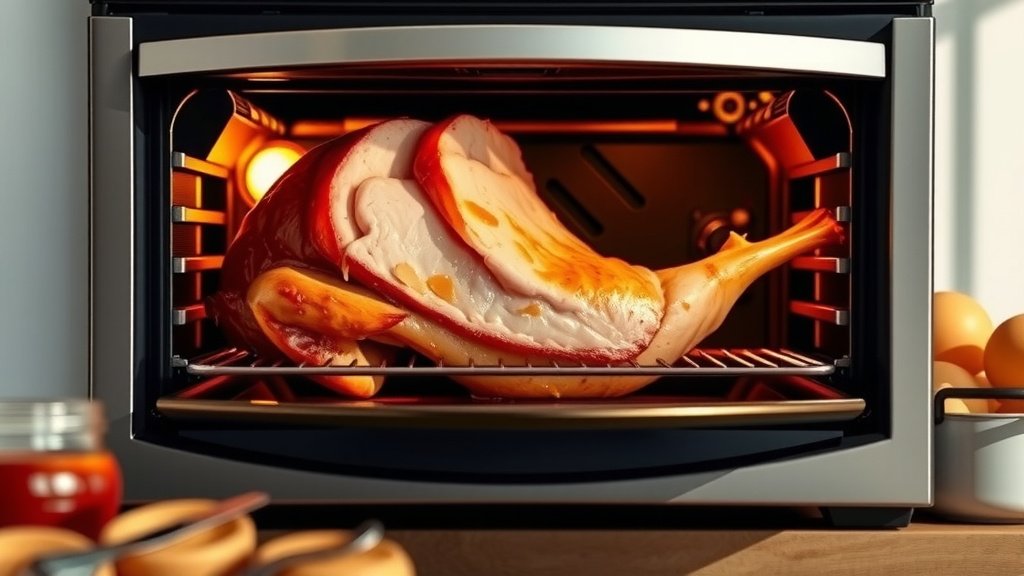
You can cook delicious gammon in a single wall oven by roasting it at a moderate temperature, often around 180°C (350°F), after a proper pre-soaking or boiling stage.
This method ensures your gammon remains tender and flavorful, even in a compact oven space, requiring simple steps like wrapping or basting to keep it moist.
- Prepare your gammon by either pre-soaking it in water or boiling it before it goes into the oven.
- Roast your gammon in a single wall oven at a steady temperature of 180°C (350°F) for consistent results.
- Always cover the gammon with foil for most of the cooking time to retain essential moisture and prevent drying.
- Apply a delicious glaze in the final 20-30 minutes of cooking for a beautiful finish and enhanced taste.
- Use a reliable meat thermometer to ensure the internal temperature reaches a safe 71°C (160°F) before serving.
How To Cook Gammon In A Single Wall Oven?
Cooking gammon in a single wall oven is quite straightforward and rewarding. You start by preparing the gammon, then roast it carefully, usually wrapped, to keep it juicy and flavorful for your meal.
Why Choose Your Single Wall Oven for Gammon?
You might wonder if your single wall oven is up to the task for a larger cut like gammon. Absolutely! These ovens are actually quite versatile. They offer precise temperature control, which is key for a perfectly cooked gammon.
Many homes have single wall ovens, making them a common and reliable kitchen appliance. You can get fantastic results with a little know-how.
Advantages of Smaller Ovens
Smaller ovens often preheat faster, which can save you time. They also tend to heat more evenly once they reach temperature. This can be a real plus when you’re aiming for a consistent cook on your gammon joint.
Think of it like a cozy blanket for your food. The heat stays contained, working its magic efficiently. We find that smaller spaces often mean less temperature fluctuation during cooking.
Prepping Your Gammon: The Essential First Steps
Preparation is half the battle when cooking gammon. Proper preparation ensures your gammon isn’t too salty and becomes incredibly tender. Don’t skip these vital steps!
It’s like setting the stage for a wonderful play. A little effort upfront makes all the difference in the final act, or in this case, the first bite.
Soaking vs. Boiling: Which is Right for You?
Most gammon joints need either soaking or boiling before roasting. This reduces the salt content. Many experts suggest boiling the gammon first (NHS). Boiling also helps tenderize the meat beautifully.
If you choose to soak, change the water several times over 12-24 hours. For boiling, place the gammon in cold water, bring it to a boil, then simmer for about 20 minutes per 450g (1 lb). Drain it well afterward.
The Right Temperature and Time for Oven Roasting
Once your gammon is prepped, it’s time for the oven. Getting the temperature and timing correct is crucial. You want a beautifully cooked, tender joint, not something dry or underdone.
This is where your oven truly shines. A consistent heat will bring out the best in your gammon.
Setting Your Oven Just Right
For gammon, we found that a moderate heat works best. Set your single wall oven to 180°C (350°F) or Gas Mark 4. This temperature allows the gammon to cook through without drying out too quickly.
Always preheat your oven fully before putting the gammon in. This ensures an accurate cooking start time. Cold spots can cause uneven cooking, which you want to avoid.
Gammon Cooking Times Chart
Cooking times can vary slightly based on your oven and the gammon’s thickness. This table offers a general guide to help you plan your cooking.
| Gammon Weight | Approximate Cooking Time (180°C / 350°F) |
|---|---|
| 900g (2 lbs) | 1 hour 20 minutes |
| 1.4kg (3 lbs) | 2 hours |
| 1.8kg (4 lbs) | 2 hours 40 minutes |
| 2.3kg (5 lbs) | 3 hours 20 minutes |
Remember, these are estimates. The most reliable way to check for doneness is with a meat thermometer.
Achieving That Perfect Moistness and Flavor
Nobody wants a dry gammon. The goal is a juicy, flavorful center with a lovely exterior. There are a few simple tricks you can use to achieve this consistently in your single wall oven.
Think of it as adding layers of goodness. Each step contributes to the overall deliciousness of your meal.
To Foil or Not to Foil?
For most of the cooking process, we recommend covering your gammon with foil. This traps steam and moisture, keeping the meat from drying out. It acts like a protective shield for your tender joint.
Remove the foil for the last 20-30 minutes if you want to achieve a crispier, golden-brown exterior or apply a glaze. This creates a wonderful contrast in texture.
Glazing Your Gammon: A Flavorful Finish
A glaze can transform your gammon from good to truly memorable. Common glazes include honey and mustard, marmalade, or brown sugar. Apply your chosen glaze after removing the foil.
Brush it generously over the gammon during the final cooking stage. The sugars in the glaze will caramelize, creating a beautiful, sticky, and flavorful crust. This adds an extra dimension of taste.
Important Safety Checks: Is Your Gammon Ready?
Food safety is always paramount. Ensuring your gammon is cooked through is not just about taste; it’s about health. Always use a reliable method to confirm doneness.
Don’t just guess! A few seconds with a thermometer can save you a lot of worry later on. It’s like checking the oil in your car; a quick check provides peace of mind.
Your Handy Gammon Checklist
Keep this quick checklist in mind as your gammon cooks:
- Pre-soak or boil the gammon thoroughly.
- Preheat your oven to the correct temperature.
- Roast gammon, covered with foil, for most of the time.
- Apply glaze during the final 20-30 minutes, if desired.
- Check internal temperature reaches 71°C (160°F) with a meat thermometer.
Troubleshooting Common Oven Gammon Issues
Even with the best intentions, things can sometimes go slightly awry. Don’t worry! Most common gammon issues have simple solutions. You’ve got this, no matter what pops up.
Think of it as a small detour on your culinary journey. A quick adjustment and you’ll be back on track to deliciousness.
Dry Gammon Fixes
If your gammon looks a bit dry, it might have been cooked too long uncovered. Next time, ensure it stays wrapped in foil for longer. You can also baste it with some of its juices or a little stock during cooking.
For a gammon that’s already slightly dry, consider slicing it thinly and serving with a flavorful gravy or sauce. This adds moisture back to each bite.
Uneven Cooking Tips
If you notice one side of your gammon is cooking faster, try rotating the joint halfway through the cooking time. Single wall ovens, while efficient, can sometimes have slight temperature variations.
Using an oven-safe thermometer placed inside the oven itself can also help you verify your oven’s accuracy. Sometimes, slight adjustments to your oven’s dial can make a big difference.
Conclusion
Cooking gammon in a single wall oven is a straightforward and rewarding process. By following these steps—from proper preparation and moderate roasting temperatures to strategic use of foil and glazes—you can achieve a wonderfully moist and flavorful result every time. Remember to always prioritize food safety by checking the internal temperature. Your single wall oven is perfectly capable of helping you create a memorable gammon joint for any occasion.
How long does a 2kg gammon take to cook in the oven?
A 2kg (approximately 4.4 lbs) gammon joint, after pre-boiling, will typically take around 2 hours and 50 minutes to 3 hours to cook in a single wall oven set to 180°C (350°F). Always confirm doneness with a meat thermometer, aiming for an internal temperature of 71°C (160°F).
Should I boil gammon before roasting in the oven?
Yes, it’s highly recommended to boil gammon before roasting. Boiling helps to reduce the saltiness of the meat and significantly tenderizes it, leading to a much more pleasant eating experience. This step is crucial for flavor and texture.
Can you cook gammon in a foil tray?
You can absolutely cook gammon in a foil tray. Using a foil tray is a great way to contain juices and makes cleanup much easier. We often recommend covering the gammon itself with foil, even within the tray, for most of the cooking to keep it moist.
What internal temperature should cooked gammon be?
Cooked gammon should reach an internal temperature of 71°C (160°F) to be safe for consumption (USDA). Use a reliable meat thermometer inserted into the thickest part of the joint, avoiding any bone, to get an accurate reading.
How can I make my oven gammon less salty?
To make your oven gammon less salty, the most effective method is proper pre-preparation. Either soak the gammon in cold water for 12-24 hours, changing the water frequently, or boil it for an initial period (e.g., 20 minutes per 450g) before roasting. This draws out excess salt.
