
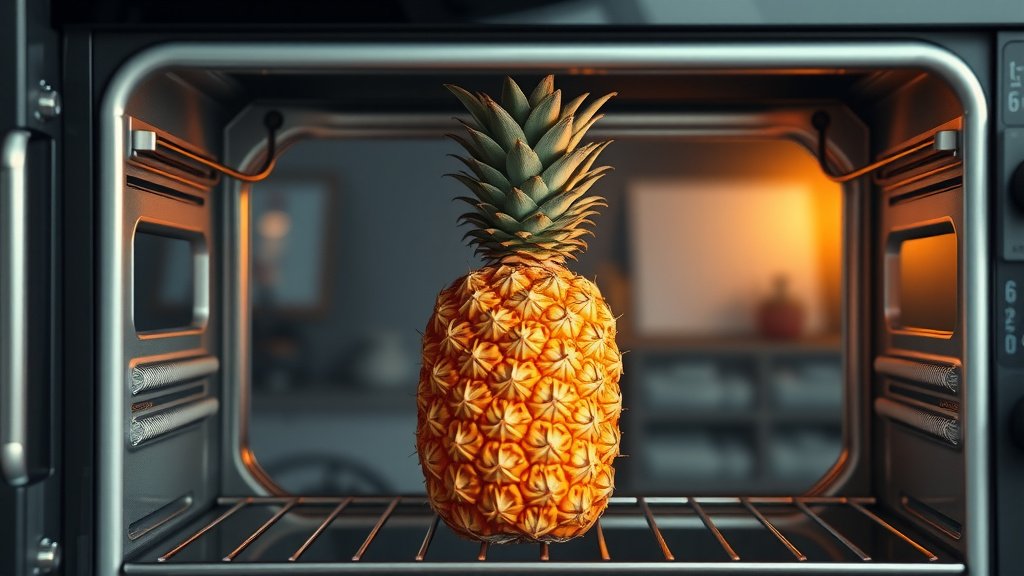
To make rotisserie pineapple at home, first peel, core, and trim a ripe pineapple, then rub it with a brown sugar and spice mixture.
Secure the seasoned pineapple onto your oven’s rotisserie spit, set the temperature to around 350-375°F (175-190°C), and roast for 1.5 to 2 hours, basting occasionally until beautifully caramelized.
TL;DR: Want sweet, juicy rotisserie pineapple without the hassle of grilling?
- Choose a ripe pineapple and prep it by peeling and coring.
- Apply a delicious rub for extra flavor, like brown sugar and cinnamon.
- Mount it securely on your oven’s rotisserie spit.
- Cook at a moderate temperature, basting every 20-30 minutes.
- Enjoy the caramelized, tender results straight from your kitchen!
How To Make Rotisserie Pineapple At Home?
Making rotisserie pineapple at home creates a wonderfully sweet and juicy treat with a fantastic caramelized crust.
It’s simpler than you might think, turning a regular pineapple into a show-stopping dessert or side dish right in your own oven.
Why Rotisserie Pineapple? A Sweet Revelation
Imagine biting into warm pineapple, crisp on the outside and incredibly tender within. That’s the magic of rotisserie cooking.
The slow, even rotation helps the natural sugars caramelize beautifully, giving it a depth of flavor you just don’t get from grilling alone.
Many home cooks find this method enhances the fruit’s juiciness and brings out its aromatic qualities (Food Network Kitchen).
What You’ll Need: Gathering Your Tools
Before you start, make sure you have the right gear. Most modern ovens come with a rotisserie kit, which is perfect.
You will need a sharp knife, a cutting board, and possibly a pineapple corer for easier prep.
Choosing the Perfect Pineapple
Picking a ripe pineapple is the first step to success. Look for one with a fragrant, sweet smell at its base.
It should feel heavy for its size and have vibrant green leaves that pull out easily (USDA). Avoid any with soft spots or dry, brittle leaves.
Prepping Your Pineapple for the Spit
Prepping the pineapple properly ensures it cooks evenly and securely on the rotisserie.
This part is important, so take your time and follow the steps carefully.
The Art of Coring and Peeling
First, slice off the top and bottom of the pineapple. Stand it upright and carefully slice downwards to remove the spiky skin.
Then, use a pineapple corer or a small knife to remove the tough, fibrous core. We found that removing the core allows for more even cooking.
Seasoning Secrets: Sweet and Savory Options
While delicious on its own, a simple rub can take your rotisserie pineapple to the next level. Think sweet or even a little savory.
A classic choice is brown sugar, cinnamon, and a pinch of nutmeg. Some experts suggest adding a touch of chili powder for a surprising kick.
| Flavor Profile | Ingredients | Notes |
|---|---|---|
| Classic Sweet | Brown sugar, cinnamon, nutmeg | Enhances natural sweetness. |
| Tropical Spice | Brown sugar, ginger, cayenne pepper | Adds a warm, subtle heat. |
| Zesty Glaze | Honey, lime juice, rum (optional) | Brush on during the last 30 minutes of cooking. |
Skewering Your Pineapple Like a Pro
Getting the pineapple onto the rotisserie spit correctly is crucial for stable rotation. You don’t want it wobbling off balance.
Carefully push the rotisserie rod through the center of your cored pineapple. Ensure it’s threaded straight through the middle.
Balance is Key: Preventing Wobbles
Once threaded, use the rotisserie forks to secure the pineapple tightly on both ends. This prevents any spinning on the rod itself.
Make sure the pineapple is centered and balanced. A lopsided pineapple will cook unevenly and strain your rotisserie motor.
Setting Up Your Rotisserie System
Whether you’re using your oven or an outdoor grill, the setup is fairly similar. The goal is consistent heat and continuous rotation.
Always refer to your specific oven or grill manual for precise instructions on installing the rotisserie kit.
Oven vs. Grill: Which is Best for You?
An oven rotisserie offers convenience and easy temperature control. It’s perfect for a rainy day or if you prefer indoor cooking.
A grill rotisserie can add a subtle smoky flavor, which some people absolutely love. We found that both methods yield fantastic results.
The Rotisserie Magic: Cooking Your Pineapple
Now for the fun part: watching your pineapple slowly transform. Set your oven or grill to a medium heat.
Aim for around 350-375°F (175-190°C). The cooking time usually ranges from 1.5 to 2 hours, depending on pineapple size.
Basting for Brilliance: Adding Layers of Flavor
Basting isn’t strictly necessary but it adds incredible flavor and shine. You can use melted butter, a honey glaze, or even a little rum mixture.
Brush your chosen basting liquid onto the pineapple every 20-30 minutes during the last hour of cooking.
Is It Done? Knowing When to Pull It Off
How do you know when your rotisserie pineapple is perfectly cooked? It’s all about appearance and tenderness.
You want a deep golden-brown, caramelized exterior. The pineapple should also feel tender when pierced with a fork.
Here’s a quick checklist to help you decide:
- The pineapple skin has a rich, golden-brown color.
- Caramelized sugars are visible on the outer surface.
- When gently pressed, the pineapple feels tender but not mushy.
- A pleasant, sweet, and toasted aroma fills your kitchen.
- Internal temperature reaches around 165°F (74°C), though not strictly required for fruit.
Serving Your Rotisserie Pineapple Masterpiece
Once done, carefully remove the pineapple from the rotisserie spit. Let it rest for a few minutes to cool slightly.
Then, slice it into rings or wedges and serve warm. It’s absolutely delightful on its own.
Beyond Dessert: Creative Uses
Rotisserie pineapple isn’t just for dessert. It makes an amazing side for grilled meats like pork or chicken.
Try dicing it and adding it to salads, tacos, or even a homemade salsa for a burst of sweet and tangy flavor (Good Housekeeping).
Conclusion
Making rotisserie pineapple at home is a simple yet rewarding culinary adventure. You transform a common fruit into something truly special.
With just a little preparation and the right tools, you can enjoy a beautifully caramelized, juicy pineapple that impresses everyone.
So, fire up that rotisserie and get ready to enjoy this incredibly delicious treat!
What kind of pineapple is best for rotisserie?
A fresh, ripe pineapple with a sweet fragrance and firm flesh is best. Avoid overly soft or underripe pineapples, as they won’t caramelize as well or offer the desired juiciness.
Can I use a grill rotisserie instead of an oven?
Yes, absolutely! A grill rotisserie works wonderfully and can impart a subtle smoky flavor to your pineapple. Just ensure your grill is set to a moderate, consistent temperature.
How do I keep the pineapple from falling off the spit?
Ensure the rotisserie rod is pushed straight through the pineapple’s core and secure it tightly with the rotisserie forks on both ends. This prevents any slipping or wobbling during rotation.
Do I need to baste the pineapple while it cooks?
Basting is optional but highly recommended for an extra layer of flavor and a glossy finish. A simple glaze of honey, melted butter, or even a little pineapple juice works well, especially in the last 30-60 minutes.
How should I store leftover rotisserie pineapple?
Store any leftover rotisserie pineapple in an airtight container in the refrigerator for up to 3-4 days. It’s delicious cold, or you can gently reheat it in the microwave or oven.
