
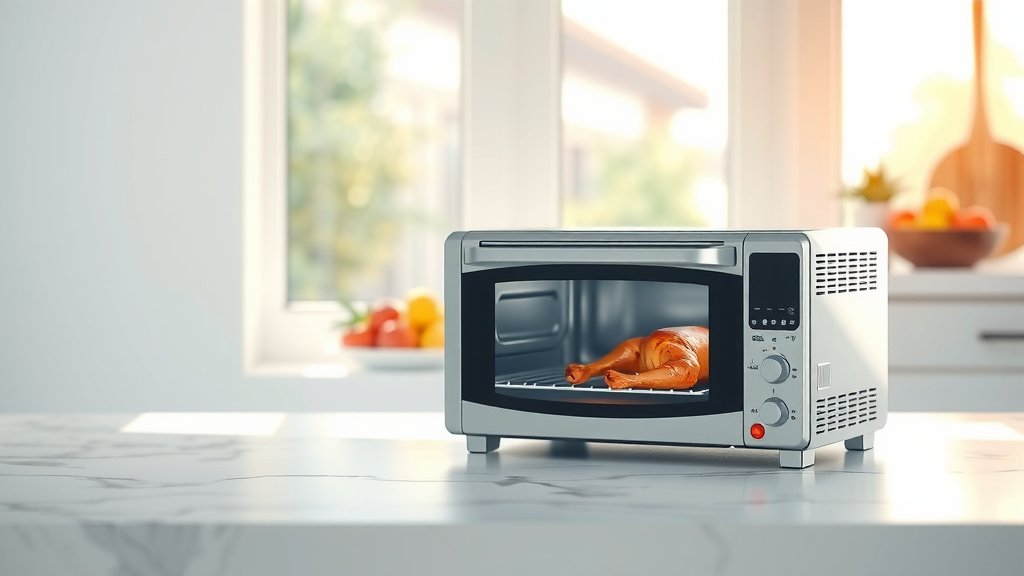
To determine what size rotisserie oven you need, consider the typical quantity and type of food you’ll cook, along with your available kitchen space.
Most home cooks find that a countertop model capable of holding a 5-6 pound chicken or small roast is ideal, while commercial needs vary greatly by volume.
TL;DR: Here’s a quick look at sizing your rotisserie oven:
- Your rotisserie oven size largely depends on the food you plan to cook and how many people you typically feed.
- Available counter or cabinet space in your kitchen is a critical limiting factor for home models.
- Think about whether you need a dedicated countertop unit or a larger, potentially built-in commercial option.
- Don’t forget power requirements; smaller ovens usually use standard outlets, but bigger ones might need more.
What Size Rotisserie Oven Do I Need?
The ideal rotisserie oven size for you truly depends on your specific cooking habits and the kitchen space you have available.
Matching your oven to your needs prevents waste of space or insufficient capacity for your culinary adventures.
Understanding Rotisserie Oven Capacity
When you’re looking for a rotisserie oven, capacity is often the first thing people consider, and for good reason.
It tells you exactly how much food, or what size of a roast, the oven can handle at one time.
For the Home Cook: Small & Mighty
Most home rotisserie ovens are designed for convenience and efficiency in a smaller space.
We often find that these models can comfortably fit a 5-pound chicken, a small turkey breast, or a pork loin.
If you’re cooking for a small family of 2-4 people, this size is often perfect and won’t crowd your kitchen.
Family-Sized Roasts: Stepping Up
Do you frequently host family dinners or larger gatherings? Then you might need a rotisserie oven with a bit more muscle.
Some home models can accommodate a 6-7 pound chicken, a duck, or even two smaller chickens side-by-side.
Research often shows these larger home units still fit on most standard countertops but demand more length (Consumer Reports).
Commercial Use: High Volume Needs
For restaurants, delis, or catering businesses, the game changes entirely. You’re no longer just cooking for dinner; you’re cooking for dozens, sometimes hundreds.
Commercial rotisserie ovens come in massive sizes, holding anywhere from 8 to 45 chickens at once.
These units often require dedicated space, specialized ventilation, and significant power considerations (National Restaurant Association guidelines).
Considering Your Available Kitchen Space
Even if you dream of a massive rotisserie, your kitchen reality might have other plans.
Space is a common constraint, especially in smaller homes or apartments.
Countertop Footprint Matters
Before you buy, grab a tape measure. Seriously, it’s a small step that saves big headaches.
Measure the length, width, and height of the spot where you plan to place your rotisserie oven.
Remember to leave a few inches around the oven for proper ventilation, as many experts say this is crucial for safety and performance.
Vertical vs. Horizontal Designs
Did you know rotisserie ovens come in different orientations?
Vertical models often have a smaller footprint on your counter, reaching upwards instead of outwards.
Horizontal models are more common and tend to be wider, but some people find them easier to load.
Power and Installation Considerations
It’s not just about fitting the oven; it’s about powering it too.
Most small home rotisserie ovens run on standard 120V household outlets.
Standard Outlets vs. Dedicated Circuits
While many kitchen appliances share a circuit, a rotisserie oven, especially a larger one, can draw a fair amount of power.
We found that some larger home units or professional-grade ovens might perform best on a dedicated circuit to avoid tripping breakers.
Commercial units almost certainly require specialized electrical hookups, often 208V or 240V.
Types of Rotisserie Ovens and Their Sizes
The type of rotisserie oven also influences the size available.
Let’s look at the main categories.
- Countertop Rotisseries: These are the most common for home use, designed to sit on your kitchen counter. They range from compact models holding a single chicken to larger units that can fit two.
- Built-in Rotisseries: Some high-end wall ovens or ranges have a rotisserie function built right in. The size capacity here depends on the oven’s internal dimensions.
- Commercial Rotisseries: These are much larger, often freestanding units found in grocery stores or restaurants. They can be gas or electric and designed for continuous heavy use.
Making the Right Choice: A Quick Checklist
To help you decide, here’s a simple checklist:
- What is the largest item you plan to rotisserie (e.g., a 5lb chicken, a whole turkey, two small roasts)?
- How many people do you usually cook for on a regular basis?
- What are the exact dimensions of your available counter space (width, depth, height)?
- Do you prefer a vertical or horizontal rotisserie design?
- What kind of electrical outlets are available where you plan to put the oven?
- What’s your budget for a new appliance?
| Oven Type | Typical Capacity | Approx. Dimensions (W x D x H) | Best For |
|---|---|---|---|
| Small Countertop | 1x 5lb chicken | 16″ x 12″ x 12″ | 1-3 people, small spaces |
| Medium Countertop | 1x 7lb chicken or 2x smaller chickens | 20″ x 15″ x 14″ | 3-6 people, moderate spaces |
| Large Countertop / Built-in | 1x 10lb turkey or 2-3 chickens | 24″ x 18″ x 16″ | 6+ people, larger kitchens |
| Commercial | 8-45+ chickens | Varies greatly (e.g., 36″ x 30″ x 48″) | Restaurants, delis, high volume |
Conclusion
Choosing the right rotisserie oven size doesn’t have to be a guesswork. By carefully considering your cooking habits, the number of people you serve, and the precious space in your kitchen, you can make a choice that truly fits.
Whether it’s a compact unit for a cozy kitchen or a larger model for entertaining, the perfect rotisserie is out there waiting to roast your next delicious meal.
Frequently Asked Questions About Rotisserie Oven Size
How much space should I leave around a countertop rotisserie oven?
You should typically leave at least 4-6 inches of clearance on all sides of a countertop rotisserie oven, especially the back and top, for proper ventilation. Many experts say this prevents overheating and ensures safe operation.
Can I rotisserie a whole turkey in a standard home rotisserie oven?
Most standard home rotisserie ovens are generally not large enough for a whole large turkey. They are usually designed for chickens up to about 7-8 pounds or smaller turkey breasts. For a whole turkey, you’d likely need a much larger, specialized unit or a built-in oven with a rotisserie feature.
Are vertical or horizontal rotisserie ovens more space-efficient?
Vertical rotisserie ovens tend to be more space-efficient in terms of countertop footprint because they are taller and narrower. Horizontal models take up more linear counter space but may offer easier access to your food.
Do smaller rotisserie ovens cook faster than larger ones?
Not necessarily. While smaller ovens heat up faster, the cooking time depends more on the size and type of food being cooked, as well as the oven’s power and efficiency, rather than just its external dimensions. Always follow recipe guidelines for internal temperatures.
What is the difference in power requirements between home and commercial rotisserie ovens?
Home rotisserie ovens typically operate on standard 120V household outlets. Commercial rotisserie ovens, due to their larger size and continuous use, often require higher voltage electrical connections, such as 208V or 240V, and may need dedicated circuits.
