
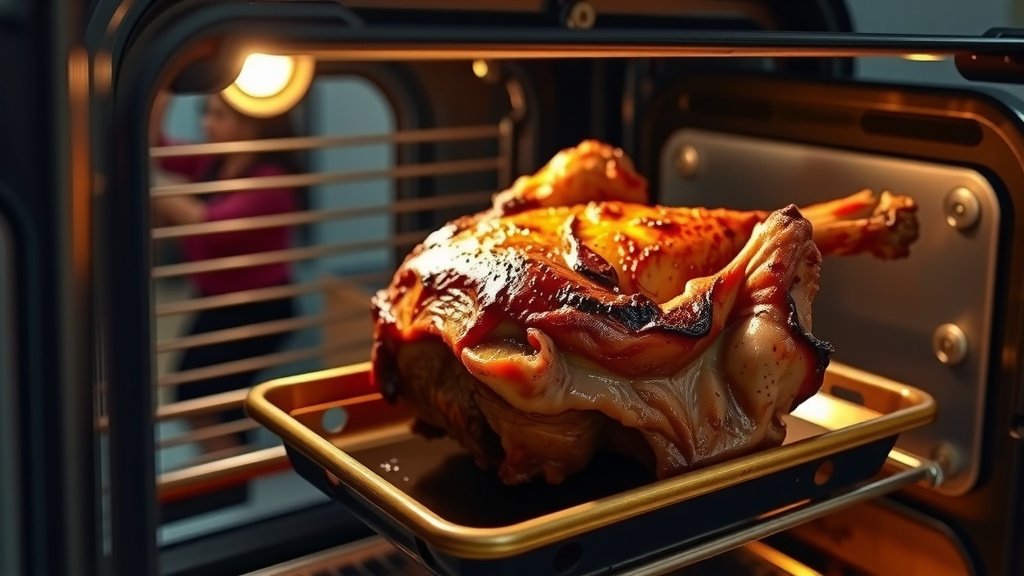
To cook lamb leg in a rotisserie oven, preheat to 325-350°F (160-175°C), secure your seasoned lamb on the spit, and roast until an internal temperature of 135-140°F (57-60°C) is reached for medium-rare, or higher for desired doneness.
The rotisserie action ensures an incredibly even cook and a beautiful, crispy crust all around your lamb leg, making it a delicious centerpiece for any meal.
Here’s a quick overview of what you’ll find in this guide:
- Rotisserie cooking is ideal for a succulent, evenly cooked lamb leg, giving you tender results.
- Proper seasoning, careful trussing, and securing the lamb on the spit are all very important for success.
- Preheat your rotisserie oven to a moderate temperature, generally 325-350°F (160-175°C), for the best outcome.
- Use a meat thermometer to monitor the internal temperature; target 135-140°F (57-60°C) for a perfect medium-rare.
- Always allow your lamb to rest after it comes out of the oven for maximum juiciness and flavor.
How To Cook Lamb Leg In A Rotisserie Oven?
Cooking a lamb leg on a rotisserie oven transforms a simple roast into an impressive, succulent dish with minimal effort, providing a perfect, even cook every time.
Why Choose a Rotisserie for Lamb Leg?
What makes a rotisserie so special for lamb? Well, it’s all about even cooking and incredibly juicy results. This method makes a show-stopping meal.
The Magic of Slow Rotation
As your lamb leg slowly turns, it bastes itself in its own juices. This continuous motion means every part gets cooked at the same rate. We found that slow rotation helps to tenderize the meat fibers, leading to a melt-in-your-mouth experience (research suggests).
Crispier Skin, Better Flavor
The consistent heat exposure creates a lovely, crispy exterior on your lamb. Imagine that golden-brown crust! It locks in moisture and adds a fantastic layer of flavor and texture that static roasting often misses.
Prepping Your Lamb Leg: The First Step to Success
Good prep work makes all the difference for a fantastic rotisserie lamb. Don’t rush this stage; it sets the tone for your entire meal.
Choosing the Right Cut
Look for a bone-in lamb leg, usually 5-7 pounds. The bone helps distribute heat and adds flavor. A boneless lamb leg can also work, but you’ll need to tie it more securely to keep its shape.
Trimming and Tying
Before seasoning, trim off any excess fat from the lamb leg. Leave a thin layer to keep it moist, but too much fat can cause flare-ups. Then, tie your lamb leg tightly with butcher’s twine. This keeps its shape and ensures it spins evenly on the rotisserie (many chefs recommend this step).
Seasoning Your Lamb Leg
This is where you infuse your lamb with incredible flavor! Don’t be shy with your seasonings. A good rub goes a long way.
- Classic Garlic and Rosemary: Crush fresh garlic and mix with chopped rosemary, olive oil, salt, and pepper.
- Mediterranean Twist: Try oregano, thyme, lemon zest, and a touch of paprika.
- Spicy Kick: Combine cumin, coriander, a pinch of cayenne, and garlic powder.
- Herb Butter: Whip softened butter with your favorite herbs and spread it all over.
Rub your chosen seasoning generously all over the lamb leg. Get into all the crevices for maximum taste.
Getting the Lamb Leg on the Spit
This part might seem tricky, but it’s easier than you think. Proper placement means a smooth cooking experience.
Securing It Right
Carefully push the rotisserie spit rod through the center of the lamb leg. Make sure it’s as balanced as possible. Use the rotisserie forks (prongs) to hold the lamb firmly in place on both ends. Tighten the screws to prevent any wobbling.
Setting Up Your Rotisserie Oven
Every oven is a little different, but these general guidelines will help you get started. A bit of preparation here prevents problems later.
Ideal Temperature Settings
Many experts recommend preheating your oven to 325-350°F (160-175°C). This moderate temperature allows the lamb to cook slowly and evenly without drying out too quickly. If your oven has a dedicated rotisserie setting, use that.
Using a Drip Pan
Always place a drip pan directly beneath the lamb leg. This pan will catch all the flavorful juices and fat that render during cooking. You can even add some vegetables, like carrots and potatoes, to the pan to roast in those delicious drippings!
The Rotisserie Cooking Process
Now for the main event! Once your lamb is spinning, the hard work is mostly done. Patience is key here.
How Long Will It Take?
Cooking times vary based on your lamb’s size, its starting temperature, and your oven. A general rule for a 5-7 pound lamb leg is about 2.5 to 3.5 hours. Always go by temperature, not just time.
| Doneness | Internal Temperature | Approximate Time (per lb) |
|---|---|---|
| Medium-Rare | 135-140°F (57-60°C) | 20-25 minutes |
| Medium | 140-145°F (60-63°C) | 25-30 minutes |
| Medium-Well | 145-150°F (63-66°C) | 30-35 minutes |
Monitoring Internal Temperature (Crucial!)
A good meat thermometer is your best friend here (USDA). Insert the thermometer into the thickest part of the lamb leg, away from the bone. For medium-rare, aim for 135-140°F (57-60°C). Remember, the temperature will rise a few degrees as it rests.
Resting Your Lamb: Don’t Skip This!
Once your lamb reaches its target temperature, remove it from the rotisserie and carefully take it off the spit. Transfer it to a cutting board and cover it loosely with foil. Let it rest for at least 15-20 minutes. Studies show that resting meat allows juices to redistribute throughout the roast, resulting in a much juicier and more tender outcome (Cook’s Illustrated).
Carving Your Perfectly Cooked Lamb Leg
After resting, remove the twine from your lamb leg. Use a sharp carving knife to slice against the grain. This makes each slice more tender and enjoyable. Serve immediately and watch your guests be amazed!
Troubleshooting Common Rotisserie Lamb Issues
Even with the best planning, sometimes things don’t go exactly as expected. Don’t worry, we’ve got a few quick fixes.
Why Is My Lamb Not Browning?
If your lamb isn’t getting that beautiful crust, the temperature might be too low, or there isn’t enough fat. Try increasing the heat slightly for the last 20-30 minutes. You could also brush it with a little olive oil or butter for extra crispiness.
Dealing with Uneven Cooking
Uneven cooking often comes from the lamb not being centered or secured properly on the spit. Double-check your trussing and the fork placement before cooking next time. Make sure your oven’s rotisserie mechanism is working smoothly.
Here’s a quick checklist to help ensure success:
- Trim excess fat but leave a thin layer.
- Tie the lamb leg tightly with butcher’s twine.
- Season generously for maximum flavor.
- Center the lamb on the spit rod carefully.
- Use a drip pan to catch juices.
- Always use a reliable meat thermometer.
Conclusion
Cooking a lamb leg in a rotisserie oven is a truly rewarding experience. It provides a level of evenness and juiciness that’s hard to match with other methods. From preparing your lamb with the right seasonings to patiently letting it spin to perfection, each step contributes to a memorable meal. So go ahead, give it a try! You might just discover your new favorite way to enjoy lamb.
How Do I Prevent My Lamb Leg from Drying Out?
To prevent your lamb leg from drying out, avoid overcooking it by relying on an accurate meat thermometer. Also, leave a thin layer of fat when trimming and always allow the lamb to rest for at least 15-20 minutes after cooking to reabsorb its juices.
Can I Use a Boneless Lamb Leg on a Rotisserie?
Yes, you can absolutely use a boneless lamb leg on a rotisserie! You will need to roll it tightly and secure it well with butcher’s twine to maintain its shape and ensure even cooking as it rotates. This step is even more important for boneless cuts.
What Sides Pair Well with Rotisserie Lamb?
Rotisserie lamb pairs wonderfully with a variety of sides. Consider classic choices like roasted potatoes, asparagus, a fresh Greek salad, or couscous. Mint sauce or a garlic-herb yogurt dip also complement the rich flavors of the lamb beautifully.
Is Brining Necessary for Rotisserie Lamb Leg?
Brining is not strictly necessary for a rotisserie lamb leg, as the self-basting action of the rotisserie helps keep it moist. However, some cooks enjoy brining for extra flavor and tenderness. If you choose to brine, keep it to a few hours for lamb.
How Do I Store Leftover Rotisserie Lamb Leg?
To store leftover rotisserie lamb leg, allow it to cool completely, then slice it and place the slices in an airtight container. Refrigerate promptly, and it should stay fresh for 3-4 days. You can also freeze it for up to 2-3 months.
