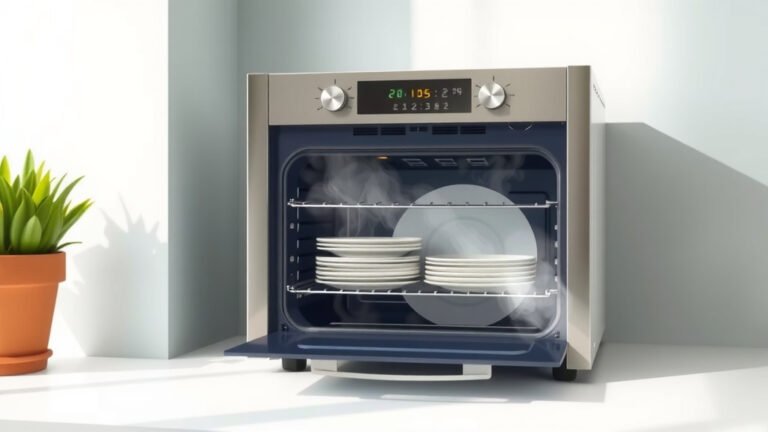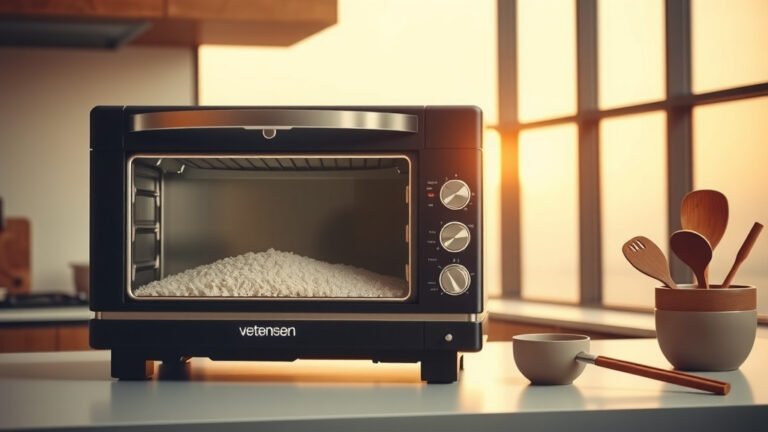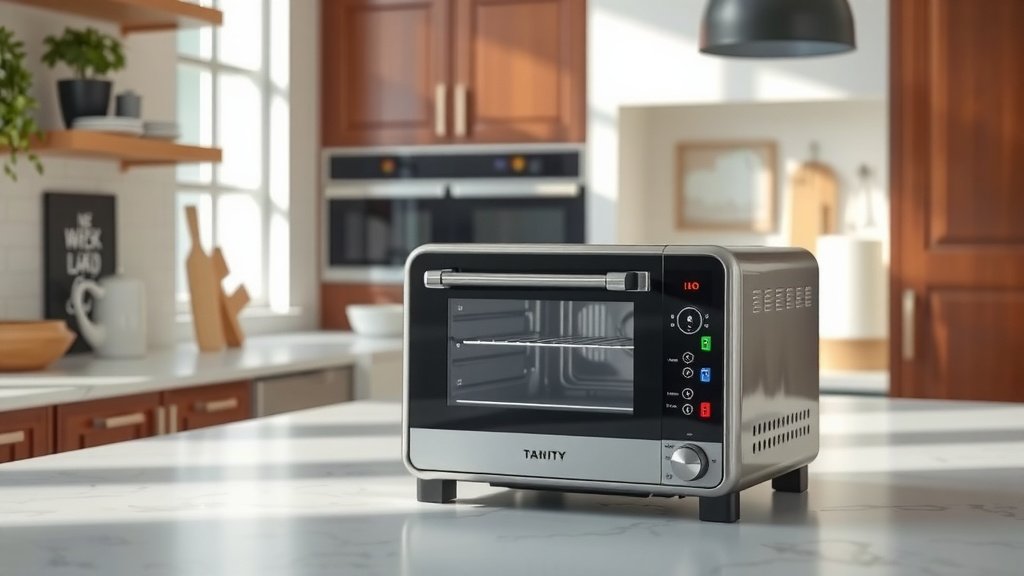
A toaster oven can replace a regular oven for many everyday cooking tasks, especially for smaller meals or quick reheating needs.
It typically falls short for larger dishes, big family gatherings, or precise baking that a traditional, full-sized oven handles with ease.
- For small meals, quick heating, or limited kitchen space, a toaster oven is a fantastic kitchen tool.
- It often uses less energy and heats up much faster than a conventional oven.
- You will likely struggle with very large roasts, multiple trays of cookies, or big casserole dishes.
- Many households find a toaster oven complements their main oven or works perfectly for one or two people.
- Ultimately, your cooking habits and available kitchen space will guide your best choice.
Can A Toaster Oven Replace A Regular Oven?
Yes, a toaster oven can absolutely serve as a primary cooking appliance for many people. It excels at handling smaller portions and quick tasks you might normally use a full-sized oven for.
However, it’s important to understand its limitations, especially concerning capacity and temperature consistency for larger items. It’s about matching the tool to your cooking style.
Understanding the Core Differences
When you look at a toaster oven and a regular oven, they both produce heat for cooking. Yet, their designs lead to very different capabilities and efficiencies.
A regular oven is built into your kitchen, offering significant space and robust heating elements. Toaster ovens are countertop appliances, focusing on portability and smaller scale jobs.
Size and Capacity: A Major Factor
The most obvious difference is size. A toaster oven has a compact internal space, often fitting only one small pizza or a few slices of toast.
A regular oven offers a much larger cavity, easily accommodating a Thanksgiving turkey or several baking sheets at once. This capacity difference truly impacts what you can cook.
Energy Efficiency and Speed
Toaster ovens typically heat up much faster because they have a smaller area to warm. This speed also translates into lower energy use for small tasks (U.S. Department of Energy).
A full-sized oven requires more time and energy to reach cooking temperatures. For baking a single potato, your toaster oven is a clear winner on efficiency.
When a Toaster Oven Shines Brightest
A toaster oven truly excels in certain situations, making it a valuable appliance for many homes. It’s perfect for those times when a big oven feels like overkill.
Think about reheating, toasting, or preparing meals for one or two people. Its convenience is hard to beat.
Small Meals and Snacks
Preparing a quick grilled cheese, warming up leftover pizza, or baking a couple of frozen burritos? Your toaster oven is the perfect tool. It provides fast, crispy results without heating up your whole kitchen.
We found that for individual servings, it’s often more practical than a large oven.
Baking Small Batches
If you’re craving a few cookies or muffins but don’t want to make a dozen, a toaster oven is your friend. It can handle a small baking pan, producing freshly baked goods without wasted energy.
Many experts say it’s ideal for these smaller, spontaneous baking projects.
Countertop Convenience
Its position on the countertop means easy access and visibility. You don’t have to bend down to check on food, which is a nice perk for daily cooking.
This convenience makes it a popular choice for quick breakfast items or lunchtime preparations.
The Limits of a Toaster Oven
While versatile, a toaster oven has definite boundaries. Understanding these limits helps you decide if it’s the right primary oven for you. It’s not a magical shrink-ray for all recipes.
Don’t expect it to perform miracles when you’re feeding a crowd or tackling large culinary projects.
Larger Roasts and Poultry
Trying to roast a whole chicken larger than three pounds, let alone a Thanksgiving turkey, will be a challenge. The internal space is simply too restrictive for big cuts of meat.
Research often shows that for even cooking, larger items need the spacious, circulating heat of a traditional oven.
Batch Cooking Challenges
Making several trays of cookies for a party? Forget about it. A toaster oven can only hold one small tray at a time, making batch cooking very time-consuming.
Also, the heating elements are often close to the food, which can lead to uneven cooking if you try to pack too much in.
When Your Regular Oven is Indispensable
Despite the toaster oven’s rise, the traditional oven remains a kitchen cornerstone for very good reasons. Its capabilities make it essential for certain cooking scenarios.
It’s not just about size; it’s about power, control, and consistency.
Family Feasts and Entertaining
When you’re hosting a dinner party or cooking for a large family, a regular oven is a must. It allows you to cook multiple dishes simultaneously at different temperatures.
Imagine baking a lasagna, roasting vegetables, and keeping side dishes warm – all at once. That’s the regular oven’s forte.
Specialty Baking Needs
Baking large cakes, multiple loaves of bread, or delicate soufflés often requires the consistent, spacious, and controlled environment of a full-sized oven.
Many bakers find it offers superior temperature regulation and even heat distribution for professional-quality results.
Making Your Decision: What to Consider
Choosing between or complementing a toaster oven and a regular oven depends on your unique situation. Think about how you cook every day, not just on special occasions.
Your lifestyle and kitchen setup play a big part in this choice.
Your Kitchen Space
Do you have limited countertop space? A toaster oven will occupy some room. A regular oven, being built-in, doesn’t add clutter to your counters.
Consider if you have enough room for both, or if you need to prioritize one over the other.
Your Cooking Lifestyle
Are you cooking for one or two people most nights? Do you rarely bake large items? A toaster oven might suffice. If you regularly feed a family or love to bake, a regular oven is likely necessary.
We found that frequent batch cooking usually tips the scale towards a full-sized oven.
Budget and Energy Costs
Toaster ovens are generally less expensive to buy than full-sized ovens. They also consume less energy per use for smaller tasks. However, if you constantly use it for long periods, costs can add up.
Think about the initial investment versus long-term operational costs for your specific needs.
Toaster Oven vs. Regular Oven: A Quick Comparison
Here’s a snapshot to help you weigh the options:
| Feature | Toaster Oven | Regular Oven |
|---|---|---|
| Capacity | Small to Medium | Large |
| Preheat Time | Fast (5-10 mins) | Slower (10-20 mins) |
| Energy Use (per meal) | Lower for small items | Higher, but efficient for large meals |
| Countertop Space | Required | None (built-in) |
| Ideal For | Single servings, snacks, reheating | Large roasts, batch baking, multiple dishes |
Is a Toaster Oven Right For You? A Checklist
Consider these points to see if a toaster oven fits your cooking needs:
- You primarily cook for 1-2 people.
- You have limited kitchen space or no built-in oven.
- You want to save energy on small heating tasks.
- You mostly reheat leftovers or cook frozen meals.
- You enjoy quick toast, bagels, or small baked goods.
- You need a secondary cooking option for holiday overflow.
Maximizing Your Toaster Oven’s Potential
If you decide to rely heavily on a toaster oven, a few tips can enhance your experience. Always preheat properly, just like a regular oven, for even cooking.
Use oven-safe dishes that fit well, leaving space for air circulation. Many experts recommend parchment paper for easier cleanup.
Why the Regular Oven Still Has Its Place
Despite the growing popularity of compact appliances, the traditional oven isn’t going anywhere. It provides a level of versatility and capacity that smaller units simply cannot replicate.
For holiday meals, serious baking, or feeding a large family, its generous space and consistent heat are simply irreplaceable.
Conclusion
Ultimately, a toaster oven can replace a regular oven for many everyday needs, especially if you have a smaller household or limited space. It offers convenience, speed, and energy efficiency for modest cooking tasks.
However, for large-scale cooking, extensive baking, or feeding a crowd, the traditional oven remains the superior choice. Many households find the best solution is often having both, using each for its strengths.
Can I bake a whole chicken in a toaster oven?
You can bake a small whole chicken, typically up to 3-4 pounds, in a large capacity toaster oven. Always check your specific model’s dimensions and follow proper cooking temperatures for food safety (USDA).
Are toaster ovens more energy-efficient?
For small tasks like toasting bread or reheating a single serving, a toaster oven is generally more energy-efficient than preheating a full-sized oven. However, if you run it for extended periods, the savings might diminish.
What are the downsides of only having a toaster oven?
The main downsides include limited capacity for larger meals or batch cooking, potentially less even heat distribution for certain recipes, and the inability to cook multiple dishes simultaneously for a group.
Can I use metal pans in a toaster oven?
Yes, most metal bakeware, like aluminum or steel pans, is safe to use in a toaster oven. Avoid using oversized pans that touch the heating elements or walls, as this can cause uneven cooking or damage.
How long do toaster ovens typically last?
The lifespan of a toaster oven varies, but many models typically last between 3 to 5 years with regular use. Higher-quality models may last longer, especially with proper care and cleaning.