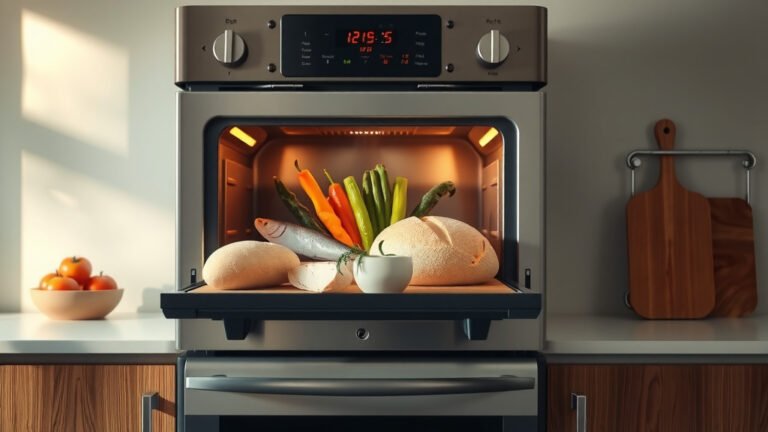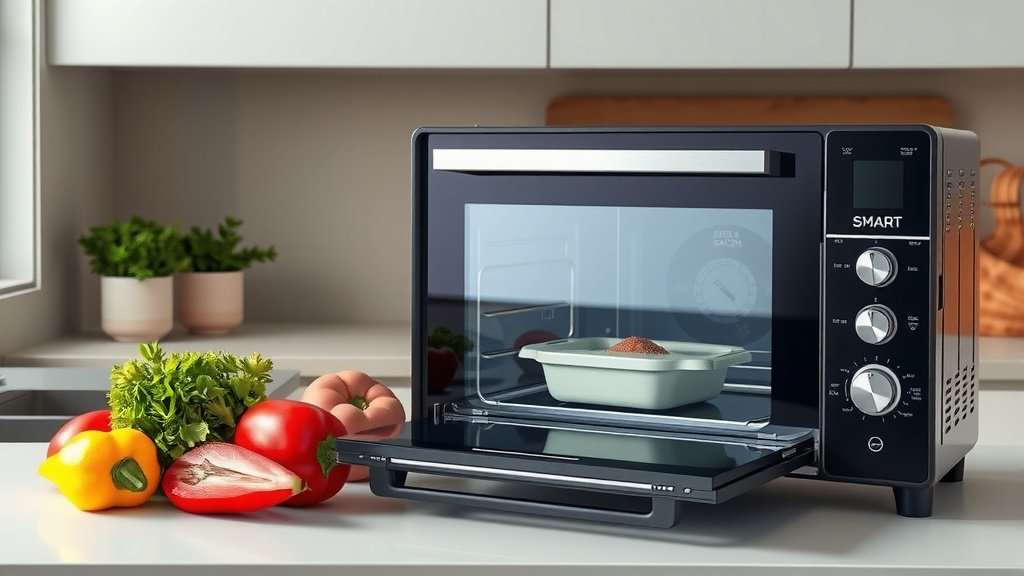
While some advanced smart ovens can detect certain food characteristics like doneness or surface browning, they generally cannot automatically identify the exact “food type” you’ve placed inside.
Modern smart ovens use sensors and AI to assist with cooking, but true, autonomous food type recognition is still a developing technology, often relying on user input to confirm what you’re making.
TL;DR: Quick Answers About Smart Oven Food Detection
- Smart ovens can sense things like internal temperature and doneness levels.
- Most ovens use visual or weight detection for limited food recognition.
- You still need to tell your oven what you are cooking most of the time.
- Advanced models offer guided cooking based on broad food categories.
- Future tech aims for more precise, automatic food type identification.
Can Smart Oven Detect Food Type Automatically?
In short, a smart oven can’t typically look at a raw chicken breast and know it’s a chicken breast versus a piece of fish. That kind of complex visual recognition is still mostly a human job. Instead, these clever appliances use other clues to help you cook.
How Smart Ovens “See” Your Food
It’s not quite like having a tiny chef in your kitchen, watching what you put in. Think of it more like a very smart assistant that uses specialized tools. They don’t have eyes in the way you do.
The Role of Sensors
Smart ovens rely heavily on various sensors. These sensors might detect the temperature inside the oven, the internal temperature of your food using a probe, or even the humidity levels. Some even use weight sensors on the rack.
Imagine you’re baking a cake. A smart oven might monitor the temperature precisely, telling you when it’s just right. But it won’t know if it’s a chocolate cake or a vanilla one without you telling it first.
AI and Machine Learning in Action
This is where the magic happens, but with a big asterisk. Ovens use algorithms that have learned from vast amounts of cooking data. This allows them to predict how long certain dishes might take or to suggest adjustments. They might “recognize” patterns related to cooking. For instance, a rapid temperature drop after opening the door is a data point for the oven’s intelligence.
What Smart Ovens Can Truly Identify
So, if they don’t identify specific foods, what can they do? Smart ovens excel at identifying cooking conditions and broad categories. It’s more about the “how” than the “what.”
Recognizing Basic Categories
Some smart ovens can identify if there’s *something* in the oven. More advanced models might distinguish between “meat” or “baked goods” if you’ve selected a specific cooking mode. We found that this usually involves pre-programmed settings rather than true object recognition (Consumer Reports).
Limitations and Nuances
You can’t just toss in a casserole and expect the oven to identify all its ingredients. Current technology is not that sophisticated. It won’t know if your lasagna has meat or is vegetarian, for example. The oven needs your input for specific food details.
Beyond Simple Detection: Guided Cooking
This is where smart ovens truly shine and offer you convenience. They might not know your food, but they can certainly guide you through cooking it flawlessly. It’s like having a digital cookbook built-in.
Pre-set Programs and Recipes
Many smart ovens come with hundreds of pre-set recipes. You select “roast chicken,” input the weight, and the oven handles the rest. It uses its sensors and AI to follow the steps. This means you are telling it the food type, and it’s optimizing the cooking process.
Temperature and Doneness Sensing
This is perhaps the most practical form of “detection.” Many smart ovens include a meat probe. This probe can tell the oven the exact internal temperature of your roast or chicken. Once it reaches the desired temperature, the oven can automatically shut off or switch to a “keep warm” setting. This prevents overcooking, which is super helpful!
Is True “Automatic Food Detection” Here Yet?
Not entirely, but we are moving closer. Imagine an oven that uses cameras and AI to identify a raw potato and then suggests the best way to cook it. That’s the dream, right?
Current Capabilities vs. Future Dreams
Today’s smart ovens are more about **assisted cooking** than fully automatic food detection. They need you to initiate the process by telling them what you’re making. The future, however, holds the promise of more advanced visual recognition and AI (MIT Technology Review). Think of it as evolving from a smart calculator to a truly intuitive assistant.
The Benefits of Smart Oven Technology
Even without perfect food recognition, smart ovens offer many advantages. They take some of the guesswork out of cooking, making your life easier.
- Achieve consistent cooking results every time.
- Access a vast library of pre-programmed recipes.
- Receive notifications on your phone when food is ready.
- Control your oven remotely from anywhere.
- Utilize precise temperature and doneness monitoring.
Challenges Smart Ovens Still Face
It’s not all perfectly baked cookies and perfectly roasted veggies. There are still hurdles the industry is working to overcome.
Consistency and User Input
The accuracy of cooking still relies heavily on you providing correct information. If you tell the oven it’s a 5-pound turkey, but it’s only 3 pounds, the results might be off. Getting the right user input is key for optimal performance.
Making the Most of Your Smart Oven
You have a powerful tool in your kitchen! Here’s a quick checklist to help you get the best out of your smart oven, even if it can’t read your mind:
- Always use the meat probe for precise doneness.
- Explore the oven’s pre-set recipe library.
- Connect it to your Wi-Fi for remote control.
- Keep the oven clean for optimal sensor performance.
- Update its software for new features and improvements.
When you learn to work *with* your smart oven, it becomes an indispensable cooking companion.
| Feature | Current Smart Oven Capabilities | Future Smart Oven Potential (Expert Opinion) |
|---|---|---|
| Food Type Identification | Requires user input (e.g., “chicken roast,” “bread”). | Visual AI identifies specific food items instantly. |
| Doneness Detection | Precise with temperature probes for meats. | Visual assessment of browning, texture, and internal temp without probes. |
| Cooking Adjustments | Pre-programmed cycles; basic sensor adjustments. | Dynamic, real-time adjustments based on observed food state. |
| Ingredient Recognition | None. | Potentially identifies ingredients in a dish to suggest recipes. |
Conclusion
While the idea of a smart oven automatically knowing what you’re cooking is exciting, current technology isn’t quite there yet. They are incredibly smart, yes, but more in the way they **assist your cooking** rather than fully identifying specific foods on their own. They rely on your input to choose recipes or cooking modes, then use advanced sensors and AI to execute those instructions perfectly. Think of your smart oven as a brilliant co-pilot, not an autonomous chef. As technology continues to grow, we can anticipate more sophisticated recognition features. For now, enjoy the consistency and convenience these clever appliances already bring to your kitchen!
Can I just put any food in a smart oven and it cooks it?
No, not entirely. You usually need to tell your smart oven what you’re cooking, either by selecting a recipe from its database or choosing a specific cooking mode. Once you’ve given it that initial information, the oven uses its sensors and algorithms to cook the food to perfection based on its internal programming.
How do smart ovens “know” when food is done?
Smart ovens primarily “know” when food is done through internal temperature probes for meats, or by following precise time and temperature settings for other dishes. They often combine these methods with algorithms that track cooking progress and make adjustments based on sensor data, ensuring consistent results.
Are smart ovens worth the extra cost?
Many people find smart ovens worth the investment for the convenience and consistency they offer. Features like remote control, guided cooking, and automatic temperature adjustments can save you time and reduce cooking stress, especially for those who enjoy experimenting in the kitchen or have busy schedules. It depends on how much you value those benefits.
Do all smart ovens have food detection cameras?
No, not all smart ovens have internal cameras for visual food detection. While some higher-end models might include cameras for monitoring food progress or even offering limited visual recognition capabilities, it’s not a standard feature across all smart ovens. The primary “detection” often comes from temperature and other internal sensors.
What is the most advanced food detection feature in a smart oven today?
Currently, the most advanced food detection features in smart ovens usually involve precise internal temperature probes that communicate with the oven’s system to ensure food reaches the perfect doneness. Some models also use visual recognition for very broad categories or to identify browning, but not for specific food item identification without user input. Many experts agree that the integration of powerful AI with advanced imaging is the next big step.