
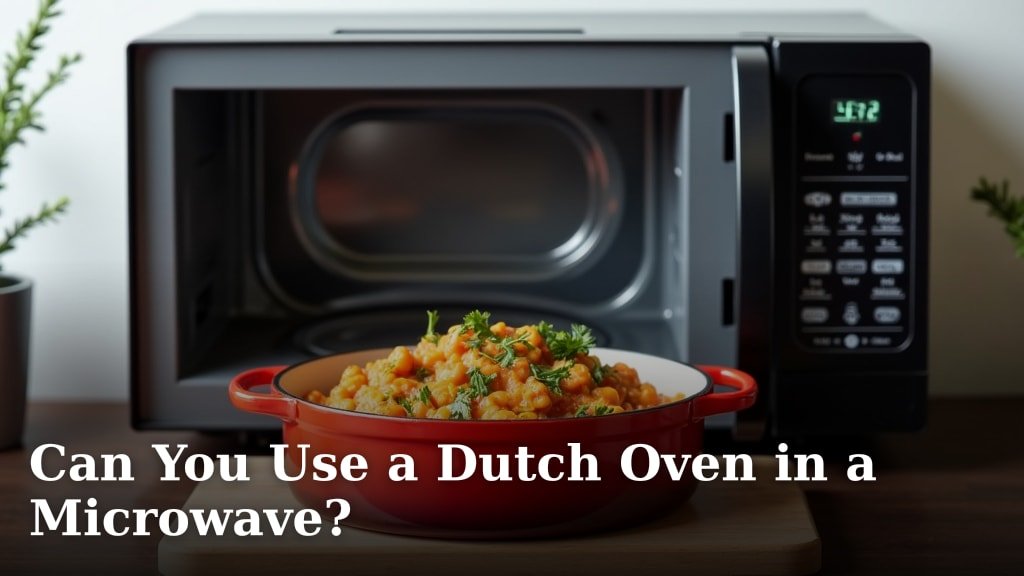
No, you absolutely cannot use a Dutch oven in a microwave. Microwaves use a specific type of energy that interacts with metal. Dutch ovens are made of cast iron or have metal components, making them a major safety hazard inside a microwave. You risk damaging your microwave and potentially causing a fire.
Microwave ovens are designed for specific cookware, usually glass, ceramic, or microwave-safe plastic. Using metal, like your beloved Dutch oven, can cause sparks and damage the oven’s internal workings. It’s essential to know which pots and pans are microwave-friendly to keep your kitchen safe and your appliances running smoothly. Always check for a “microwave safe” label.
- Dutch ovens are made of metal.
- Microwaves use energy that reacts with metal.
- Using a Dutch oven in a microwave can cause sparks.
- It can lead to damage or a fire.
- Always use microwave-safe cookware.
Let’s dive into why this is a firm no-go and what cookware is actually safe for your microwave.
Microwave Safety: Why Your Dutch Oven Stays on the Stovetop
So, you’re looking at your beautiful Dutch oven and then at your microwave. You might be wondering, “Can this heavy-duty pot actually go in there?” We’ve got a straightforward answer for you: No, you absolutely cannot use a Dutch oven in a microwave.
It might seem like a quick way to heat up leftovers or cook a small meal. But mixing Dutch ovens and microwaves is a recipe for disaster. We’re talking sparks, potential fires, and damage to your appliance. It’s really important to understand why this is a strict no-fly zone for your kitchen.
Understanding How Microwaves Work
To grasp why your Dutch oven is a no-go, let’s quickly look at how microwaves operate. They don’t use heat in the traditional sense. Instead, they use electromagnetic waves called microwaves. These waves bounce around inside the oven cavity. They excite the water molecules in your food. This rapid vibration creates heat, cooking your food from the inside out.
The Role of Microwaves and Water Molecules
Think of it like tiny dancers getting very excited. When the microwave energy hits the water in your food, those water molecules start wiggling and jiggling super fast. This energetic dance is what generates the heat. Foods with more water cook faster. This is why dry foods might not heat up as well.
Why Metal is the Enemy of Microwaves
Here’s where your Dutch oven runs into trouble. Metal is a conductor of electricity. When microwave energy hits metal, it doesn’t just pass through or get absorbed like it does with food. Instead, the metal reflects the microwaves. This reflection can cause a few problems. It can prevent your food from cooking properly, as the waves can’t reach it effectively.
More importantly, the reflected energy can bounce back to the microwave’s magnetron. This is the part that generates the microwaves. This feedback loop can overheat and damage the magnetron. It’s like shining a laser pointer directly into a security camera; the device isn’t designed for that kind of direct energy feedback.
The Dangers of Metal Cookware in a Microwave
Using metal in a microwave, especially something substantial like a Dutch oven, can lead to some scary situations. The interaction between the metal and the microwave energy can be quite dramatic. We want to make sure you’re aware of the risks so you can avoid them.
Sparks and Arcing: The Classic Microwave Show
One of the most common and visible signs of metal in a microwave is sparking, also known as arcing. This happens when the electrical charge builds up on the metal’s surface. If the charge gets strong enough, it can jump through the air to another part of the oven. This creates a bright flash and a loud crackling sound. It looks pretty dramatic, but it’s actually a sign of electrical discharge.
Think of it like static electricity, but much more intense. The sharp edges or thin parts of metal items are particularly prone to this. While a smooth, round metal bowl might arc less than a fork, any metal object poses a risk. Your Dutch oven, with its thick cast iron and metal handles, is certainly no exception.
Fire Hazards: A Serious Concern
Those sparks aren’t just for show. They can ignite flammable materials inside your microwave. This could be food residue, paper towels, or even the packaging your food is in. If a spark lands on something combustible, it can start a fire. A fire inside a microwave can spread quickly and is extremely dangerous.
We’ve heard reports of small fires starting from things like aluminum foil that wasn’t used correctly. A heavy Dutch oven is full of metal, and while it might not ignite itself, it can certainly be the catalyst for a fire. It’s a risk that’s simply not worth taking for the convenience of faster cooking.
Damage to Your Microwave: An Expensive Mistake
Even if you don’t see dramatic sparks or a fire, using metal cookware can still harm your microwave. As we mentioned, the reflected energy can damage the magnetron. Over time, this can lead to your microwave heating food less effectively or stopping altogether. Repairs can be costly, often more than the price of a new microwave.
The internal components of a microwave are sensitive. They are designed to work with specific types of materials. Introducing metal disrupts this delicate balance. It’s like trying to run a race car on bicycle tires; the components aren’t compatible and can lead to serious breakdowns.
What is a Dutch Oven and Why It’s Not Microwave-Friendly
Now, let’s talk specifically about the Dutch oven. These are fantastic pieces of cookware. They are renowned for their durability and versatility on the stovetop and in the oven. But their construction is precisely why they can’t go in a microwave.
Construction of a Dutch Oven
A traditional Dutch oven is made from cast iron, which is a heavy metal. Some modern versions might have a ceramic coating, but the core material is still metal. They often have heavy, tight-fitting metal lids, sometimes with metal handles. Even if the inside is enameled, the underlying structure is metal.
This thick, dense metal is excellent for distributing heat evenly on a stovetop or in a conventional oven. It holds heat wonderfully, making it perfect for slow cooking, braising, and baking. However, these same metallic properties make it completely incompatible with microwave energy.
Enamel Coatings: Still Metal Underneath
You might have a beautiful enameled Dutch oven. These are popular because they are easier to clean than bare cast iron. The enamel is a glass-like coating fused to the cast iron. While the enamel itself is generally microwave-safe, the cast iron base is not. The metal is still there, and it will interact with the microwaves.
Think of it like painting a piece of metal. The paint layer is thin, but the metal underneath is still a conductor. So, even with a smooth, colorful coating, your enameled Dutch oven needs to stay out of the microwave. The heat absorption and reflection properties of the metal are the primary concern.
Safe Cookware for Your Microwave
Since your Dutch oven is off-limits, what *can* you use in your microwave? Thankfully, there are plenty of safe options. The key is to look for materials that don’t interfere with the microwave energy in a negative way.
Microwave-Safe Glass and Ceramic
Glass and ceramic dishes are generally your best bet for microwave use. They are non-metallic and allow the microwaves to pass through to your food. Most everyday plates, bowls, and mugs made of these materials are safe. Always check for a label that says “microwave safe” to be absolutely sure.
Some older ceramic dishes or those with metallic trim or paint might not be safe. The metallic elements can cause sparking. So, if you see any gold or silver designs on the rim, it’s best to avoid using that dish in the microwave. When in doubt, pick a plain glass or ceramic item.
Microwave-Safe Plastics
Many plastic containers are designed for microwave use. These are often labeled as “microwave safe.” They are made from specific types of plastic that can withstand the heat and won’t melt or warp. This is especially useful for reheating leftovers or cooking microwave meals.
However, it’s important to use them correctly. Avoid microwaving acidic foods in plastic for extended periods. Some research suggests that certain plastics can leach chemicals into food when heated, especially with fatty or acidic items (National Institute of Environmental Health Sciences). Using them for shorter reheating times is generally considered safe. Always check the container for the microwave-safe symbol.
Paper Products and Wraps
Paper plates, paper towels, and wax paper can also be used in the microwave for short periods. They are useful for covering food to prevent splattering or for quickly warming small items. However, be cautious. Avoid using paper products with recycled content that might contain tiny metal fragments. Never use brown paper bags, as they can catch fire.
Be mindful of any ink or dyes on the paper products. Some inks might not be microwave safe and could potentially transfer to your food. Opt for plain white paper products when possible. Always keep an eye on them while heating, especially if you’re heating for longer than a minute or two.
What About Other Cookware?
You might be wondering about other pots and pans you have. Understanding materials helps you make safe choices.
Foil and Metal Trim
Aluminum foil is a tricky one. While it’s metal, it can sometimes be used in microwaves with extreme caution. However, it’s generally not recommended for beginners or for general use. Small, smooth pieces of foil can sometimes be used to shield parts of food from overcooking. But crumpled foil or large pieces will almost certainly cause arcing. We strongly advise against experimenting with foil in your microwave.
Likewise, any dishes with metallic trim, like gold or silver banding, should be avoided. These decorative elements are made of metal and will cause sparks. It’s a common mistake people make with their “nice” dishes.
Styrofoam and Melamine
Some Styrofoam containers are labeled microwave safe, but many are not. Styrofoam can melt at relatively low temperatures, potentially releasing harmful chemicals into your food. It’s generally best to transfer food to a glass or ceramic container if you’re unsure.
Melamine dishes are sturdy and can be microwave-safe, but again, you need to check the label. Some melamine products can degrade or leach chemicals when heated, especially with high-fat or high-sugar foods. The USDA recommends using them only if they are explicitly marked as microwave-safe.
Quick Checklist: Microwave Cookware Safety
To help you remember, here’s a quick rundown of what to keep in mind:
- Always check for a “microwave safe” label on any new dish or container.
- Avoid metal of any kind, including Dutch ovens, foil, and metallic trim.
- Glass and ceramic are usually safe, but avoid those with metallic decorations.
- Microwave-safe plastics are convenient, but check for melting or damage.
- Paper towels and wax paper are okay for short heating times and covering food.
- When in doubt, leave it out! Choose a known safe option if you’re unsure.
Conclusion
So, to recap, your trusty Dutch oven is a kitchen workhorse, but it belongs on the stovetop or in a conventional oven, not your microwave. We’ve learned that metal cookware like Dutch ovens can cause dangerous sparks, damage your microwave’s sensitive components, and even start fires. Always stick to glass, ceramic, or microwave-safe plastic for safe and efficient cooking in your microwave. Prioritizing the right cookware ensures your meals are prepared safely and your appliances stay in good working order for years to come.
Frequently Asked Questions
Can I use a Dutch oven with a ceramic coating in the microwave?
No, even if your Dutch oven has a ceramic coating, the cast iron underneath is still metal. This metal will interact with microwave energy, posing the same risks of sparking, damage, and fire as bare cast iron. Always check the material of the core pot, not just its coating.
What if my Dutch oven has no metal handles?
The main body of a Dutch oven is typically made of cast iron, which is a dense metal. Even without metal handles, the pot itself will still reflect microwave energy. Therefore, it’s unsafe to use any Dutch oven, regardless of its handle material, inside a microwave.
Will a tiny spark from my Dutch oven really damage my microwave?
Yes, even small sparks, known as arcing, can cause significant damage. This electrical discharge can harm the magnetron, the component that generates microwaves, leading to reduced heating power or complete failure over time. It’s best to avoid any situation that could create sparks.
Are there any specific types of Dutch ovens that ARE microwave-safe?
Based on how microwaves work and the materials used in Dutch oven construction, there are no Dutch ovens that are microwave-safe. Their dense metal composition makes them fundamentally incompatible with microwave energy, regardless of brand or specific design features.
How can I quickly reheat food if I can’t use my Dutch oven in the microwave?
For quick reheating, use microwave-safe glass bowls, ceramic dishes, or approved plastic containers. You can also reheat food on the stovetop using a regular saucepan or skillet, which is often just as fast for many types of meals. Always ensure your chosen cookware is clearly labeled “microwave safe” if using that appliance.
