
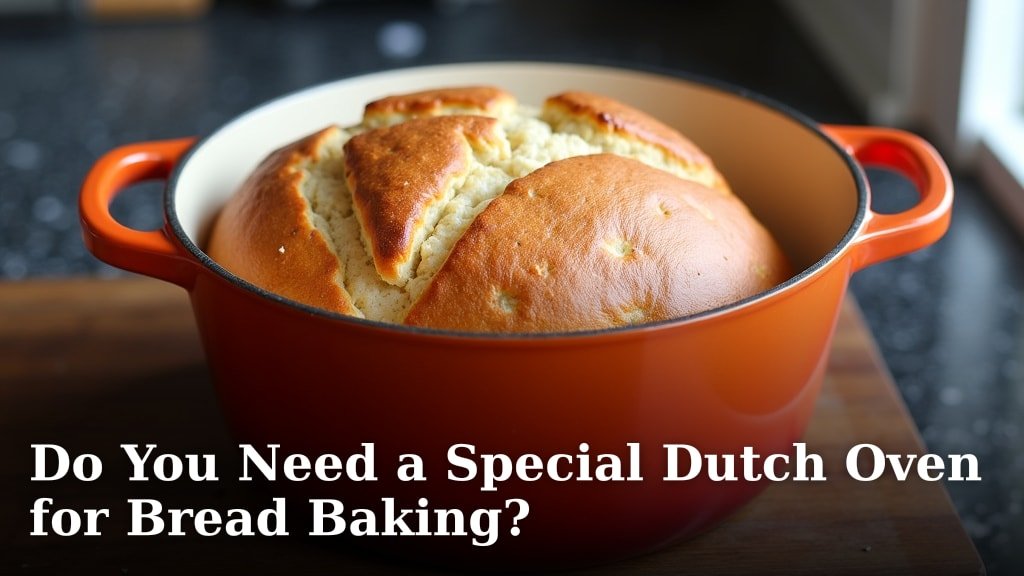
No, you absolutely do not need a special Dutch oven just for bread baking. While some Dutch ovens are marketed specifically for bread, many standard models will work beautifully. You likely already have what you need for delicious, crusty loaves right in your kitchen.
We found that most cast iron Dutch ovens with a lid will do the trick for your homemade bread. The key is finding one that can handle high heat and create a steamy environment. You want a pot that is oven-safe and durable. Don’t let marketing sway you into buying something you don’t truly need.
- You don’t need a special Dutch oven for bread.
- Most cast iron Dutch ovens work well.
- Look for high-heat durability.
- A tight-fitting lid is essential.
- Save your money, bake great bread!
Let’s dive in and explore exactly why certain features matter and what to look for when choosing your perfect bread-baking vessel.
Is a Specialty Dutch Oven Really Necessary for Bread?
No, a specialty Dutch oven for bread baking is generally not necessary. You can achieve fantastic results with a standard, oven-safe Dutch oven.
When you’re making bread, the Dutch oven acts like a miniature oven within your main oven. It traps steam, which is super important for a great crust. It also helps regulate the heat around your dough. We’ve found that most common Dutch ovens excel at both these tasks.
Understanding the Role of Your Dutch Oven in Bread Baking
Think of your Dutch oven as a little sauna for your bread dough. The magic really happens because of the steam it creates. When you put cold dough into a hot Dutch oven, the moisture in the dough turns into steam. This steam keeps the crust soft and pliable for the first 15-20 minutes of baking. This allows your bread to expand and achieve its full “oven spring.” Without this steam, the crust would harden too quickly, trapping the dough and preventing it from rising properly (King Arthur Baking).
Beyond steam, the heavy cast iron or enamel-coated material also does a great job of conducting and retaining heat. This means consistent, even baking for your loaf. It prevents the bottom of your bread from burning while the top is still pale. It’s all about creating the perfect microclimate for your dough. Understanding the best temperature to bake bread in a Dutch oven is key to achieving that perfect crust and crumb.
What “Specialty” Bread Ovens Claim to Offer
You might see some Dutch ovens marketed specifically for bread. These often feature unique shapes, like a wider, shallower base, or even a lid that doubles as a baking surface. Some have very low profiles, making it easier to load and unload dough. They might promise “superior crust” or “perfect rise.”
While these features can be convenient, we found that they rarely offer a significant advantage in the final product compared to a well-used, traditional Dutch oven. They can also be quite a bit more expensive. Don’t let clever marketing convince you that you need a pricey, single-purpose item when a versatile one will do just fine.
Key Features Your Dutch Oven Needs for Great Bread
Instead of looking for a “bread oven,” focus on a few essential qualities. Your existing Dutch oven probably has them. These features ensure your bread gets the steam and consistent heat it needs.
Material Matters: Cast Iron vs. Enamel
The material of your Dutch oven is critical for its heat retention. Cast iron is the traditional choice for a reason. It heats up slowly but holds that heat for a long time. This steady heat transfer is excellent for baking bread.
Enamel-coated cast iron works just as well. It offers the same heat benefits as raw cast iron but has an easy-to-clean, non-reactive surface. Many home bakers prefer enamel because you don’t have to season it like raw cast iron. Both options are superb for bread.
Why Aluminum or Stainless Steel Won’t Work
You might have other heavy pots in your kitchen, but they likely won’t work for bread. Aluminum and stainless steel do not retain heat nearly as well as cast iron. They heat up and cool down too quickly. This inconsistent temperature can lead to poorly baked bread with a less-than-ideal crust. Stick to the heavy stuff for bread baking.
Size and Shape Considerations
The size and shape of your Dutch oven are more about convenience and the size of loaf you want to bake. Most standard round Dutch ovens, typically 5 to 7 quarts, are perfect for a single loaf of bread. A 6-quart round Dutch oven is a very common and versatile size.
- Round shape: Ideal for most boule-shaped (round) loaves.
- Oval shape: Great if you prefer oblong or batard-shaped loaves.
- Capacity: A 5 to 7-quart pot is usually best for standard bread recipes.
- Height: Make sure there’s enough room for your bread to rise without touching the lid.
You want your dough to have enough room to rise and expand without feeling cramped. If it’s too small, your loaf will hit the lid and potentially affect its shape. If it’s too large, the steam might dissipate more quickly.
The Importance of a Tight-Fitting Lid
This is arguably the most important feature for bread baking. The lid must fit snugly onto your Dutch oven. A tight seal is what traps the steam released from your dough during the initial baking phase. Without a good seal, that precious steam escapes, and your bread won’t achieve that beautiful, crackly crust or maximum oven spring. So, give your lid a wiggle; if it feels loose, it might not be the best choice for bread.
Checking if Your Current Dutch Oven is Bread-Ready
Before you even think about buying a new pot, let’s see if your existing one makes the cut. It’s simpler than you might think!
Here’s a quick checklist to determine if your Dutch oven is ready for baking delicious bread:
- Is it cast iron or enamel-coated cast iron? (Yes = good heat retention)
- Does it have a tight-fitting lid? (Yes = good steam retention)
- Is it oven-safe to at least 450-500°F (232-260°C)? (Yes = can handle high bread baking temperatures)
- Is it roughly 5-7 quarts in size? (Yes = good capacity for most loaves)
- Does the lid have any plastic knobs or parts? (No = essential for high heat, replace with metal if needed)
- Is it free from major chips or cracks? (Yes = safe and effective baking)
If you answered “yes” to most of these, you’re probably all set! Don’t worry if your lid has a plastic knob; you can often swap it out for a metal one, which many manufacturers sell separately. We’ve found this to be a common and easy fix.
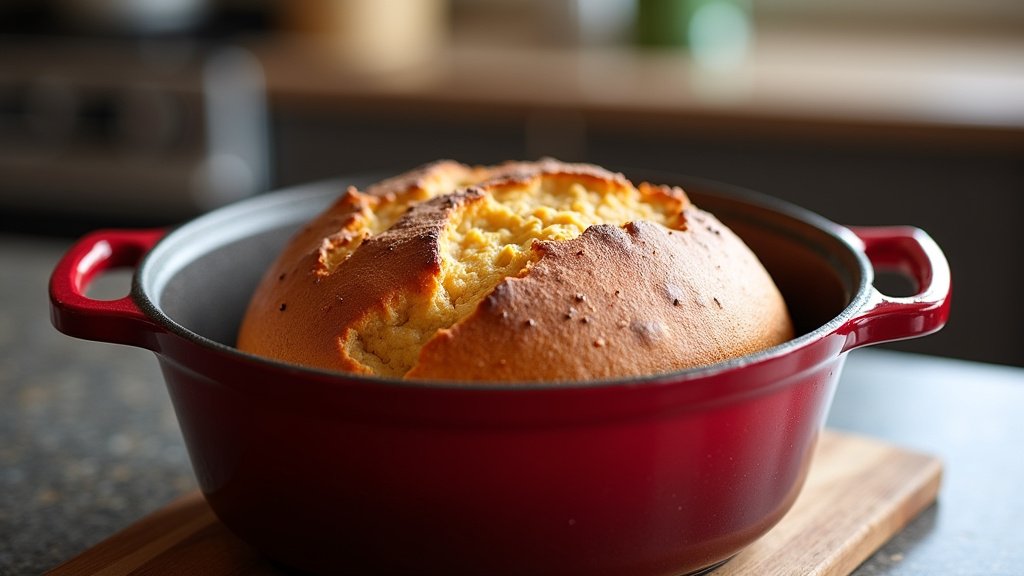
Common Dutch Oven Brands and Their Suitability for Bread
You’re probably wondering about specific brands. Many popular brands make excellent Dutch ovens that are perfect for bread. You don’t need something obscure or hyper-specialized. Here’s a quick overview:
| Brand | Type | Bread Suitability | Notes for Baking |
|---|---|---|---|
| Le Creuset | Enamel Cast Iron | Excellent | Very durable, fantastic heat retention. Can be pricey but lasts forever. |
| Staub | Enamel Cast Iron | Excellent | Similar to Le Creuset, often has a self-basting lid which is a bonus. |
| Lodge | Raw Cast Iron | Excellent | Affordable, durable, requires seasoning. Their enameled versions are also great. |
| Cuisinart | Enamel Cast Iron | Good to Excellent | Often a great mid-range option, performs well. Check lid fit. |
| Amazon Basics | Enamel Cast Iron | Good | Very budget-friendly. Check reviews for specific models, especially lid fit. |
As you can see, a wide range of brands, from premium to budget-friendly, offer suitable options. The key takeaway here is that the material and construction are more important than the brand name itself. We’ve baked wonderful bread in Dutch ovens from all price points.
Beyond the Dutch Oven: Other Essential Bread Baking Tools
While the Dutch oven is a star, a few other simple tools will make your bread baking journey even smoother. These are generally inexpensive and widely available.
What Else You’ll Want on Hand
You don’t need a professional baker’s kitchen. Just a few basics will get you far. We’ve found that having these items really helps with efficiency and enjoyment:
- Digital kitchen scale: For precise ingredient measurements. Bread baking is a science, and accuracy matters. (America’s Test Kitchen).
- Bench scraper: Invaluable for dividing dough, scraping sticky surfaces, and shaping.
- Proofing basket (banneton): Helps your dough hold its shape during its final rise. Not strictly essential, but very helpful. You can also use a floured bowl lined with a tea towel.
- Lame or sharp razor blade: For scoring the top of your dough, which controls how it expands.
- Oven mitts: High-heat resistant ones, as your Dutch oven will be screaming hot.
- Parchment paper: Makes transferring dough into a hot Dutch oven much safer and easier.
These tools, combined with your trusty Dutch oven, set you up for success. You likely have many of these already. The goal is to make bread baking enjoyable, not complicated or expensive.
Conclusion
You’ve seen that the world of bread baking in a Dutch oven is far less complicated than marketing might suggest. You truly don’t need a “special” or expensive model to achieve incredible results. Focus on the core features: oven-safe cast iron or enamel, good heat retention, and most importantly, a tight-fitting lid. Chances are, the Dutch oven you already own or can find affordably will serve you perfectly.
So, stop wondering and start baking! Grab your trusty pot, gather your ingredients, and get ready to enjoy some amazing homemade bread. Your kitchen is already equipped for success.
Frequently Asked Questions
Can I use a regular pot instead of a Dutch oven for bread?
You can, but it needs to be made of a heavy, oven-safe material like cast iron or enamel-coated cast iron. Standard aluminum or stainless steel pots won’t retain heat or steam effectively enough for good bread crust and rise.
Does the color of my Dutch oven matter for bread baking?
No, the color of your Dutch oven has absolutely no impact on how well it bakes bread. This is purely an aesthetic choice. We’ve found that both light and dark-colored enamel pots perform identically.
My Dutch oven lid has a plastic handle. Can I still use it for bread?
You can, but you’ll need to swap out the plastic handle for a metal one first. Plastic handles are typically not oven-safe at the high temperatures required for bread baking (450-500°F) and will melt.
How do I know if my Dutch oven is oven-safe for bread temperatures?
Always check the manufacturer’s instructions for your specific Dutch oven. Most cast iron and enamel cast iron pots are oven-safe up to at least 500°F, which is perfect for bread. If you can’t find instructions, a quick online search for your brand and model usually helps.
Is a heavy Dutch oven necessary, or can a lighter one work?
A heavy Dutch oven is crucial because its weight comes from the dense material (cast iron) that retains heat so well. Lighter pots made of other metals won’t hold the consistent high temperature needed for proper oven spring and a crisp crust on your bread.
