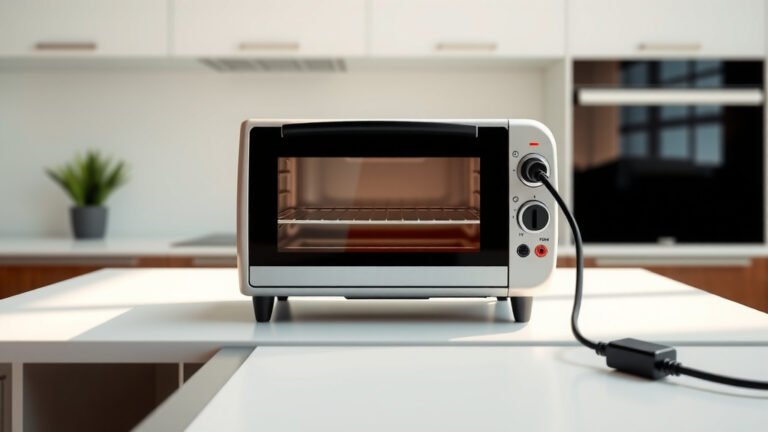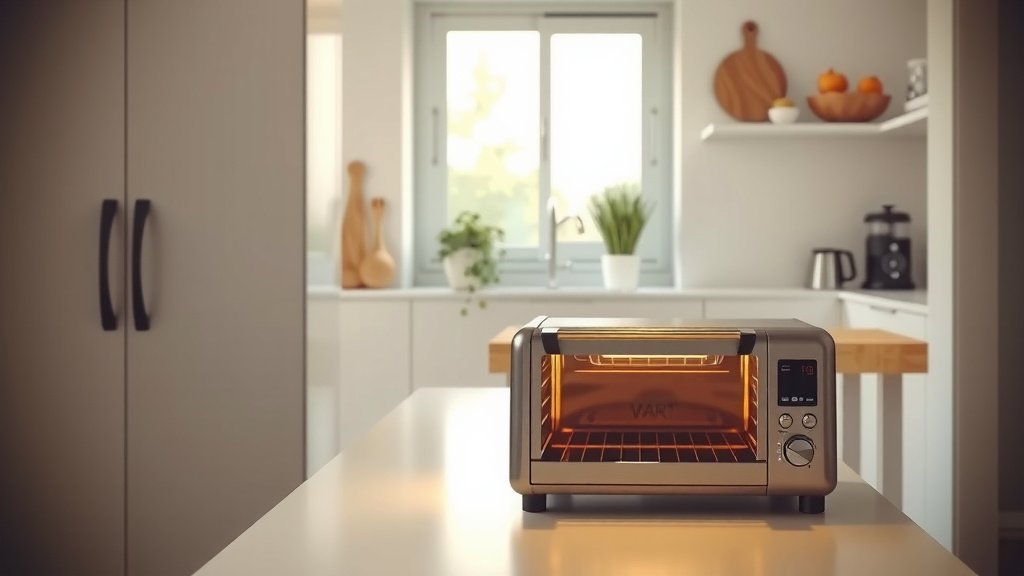
Yes, a toaster oven does heat up the kitchen, but typically much less significantly than a full-sized conventional oven.
Its compact size and lower power consumption mean it emits less waste heat, making your kitchen only slightly warmer, especially in smaller spaces.
For a quick overview of how toaster ovens affect your kitchen’s temperature, here’s what you need to know:
- Toaster ovens generally contribute less heat to your kitchen compared to larger ovens.
- Their smaller interior volume requires less energy to heat, reducing overall heat output.
- Factors like kitchen size, ventilation, and outside temperature influence how noticeable the heat is.
- Using a toaster oven can be a smart way to keep your kitchen cooler, especially during hot weather.
Does A Toaster Oven Heat Up The Kitchen?
A toaster oven will add some heat to your kitchen, but its impact is usually minor compared to a traditional large oven. Because of its smaller size, it requires less energy and heats a smaller area.
Comparing Heat Output: Toaster Oven vs. Full-Size Oven
Have you ever noticed how a traditional oven can turn your kitchen into a sauna? That’s because larger ovens need a lot of power and space to heat up. Toaster ovens, on the other hand, are designed for smaller tasks.
They cook food efficiently without pumping out as much excess heat into your home. This difference is often quite noticeable, especially during warmer months.
Why Smaller is Cooler
Think of it like heating a swimming pool versus a bathtub. A bathtub takes far less energy and releases less heat to the surrounding room. Toaster ovens are like that bathtub.
They have a much smaller interior volume. This means they need less energy to reach your desired cooking temperature. Less energy used means less heat escaping into your kitchen (Consumer Reports).
The Power Consumption Difference
Full-size ovens often consume 2,000 to 5,000 watts of power. Toaster ovens, by contrast, typically use between 800 and 1,800 watts.
We found that lower wattage directly correlates with less heat waste. This makes them a more energy-efficient choice for smaller meals.
How Heat Escapes Your Toaster Oven
Even though toaster ovens are smaller, they still generate heat. How that heat gets out matters for your kitchen’s temperature. It’s not just about the food inside; it’s about the whole appliance.
Understanding these pathways helps you manage kitchen comfort. Heat can escape through the body of the oven or its glass door.
Insulation’s Important Role
Most modern toaster ovens come with insulation, but it varies in quality. Good insulation works like a thermal barrier. It helps to keep the heat inside the oven cavity where it belongs.
We found that better insulated models release less heat. This is a key factor if you want to keep your kitchen cooler while cooking.
Through the Glass Door
The glass door on your toaster oven is convenient for peeking at your food, right? However, glass is not the best insulator. Some heat naturally radiates through it.
Double-paned glass doors offer better heat retention than single-paned ones. This small detail can make a difference in overall heat leakage.
Your Kitchen’s Role in Heat Perception
The heat generated by a toaster oven is only half the story. How hot your kitchen feels also depends a lot on your kitchen itself. Every kitchen is unique, just like every home.
What might feel like a minor warmth in one kitchen could be more noticeable in another. Let’s explore some key factors.
The Size of Your Space Matters
Imagine lighting a small candle in a large ballroom versus a tiny closet. The closet would get noticeably warmer much faster. The same principle applies here.
A small, enclosed kitchen will feel the heat from a toaster oven much more quickly. A larger, open-plan kitchen will dissipate that heat easily, making it less perceptible.
Airflow and Ventilation
Good ventilation is your best friend when it comes to managing kitchen heat. A well-placed exhaust fan or an open window can work wonders.
Many experts say that proper airflow removes warm air efficiently. This helps maintain a comfortable temperature. Do you have a window nearby?
The Outside Temperature Factor
Think about using your toaster oven on a chilly winter morning versus a sweltering summer afternoon. The outside temperature plays a significant role.
In winter, a little extra warmth might even be welcome. In summer, every bit of added heat feels like too much. Your perception of heat is often relative to the ambient environment.
Toaster Oven vs. Traditional Oven: A Heat Comparison
To really see the difference, let’s look at a simple comparison. This table highlights why a toaster oven usually wins the “cooler kitchen” contest.
| Feature | Toaster Oven | Traditional Oven |
|---|---|---|
| Power Consumption (Watts) | 800-1800 | 2000-5000+ |
| Internal Volume | Small, few quarts | Large, multiple cubic feet |
| Heat Output to Kitchen | Low to Moderate | Moderate to High |
| Cooking Time for Small Items | Faster | Slower (preheat time) |
| Best for | Small meals, toast, reheating | Large roasts, baking multiple items |
Smart Strategies to Keep Your Kitchen Cool
You want to cook, but you don’t want to sweat, right? There are definitely ways to minimize any heat impact from your toaster oven. A little planning goes a long way.
These simple strategies can help ensure your kitchen remains comfortable. Try incorporating these habits into your cooking routine:
- Use ventilation: Turn on your range hood or open a window during use.
- Cook during cooler times: Prepare meals in the morning or evening on hot days.
- Close kitchen door: If you have an enclosed kitchen, keep the door shut.
- Keep it clean: A dirty toaster oven can sometimes be less efficient and radiate more heat.
- Place strategically: Position the oven away from direct sunlight or heat vents.
Optimal Times to Use Your Toaster Oven
Knowing when to grab your toaster oven can be a game-changer for your comfort. It’s not just about what you’re cooking, but also when. Think about the season and time of day.
It shines brightest for certain tasks and temperatures. When the weather outside heats up, your toaster oven becomes your best friend.
During the summer, or if you live in a perpetually warm climate, a toaster oven is perfect for quick meals. It won’t overwhelm your air conditioning. It’s also great for reheating leftovers without heating your entire house for just one plate.
Conclusion
Ultimately, a toaster oven will add a minimal amount of heat to your kitchen, far less than its full-sized counterpart. Its compact design and lower power requirements make it an efficient choice for daily cooking and reheating tasks.
By understanding how heat escapes and implementing simple ventilation strategies, you can keep your kitchen cool and comfortable year-round. So go ahead, enjoy your perfectly toasted snacks without fear of a sweltering kitchen!
Are toaster ovens truly energy efficient?
Yes, toaster ovens are generally considered more energy efficient than full-sized ovens for smaller tasks. They heat up faster and use less electricity because they have a much smaller area to heat. This means less energy is wasted, making them a good choice for smaller meals or reheating.
Can I bake a whole chicken in a toaster oven without heating the room too much?
While some larger toaster ovens can accommodate a small whole chicken, this longer cooking process will generate more heat than shorter tasks. Expect a noticeable, but still contained, increase in kitchen temperature compared to using a full-sized oven. Good ventilation is still recommended.
Do convection toaster ovens generate more heat than conventional ones?
Convection toaster ovens circulate hot air, which can cook food faster and more evenly. While they might feel slightly warmer right around the appliance due to the fan, their efficiency means they often cook quicker, potentially reducing the overall time heat is being emitted into the kitchen. The difference in total heat added to the room is usually negligible.
What’s the best way to ventilate my kitchen when using a toaster oven?
The best way is to use your kitchen’s exhaust fan or range hood, if available. Opening a nearby window and creating a cross-breeze can also be very effective. Even a small floor fan pointed away from the oven can help circulate air and dissipate any localized warmth.
Is using a toaster oven always better than a microwave for avoiding kitchen heat?
For sheer heat avoidance, a microwave is generally superior as it cooks by exciting water molecules and emits very little ambient heat into the room. However, a toaster oven offers browning and crisping that a microwave cannot. So, while it adds more heat than a microwave, it’s still significantly less than a traditional oven and provides different cooking benefits.